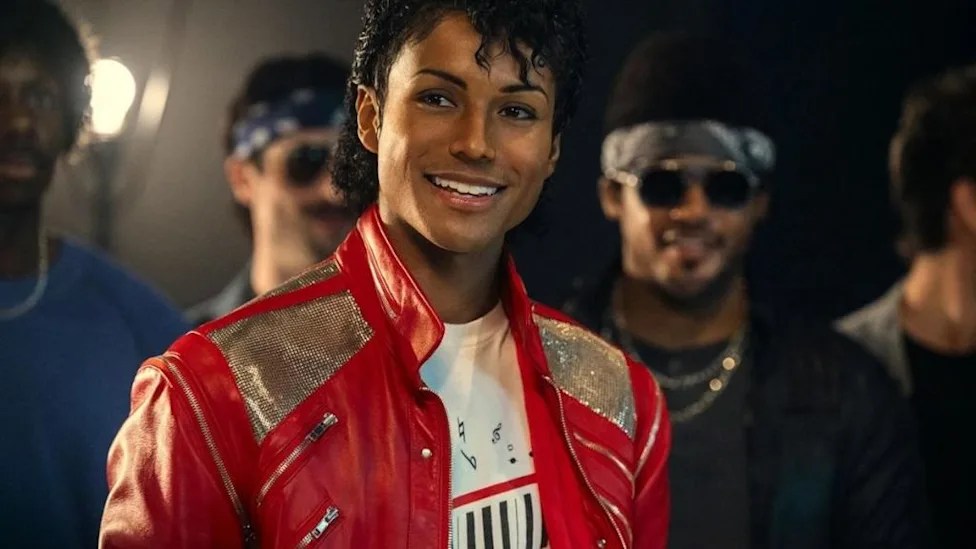
The 2010s was the home of the superhero film, and now in this post COVID-19 world, the filmmaking world has seemed to shift to the art of videogame movies and the biopic. Biopics have been around for decades, consistently being a moneymaking machine, but off the back of films like 2022’s Elvis and 2024’s A Complete Unknown, they have become all the rage of Hollywood. There are four different biopics focused on each of the Beatles soon releasing, all directed by Sam Mendes, which will be a certified box office hit. This certified chance of making money is why these biopics come out so consistently, an established singer will bring their fans into the cinema to watch their life story, and to listen to their music once again. It is no surprise then that a Michael Jackson biopic was fast-tracked along this current trend, a film based on easily the most popular artist of all time is a no brainer. Development on the film began in 2019, with Lionsgate formally announcing the film in 2022.
The following year was when news began more frequent, as Antoine Fuqua was announced as director, who had previously directed films like the Equalizer trilogy and 2001’s Training Day, and Michael’s own nephew, Jaafar Jackson, was announced to be portraying Michael. After a delay in production because of the 2023 SAG-AFTRA Strike and major reshoots changed the third act late into production, the film is finally out. The film follows Michael’s rise to stardom, starting with his time as a member of the Jackson Five and culminating during the release of the artist’s third album, Bad. The film juxtaposes his rise to power with the abusive and controlling relationship Michael has with his father, Joseph Jackson, played by Colman Domingo, as he attempts to sneak out from under his father’s thumb.
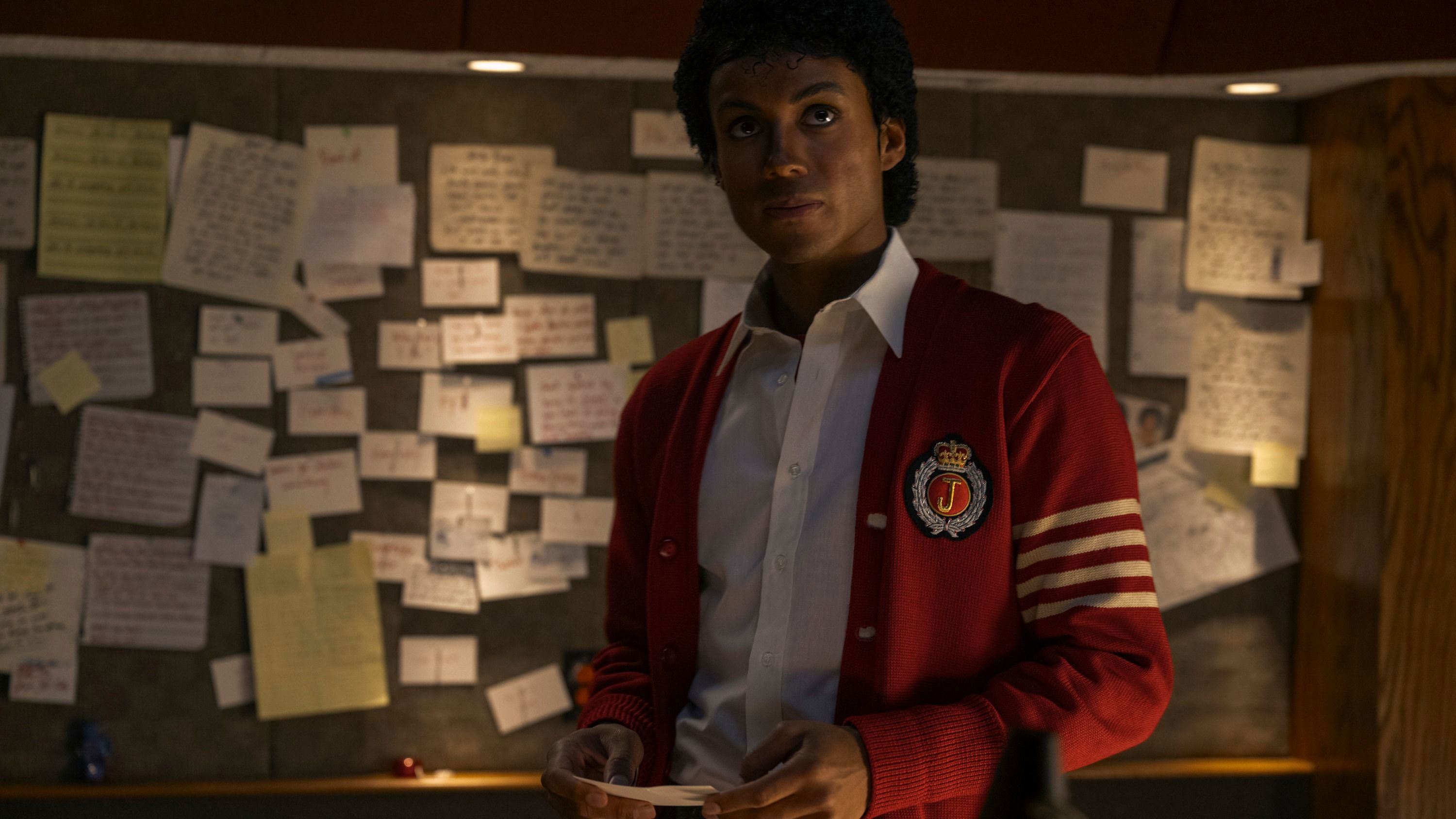
The first thing to address when talking about this film is the big elephant in the room that the film refuses to acknowledge. Michael Jackson has become a scrutinized figure after sexual abuse allegations were thrown at the singer in 1993, claiming he was sexually abusive to 13-year-old Jordan Chandler. After the case was settled the following year, things only became more concerning, and the court of public opinion began to turn on the singer even after his death. The singer was acquitted in a trial in 2005, after another case was raised against him, and after his death in 2009, more accusations have been raised at the singer. The 2019 Leaving Neverland documentary, that aired on HBO, has enlightened people to these allegations. The initial Jordan Chandler case was originally conceived as part of the film, beginning the film as Michael is visited by the police at his home, and then flashing back to see the pop-star’s rise to power. The entire third act was originally meant to involve this case and seemed to be an ambitious look at trying to make Michael into a multi-layered human, not shying away from the parts of his life that showed real trouble. However, those sequences would have to be removed from the film and the entire third act reshot, after a clause was found in the original settlement, forbidding any dramatization of Chandler. What the film became instead then is a typical rise to stardom story, and a deeply formulaic one at that. The biopic genre is incredibly played out in the modern day, and outside of parody films like Popstar: Never Stop Never Stopping and Weird: The Al Yankovic Story, they are all the exact same.
Falling back into being your typical genre tropes leaves this film into feeling sanitized, a film which feels afraid to even question its lead star or confront him on anything that is in his control. There are elements that seem to be still in from that earlier version of the draft, Neverland is shown in a very fan-servicey shot, which comes across as a bit sinister, and there is a real attempt to infantize Michael. There is a focus on Michael’s obsession with childhood toys, his dialogue is child-like and his connection to children is a focus of multiple scenes. The original version of the film was very clearly trying to make a connection between the lost childhood he faced because of his father, and the possible sexual abuse that Michael has inflicted on others. Removing the actual outcome from that abuse however leads these scenes to feel like excuses, with the estate and the director attempting to make Michael seem perfect.
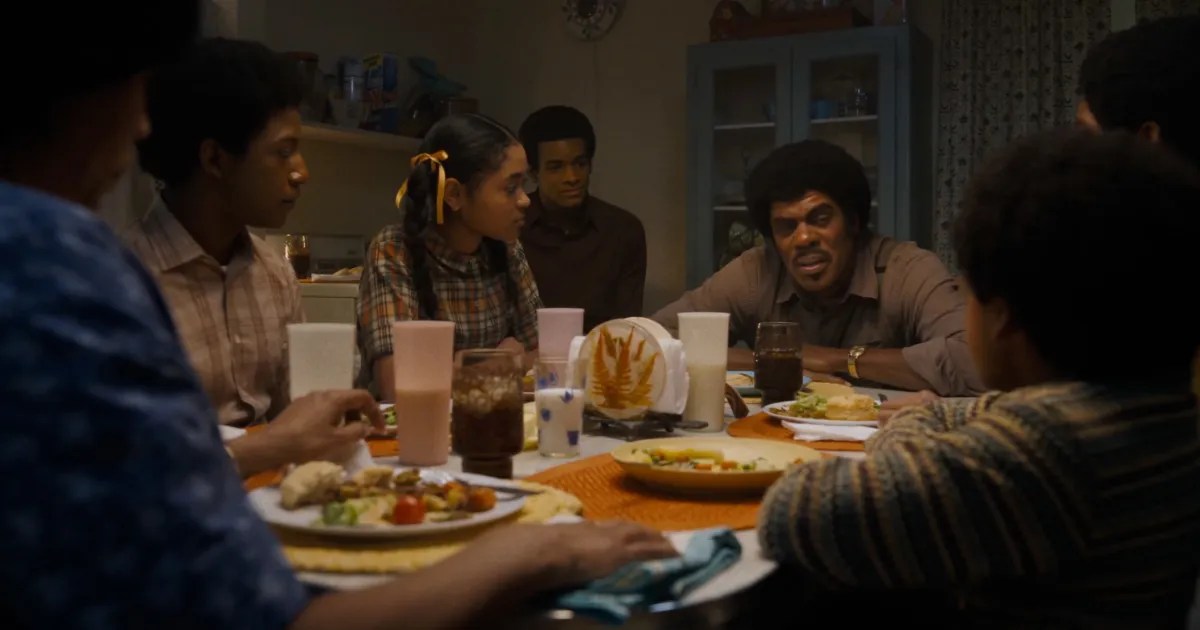
The abuse that he faces by his father is also so sanitized, outside of one opening scene where the character feels intimidating, Colman Domingo plays the character like a cartoon character. Domingo shines when the character gets a chance to be intimidating or evil, but most of the time, the character feels inconsistent and ultimately unconnected to Michael’s rise to power. This is what happens when a biopic of this scale comes out, a film that is attempting to cover so much ground in such a short runtime. The best biopics pick a period to focus on, a big moment in their lives, but when it’s focused on everything, that is where you feel like it focuses on nothing. Every supporting character in this film is so thin and underdeveloped, with many of Michael’s family even not appearing in the film because of the real-world people refusing their likeness, and the Jackson Five feel like window-dressing rather than Michael’s actual siblings.
For fans of the artist’s music and his public persona, they will get everything they want out of this film. It is essentially what every other biopic is, a concert movie with a loose plot focused around connecting those musical sequences together. Those musical sequences are the highlight of the film, with Fuqua’s direction being brought to life by one of the most colourful looking cinematography and colour grading of the year, the film pops out the screen in a way not many films have this year. Jafaar Jackson is also perfect as Michael Jackson, he disappears into the role, and you genuinely feel like you are just watching the superstar on screen. The way he emulates his voice, the mannerisms and the physicality is immense, and the singing talent is top notch. It is a shame really that the film does not give him more to chew on for the role, this is a cookie-cutter version of Michael, a Michael that seems to have been crafted by a committee to appear as the best version of himself. It even shies away in the end from even deciding to confront his drug addiction after an accident, with movie Michael refusing to become addicted, feeling like its attempting to say that Michael would never fall for something like that. Michael does not feel like a three-dimensional person, the film doesn’t attempt to show anything bad about him, any struggles outside of the struggles given to him by others. The only character arc he is given comes from his father, which leaves so much to be desired when the movie shies away from even making his father a real character. The movie just consistently tells us that Michael is gifted, talented and sent from God, like it is running PR for a damaged talent.
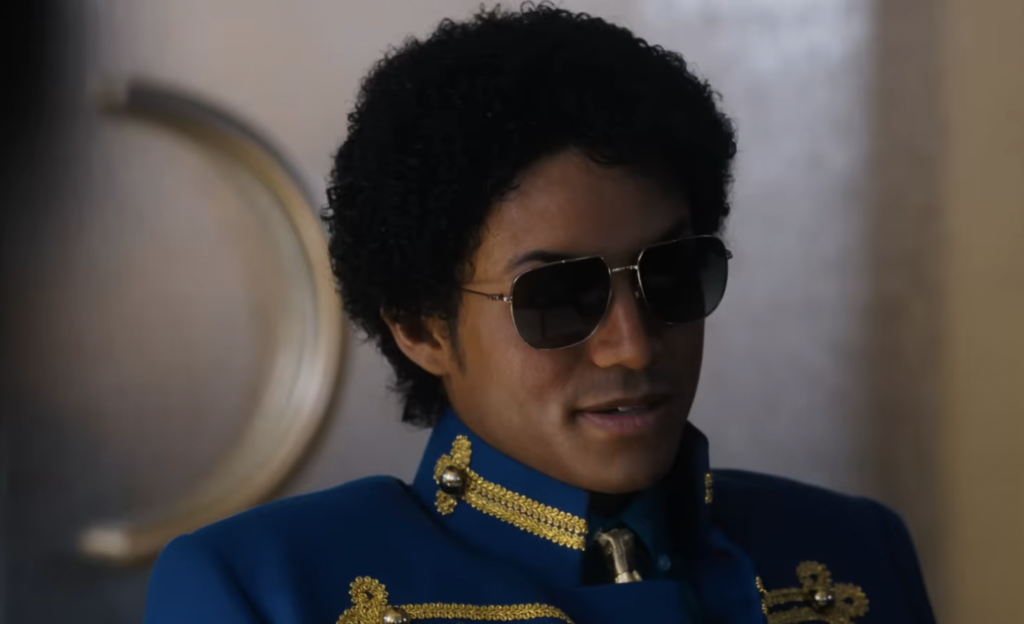
Michael is meant to only be part one of a two-part focus on the talented singer, and it can only be hoped that the next film attempts to craft an engaging arc for our real-life character. At some point, this film had a very clear narrative thrust and focused around a very interesting time in the singer’s life, that could have crafted a film which conveyed its star as anything else than just a god. However, what we have now feels less like a movie, and more of an advertisement, a PR stunt to try and save the public image of its pop singer. It is bound to make a big splash at the box office, but besides some great music, a solid direction and a great central performance, it feels empty and hollow of any actual life.


Leave a comment