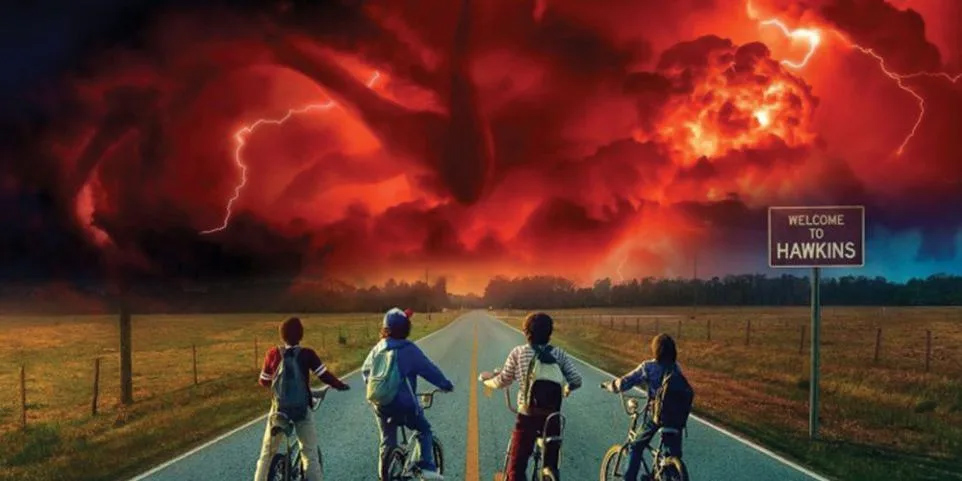
Barrack Obama was the president of the United States when Netflix’s biggest series, Stranger Things aired in 2016, and while the show has been airing its subsequent seasons, America has gone through a Donald Trump presidency, a Joe Biden presidency and now amid Trump’s second term. It has been nearly ten years since the show began, and this year marks the final season of the show. There has been much criticism facing the show around the long wait times between seasons, as streaming series become increasingly padded in release, and as the actors who were once age appropriate for their roles, have become twenty-year olds playing high schoolers. However, it is hard to downplay the power of Stranger Things, and the immense popularity it has had since its release in 2016, and its importance to Netflix. It has been reported that the combined production cost of the newest season is in the ballpark of $400-$480 million, around $50-$60 million per episode. Netflix, the streaming giant that is well known for cancelling shows only two or three seasons into their lifespans, has threw massive amounts of money into the series that has essentially became its backbone.
The service has big series, mainly all released off the back of Stranger Things, with shows like Squid Game, Wednesday and Bridgerton being streaming series giants, but nothing compared to the cultural phenomenon that Stranger Things was. When its first season aired, it became the third most streamed season on the service and come the third season the show was watched by 64 million households in the first month of release of the show’s third season. The show’s fourth season has entered the top 10 most streamed seasons on Netflix of all-time and is one of the few Netflix franchises that have evolved past just the series. The show has launched a set of comics and novels, including crossovers with the Teenage Mutant Ninja Turtles and Dungeons and Dragons, various mobile games and appearances in crossover games like Dead by Daylight and Fortnite, and a canon stage play prequel known as Stranger Things: The First Shadow. Mere weeks before the launch of the fifth season, an animated series was announced, set between the shows second and third season, proving the franchise is here to stay.
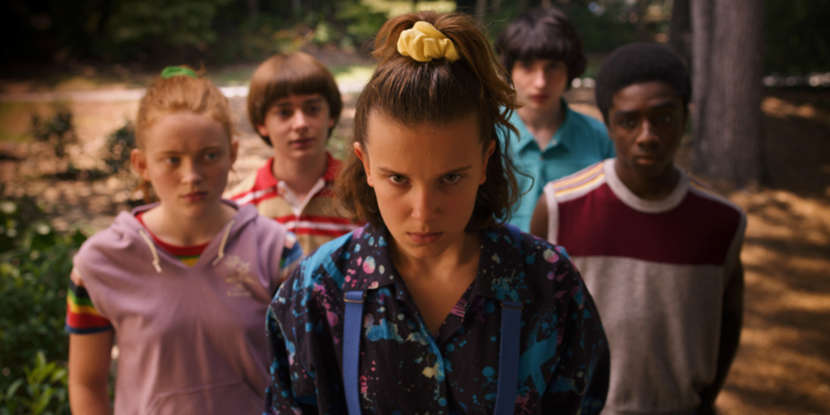
Set in 1983, the first season opens with the disappearance of Will Byers, as he leaves a Dungeons and Dragons game with his friends and disappears into the night. His friends find a strange girl when on the hunt for him and soon encounter a supernatural being linked to another world. Will’s mother believes she is communicating with her son and brings the local town sheriff in to investigate Hawkins Lab, as the child’s brother teams up with one of his brothers’ siblings to hunt the monster themselves. The Upside Down, the other world mentioned beforehand, and the characters become the centre piece of the show, as the second season explores a larger threat coming from the Upside Down, as Will becomes possessed by the being that calls that world home. The third season hosts the Mind Flayer, the larger threat, trying to become real, as the Russians attempt to use the Upside Down to win the Cold War. The fourth and fifth season expand the scope of the show, as the expanded cast attempt to put an end to the threat faced by the military, the Russians and the Upside Down, who has revealed a new threat in the form of Vecna.
Stranger Things came out during the height of the 2010’s 1980s nostalgia movement, a nostalgia that critics have pointed out had started since the 1990s but only became more prominent in the past decade. Stranger Things owes much of its success to the films, series and iconography that it draws upon from the 1980s. The biggest inspirations clearly come from the work of John Carpenter and Steven Spielberg, and the literary works of Stephen King. The first season acts intentionally as a merging of the narratives of ET: The Extraterrestrial and King’s Firestarter. Eleven, the mysterious little girl who becomes the focus of the series, acts as a stand-in for the pyrokinetic abilities of the character from King’s novel, hunted by the government for the abilities she holds. However, she also acts as a stand in for ET, being harboured by Mike in his house, and the season features a homage to ET raising the bikes in the air in that classic feature. The characters travelling around on bikes acts a homage to both Kings’ novels, IT and the Body, which would be turned into the film Stand By Me, to the point that Warner Bros’ future IT adaptations that came in 2017 and 2019, would in turn cast one of the central Stranger Things’ child actors for a character and feature a decade change in setting to the 80s to cash in on that nostalgia started by Stranger Things. Connection in the show comes from the characters’ love of pop culture, as the show acts as not just a homage to the pop culture icons it is based on, but a celebration of those cultural touchstones.
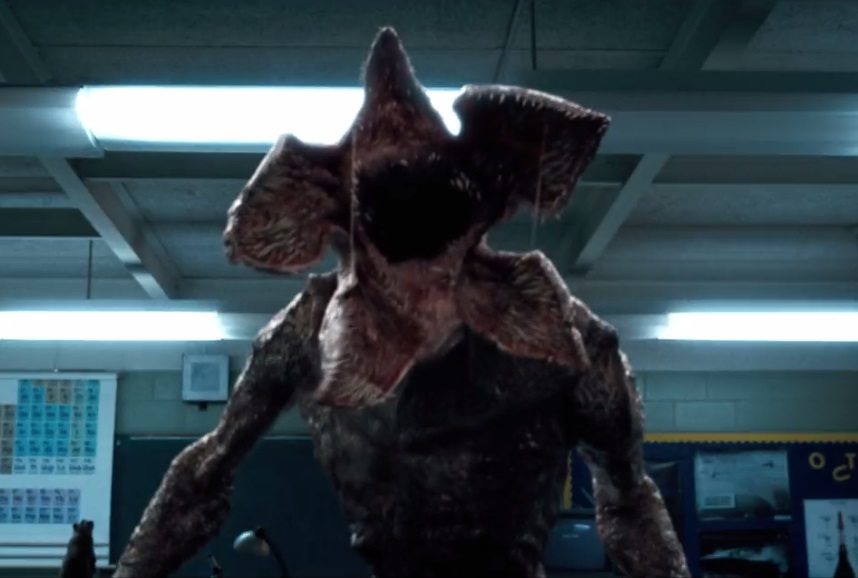
The central boys are friends because of their love for Dungeons and Dragons, which the show derives names from for its central antagonists, and Eleven finds love for Eggo Waffles, a brand which brings her close to Mike and eventually Sherriff Hopper, in season 2. The homages to 1980s pop culture only continues to become more prominent in the shows’ subsequent seasons, with the shows’ sophomore season featuring a clear callback to The Exorcist in the possession of Will Byers. The season’s finale features more than one Demogorgon, now known as Demodogs, as a translation of the movement between Alien and Aliens. Even the casting of Sean Astin acts as a popular culture callback, known for his roles in the Goonies and Lord of the Rings, and even a Halloween episode where the characters dress as the Ghostbusters. Season 3 featured a plot which called back to films like the Blob and Invasion of the Body Snatchers, as the Mind Flayer possessed large groups of people and reformed into a sinister blob-like creature.
A heavy-handed Russian character also clearly seemed to reference The Terminator. The show’s fourth season acts an homage to Nightmare on Elm Street, with a central antagonist that can attack the characters in your dreams and nightmares, feeding on fear and trauma, and even featuring an appearance from Freddy Krueger himself, Robert Englund in a small role. Character’s connections form from their love of pop culture, but also in their love of 80s music, which becomes a driving force of the show’s nostalgia. From a duet to The Never Ending Story to the immensely popular Kate Bush sequence from the show’s fourth season, the show homages the best in 80s music to a great degree.
Homages to the 80s famous features even comes at the cost sometimes of even understanding what those films were about, as the third seasons acts as a clear homage to George A. Romero’s Dawn of the Dead. That film featured zombies in a mall, deriving metaphoric commentary around the consumerism of the 80s and how the ones who mindlessly consume products of such are just the same as the zombies featured. The show’s third season derives inspiration from the film by featuring a mall as a central location, and a final battle featuring the monster being trapped in said mall. However, the inspiration stops there, as the show’s love for the past and love for consumerist goods hits an all-time high, featuring a mind-numbing sequence where Lucas advertises New Coke to the audience, an old rebrand for Coke that was brought back as a tie-in promotion for the season. Season three also moved the show from just referencing products from the past, to featuring products that Netflix would sell themselves inspired by the show, from Scoops Ahoy to the fourth season’s Surfer Boy Pizza. The show became bigger than it could have ever imagined to be at this point, moving from the small ‘indie’ series that was a mystery to Netflix’s blockbuster show which acted as a long-running film. This could be seen as early as the second season, with the show referring to its seasons as sequels, with its second season being labelled as Stranger Things 2.
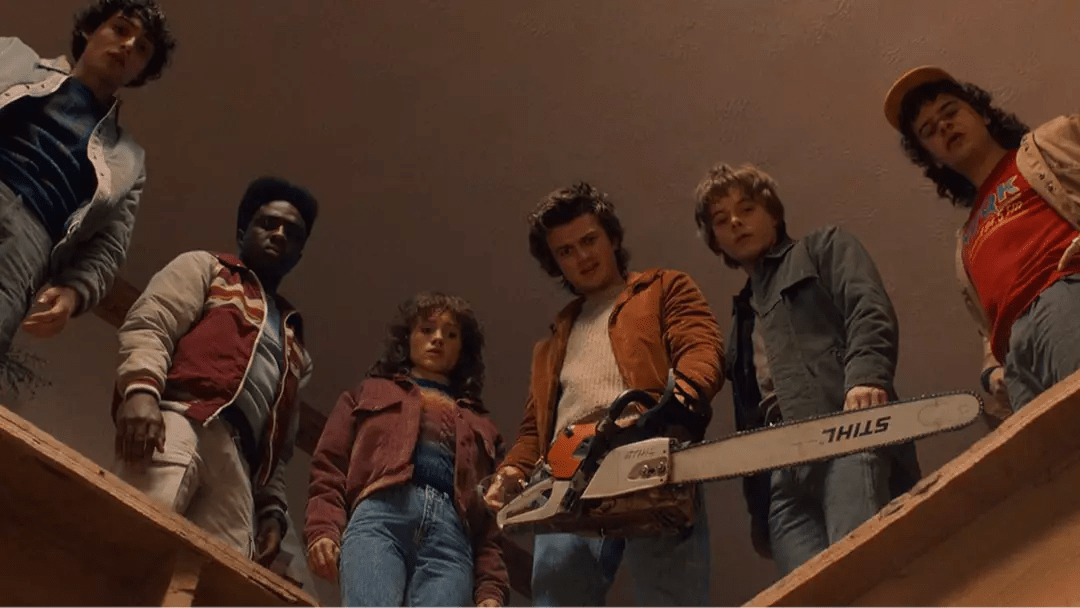
What really made the show shine, however, was how it also turned its inspirations on its head and turned character archetypes on their head. The central bully character, Steve Harrington, played by Joe Keery, becomes a hero as the show progresses, and a fan favourite character alongside that. The character was designed to die but was rewritten once the creator’s fell in love with Keery as the character. The season two-character, Billy, would take on the form of the more stereotypical bully, but once becoming part of the narrative in season two, would be featured in a smaller redemption arc. Hopper, the town sheriff, would start the series as the drunken mess who does not believe in the supernatural happenings, but would be soon developed into a multi-layered character who starts as the cliché trope because of the loss of his daughter, but believes in the supernatural once having clear proof.
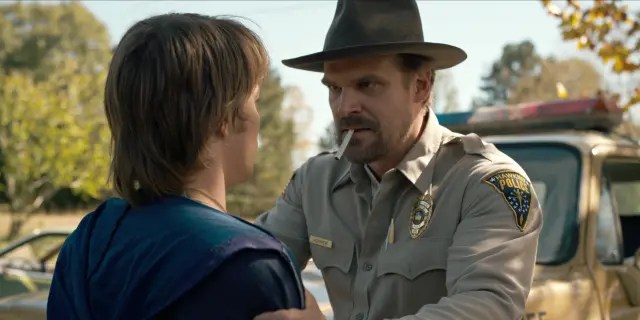
The characters became iconic and fuelled fan demand, as the fanbase of the show grew and grew. Fans would get into shipping wars, from demanding the inclusion of Byler, a fan-made relationship between characters Will and Mike, to an online campaign known as Justice for Barb, after the said character died in the first season. This campaign would influence a storyline in the second season, proving how engrained the fan base was in the creation of one of the 2010’s most popular shows. The central five child actors all seemed to strike a chord with audiences, as Finn Wolfhard, Millie Bobby Brown, Gaten Matarazzo, Caleb McLaughlin and Noah Schnapp deliver exceptional performances as young actors in the first season. The show follows the same route as the Harry Potter films, as the cast age with the show and begin to develop as actors as the show becomes more emotionally complex, with season two’s Sadie Sink joining the central child actors and proving herself a talent. David Harbour’s portrayal as Hopper becomes another backbone of the show as he balances a character who is warm but also intense, emotionally guarded but incredibly loyal. This character allowed the actor to finally break out and become the star he is now, starring in films in the Marvel universe and becoming a box office draw.
Winona Ryder, who would be a draw for the show’s nostalgia appeal, starring in 80s films like Beetlejuice, delivers an exceptional performance as a mother who is willing to do anything for her son. The characters are all brimming with charm, characterised by their connection to the audience through their own love for pop culture, but also in their dynamics with each other. Representation is also an important part of the show’s later season identity, with the exploration of Will’s coming out, and the introduction of Robin, a lesbian character who has become a fan favourite. Positive representation of LGBTQ characters in popular media is still hard to come by, and this is a very positive direction for the show. The show is immensely popular because the characters are distinct and memorable, but also flexible enough to move between the show’s varying tones.
The strength of the first season is that it is easily able to balance the various genres it is composed. It can pull of the Spielberg feeling, the wonder and awe that comes with referencing those films, but the show can also pull back into being a genuine tensely horror series. Comedy comes from the characters’ relationships and camaraderie, and never from the actual scenarios or the monsters. It can balance being essentially a creature feature at times, with a smart script that keeps the audience guessing with the mystery but also keeping it fun with its science-fiction elements. Later seasons would find it difficult to balance the various genres, with many critics pointing out how absurd season three was in going down the comedy angle, with the show swapping out the autumn leaves and low scale drama for neon lights and a summer blockbuster feel. The fourth season would embrace the blockbuster angle by splitting the characters up into smaller mini-movies, with each mini-narrative harbouring its own tone and genre that makes some hard to combine. The show’s strength is that it always harbours itself in realism, with all the extended world building that the show drags out, there is always a human element to the narrative.
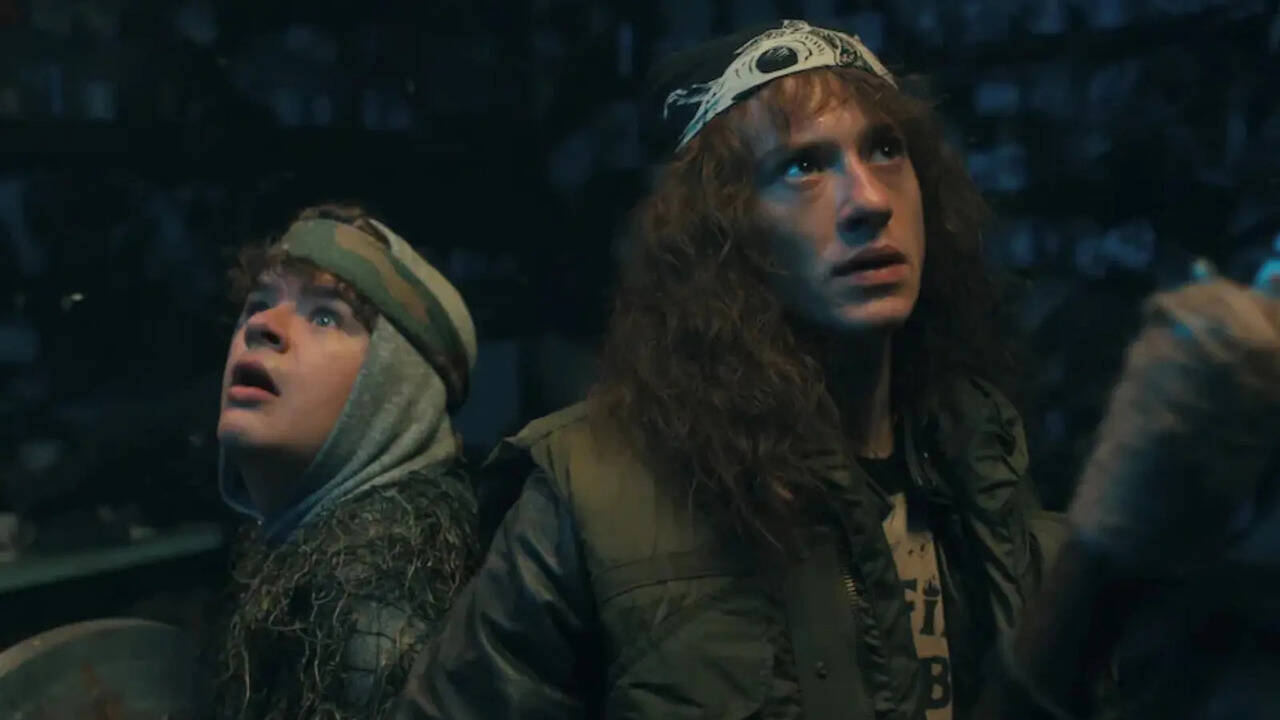
When crafting the show, the Duffer Brothers based their concept off MKUltra, a US project in crafting medicine and drugs that could alter human behaviour, and the show would continue to explore its narrative as being a complex combination of the 80s nostalgia explored before, and the real-world issues happening at the time. 80s films were heavily influenced by the paranoia of the Cold War, with many of the films featuring either a distrust for the American government, with the government being the villains, or a foreign enemy. Stranger Things does both, the American government being after Eleven is a common part of each season, but the Russians become a antagonist from season three onwards. The supernatural elements of the fourth season become a conflict in the town because of the current events of the Satanic Panic. The panic came about with over 12,000 unsubstantiated cases of Satanic Ritual Abuse in the 1980s, with major cases being linked to the blame of films, music and other popular culture. Season four’s newest character, Eddie, becomes linked to a series of murders that envelops him in the satanic panic movement, as he and the rest of the characters are blamed because of their involvement in Dungeons and Dragons.
Stranger Things is a cultural phenomenon that has survived a long period of time and remained able to be as popular as ever. It has nearly been ten years since the show first aired, and it is hard to argue against the fact that the show is probably the most famous show of the 2010s. It owes so much of its success to the films, music, television and games it takes ideas from, as its homages so many popular media, but it brings enough of its own twists that it stands on its own. The characters are memorable, becoming much as part of popular culture as the films they have based them on, and the mythology crafted for the show is rich enough to become important. 2025 marks the end of the show, but with promises of a spin-off series, a rumoured anime and the animated series premiering next year, the story is far from over.
 Rhys Reviews