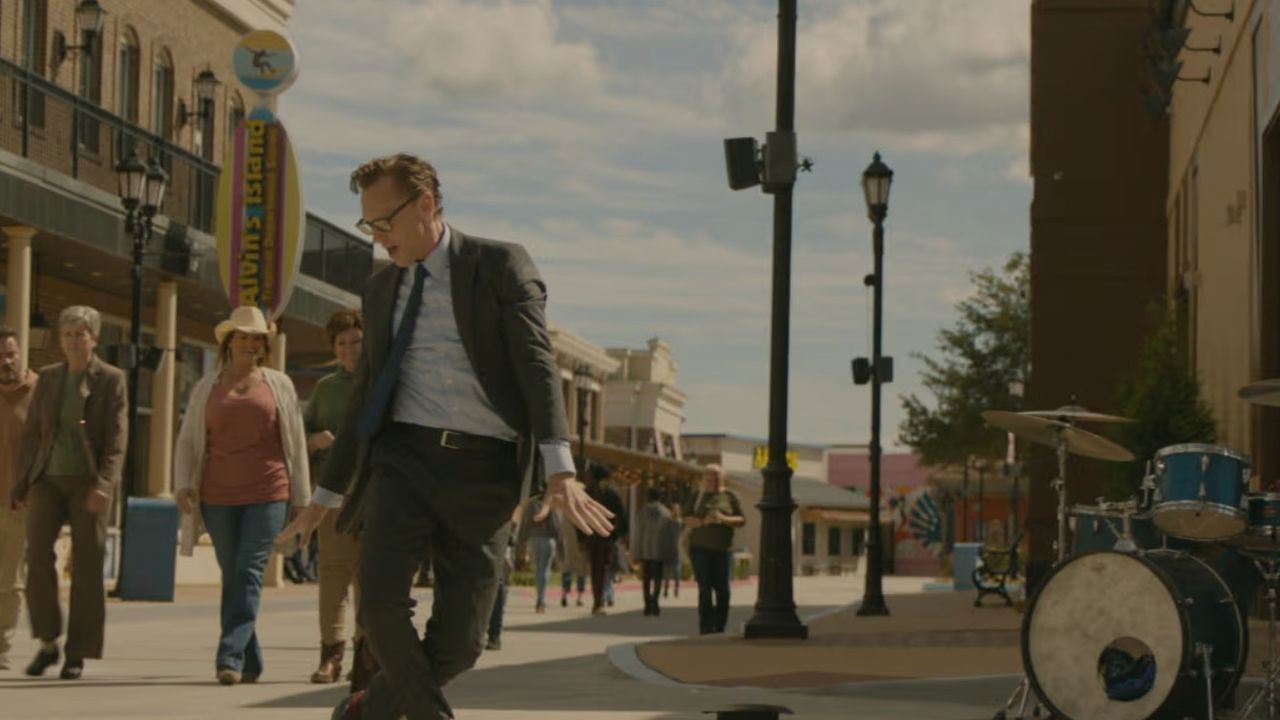
Stephen King is one of the most popular horror authors of the modern day, publishing almost 60 novels since the release of his first novel in 1974, known as Carrie. Though, most known as a horror author, it’s the author’s non-horror works that have made the biggest splash critically when being translated to the big screen. Director Rob Reiner’s 1986 film Stand By Me, based on short story ‘The Body’, and Frank Darabont’s pair of releases, 1994’s The Shawshank Redemption and 1999’s The Green Mile based on the short story and novel of the same name, stand as prime examples of the success of adaptations of King’s more dramatic pieces of work.
Director Mike Flanagan has already had tremendous success working with King, adapting two of his horror novels, Doctor Sleep and Gerald’s Game, into features released in 2019 and 2017 respectively. The director is also most known for his horror works, starting with his low budget feature Absentia in 2011, and most probably known to a general public for his horror Netflix television series, notably 2018’s The Haunting of Hill House, 2020’s The Haunting of Bly Manor, 2021’s Midnight Mass, 2022’s The Midnight Club and 2023’s The Fall of The House of Usher. Before he returns to the worlds of horror, with the director attached to a new Exorcist film and a Carrie television series for Amazon Prime next, Flanagan has sought out a lesser-known King-drama short story to adapt, The Life of Chuck.
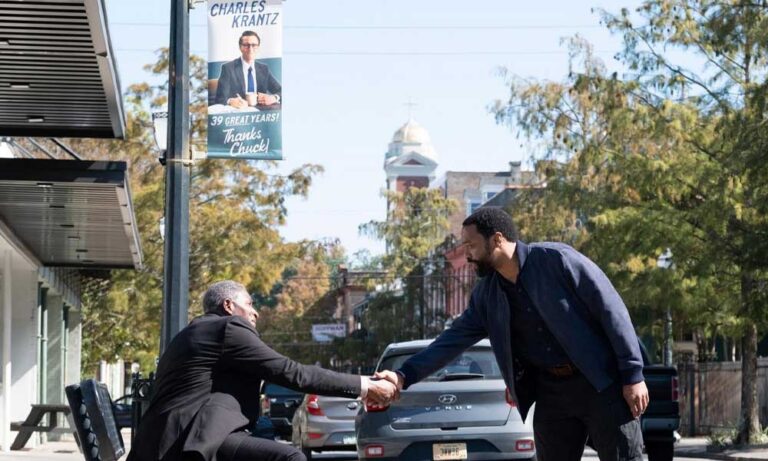
Told through 3 separate chapters, that tell the life of Charles Krantz, known as Chuck to his friends, as the film explores the character’s life backwards. Starting with the end of his life, and beginning with his coming of age, the film and original short story showcases how the people in his life shaped him to the man he is, exploring the multitudes of life and memory.
Through his previous two works adapting the horror author, it was clear to argue that King and Flanagan almost felt like they were made for each other, the connection between King’s introspective dialogues and Flanagan’s wordy monologues is palpable. The same can be said for The Life of Chuck, a short story that seems like it was made to be adapted by Flanagan. Flanagan makes the genius decision to give this film a voice-over narration, with Nick Offerman doing the voice-over duties, delivering narration directly from the novel word-for-word. This helps the narrative for sure, some of the strongest emotional beats come from Offerman’s delivery and words and helps to bring structure to such a weirdly structured film. Delivering accurate narration onto the big screen is not the only thing pulled from the short story, the film essentially brings everything from the story onto the screen, favouring expansion to some elements than removing any. Narrative-wise, the story of this film leans a lot more on the emotional side of the King adaptation filmography, its overly sentimental and wordy in its messaging, a choice that will not work for every audience member but works well for people used to Flanagan’s dialogue-heavy previous projects.
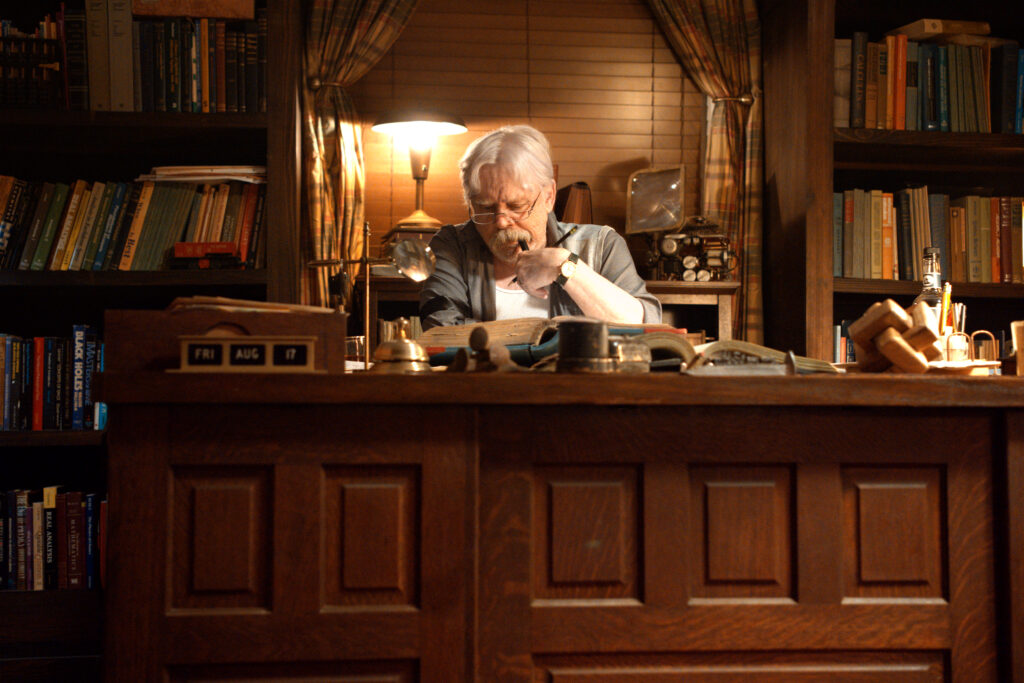
Flanagan’s Netflix series, mostly Midnight Mass, would be criticised commonly for its lengthy dialogue sequences, with many conversations between characters ranging between 3 to 5 minutes in length. These scenes could be argued as an example of show, don’t tell, featuring characters discussing the themes of the show, exploring topics of religion, greed, death and the meaning of life, but the writing was so well-realised and moving that it could be ignored for its lengthy inclusion. This film is a treasure-trove of lengthy monologues, the film being held together by the people that come in and out of Chuck’s life, imparting wisdom on him and then leaving the narrative. Running just under two hours, viewers who would criticise Flanagan’s meaningful but lengthy dialogue sequences may find the inclusion here more meaningful and emotional in their frequented but shortened inclusion.
The themes that the director explored in his long-running series also make appearances here, from discussion around religion, the fear of death and the meaning of life, all explored in new ways through both the characters and the central narration. The narrative also being in reverse chronological order allows for a central mystery to build, opening with characters dealing with the end of the world, and how this end links to a man they barely know, Chuck. Through the reverse chronological narrative, the film becomes more complex and denser as the narrative moves on, revealing answers and a central twist as Chuck’s life becomes simpler and more mundane, from adult to child.
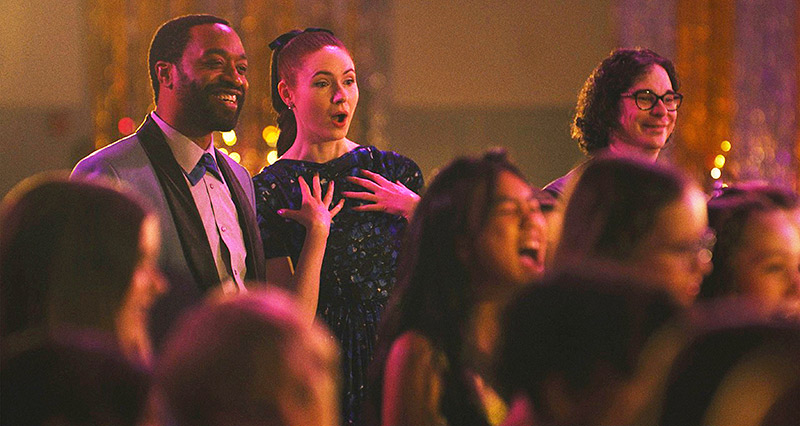
Flanagan’s film has delivered an incredibly surprising cast, with most of its biggest names being in small scenes and essentially cameos. Flanagan mainstays, that have populated his casts for a decade at this point each get a moment to shine, notably Rahul Kohli, Carl Lumbly, Kate Siegel and Samantha Sloyan. David Dastmalchian and Harvey Guillen share a fun singular sequence each which brings some welcome levity to the proceedings. Scream and now-Five Nights at Freddy’s star Matthew Lillard has a memorable sequence that will tug at the heart strings, and Nightmare on Elm Street’s own Heather Langenkamp makes a notable return to the big screen. Starting the film off with people reacting to Chuck outside of meeting the character ourselves, welcomes Chiwetel Ejiofor and Karen Gillan into essentially being the opening acts main characters and they handle the focus perfectly. Newcomers to the worlds of overlong monologues, they seem naturals at talking about the meaning of life and death itself. Mark Hamill and Mia Sara give heartbreaking performances as Chuck’s grandparents, bringing some realistic humanity to such a fantasy-esque narrative.
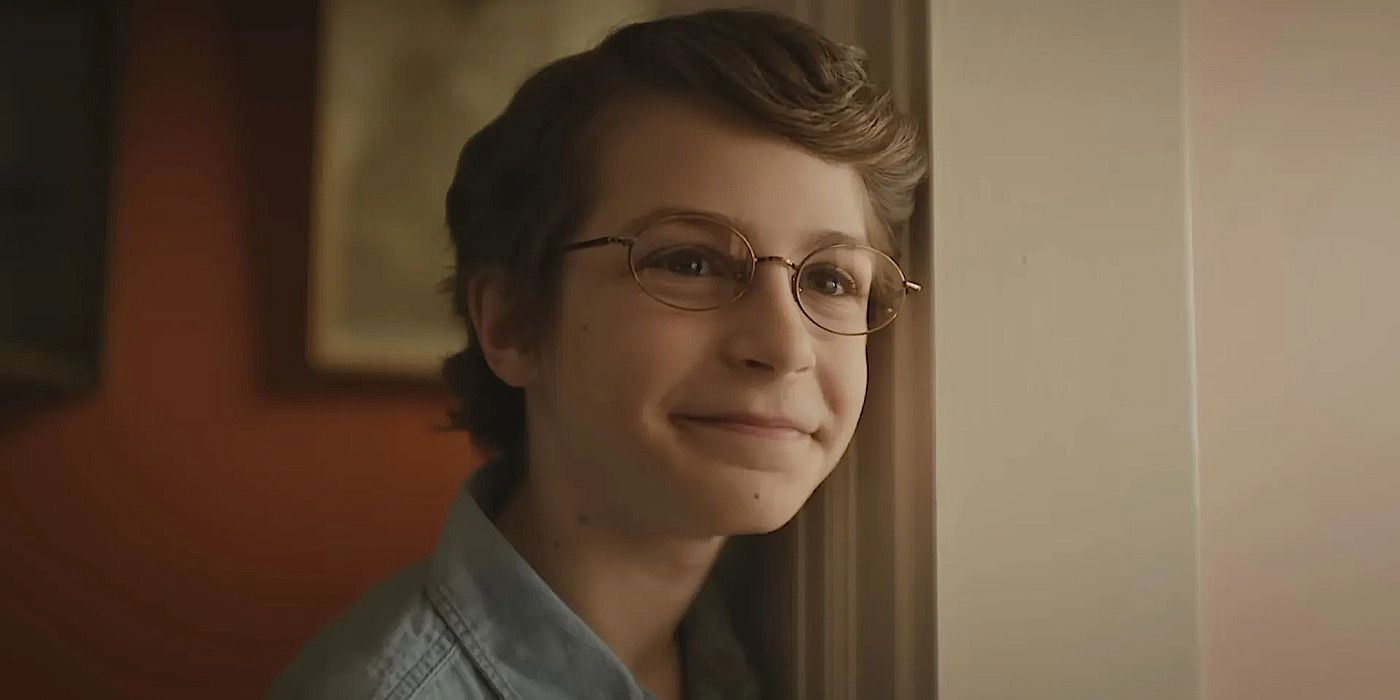
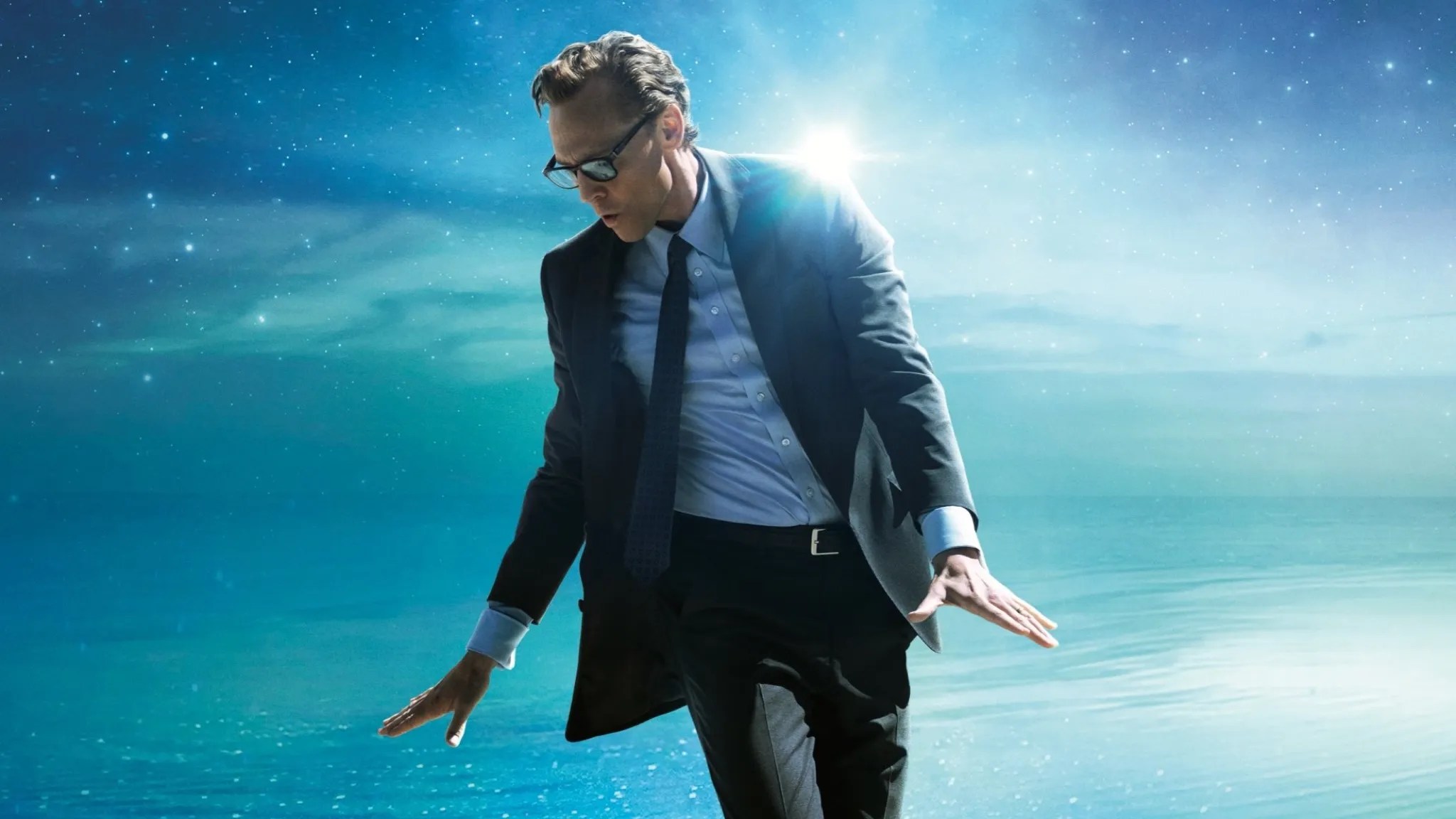
The titular character has been marketed as being played by Tom Hiddleston, but the Marvel-star is in very little of the film. Chuck’s most common actor is newcomer Benjamin Pajak as the 11-year-old version of the character, and he delivers the true heart of the movie through his performance. The entire narrative reveals itself through his impassioned performance, reflecting himself through Hiddleston’’s short tenure as the character, selling the positivity of the character amongst all the pain he encounters, his love of dance and the teenage angst that comes at that age.
The Life of Chuck stands strong next to some of King’s most successful adaptations. Mike Flanagan just knows how to breath the cinematic language into the author’s texts, delivering a scene like a man and woman dancing to a reggae beat which any other director could make silly or heartless, but it ends up on the screen as a heartfelt and moving sequence. It may be overly sentimental at times, but the heart is in the right place, it’s a movie which feels like a lifetime, filled with so many characters and actors giving a moment of wisdom. Each sequence feels better than the last, feeling like a film designed perfectly for fans of both Flanagan and King.
 Rhys Reviews