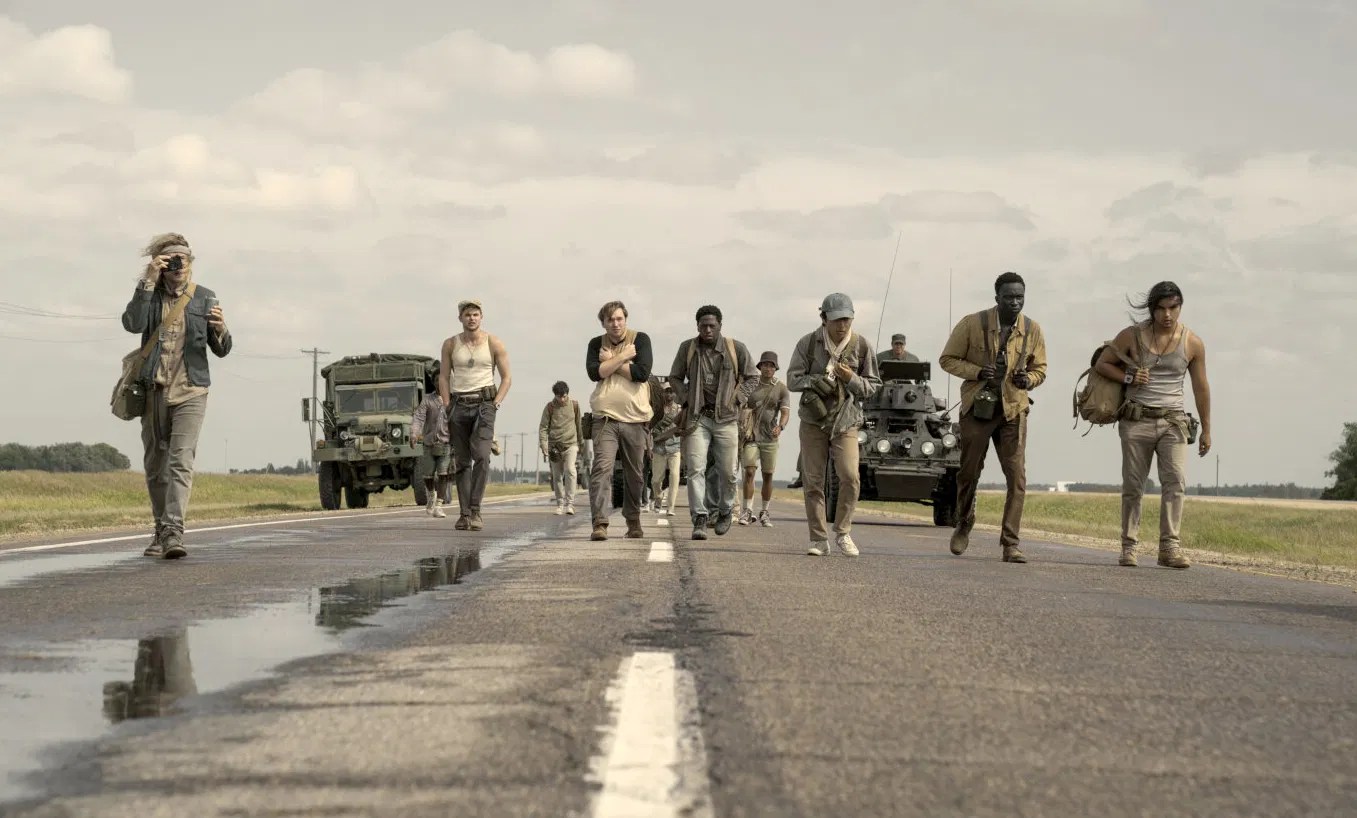
Stephen King has made a long career as one of the most successful American horror authors of all time, crafting horrific stories from Carrie to Salem’s Lot, or from IT to Christine. However, the author has also stepped outside of that box with various novels of various other genres, from the crime thriller of Mr Mercedes, the fantasy story of Eyes of the Dragon, or the science-fiction narrative of 11/22/63. Dystopian narratives have an equal importance to the career of King, mostly published under the authors’ pseudonym, Richard Bachman. King wrote five novels under this pseudonym, with his 1981 novel, Roadwork, and 1982’s The Running Man, which will soon hit the big screen directed by Edgar Wright, falling under this category, but the most famous would be 1979’s The Long Walk.
The Long Walk serves as King’s first written novel, written during his freshman year at the University of Maine, but would not be released until well after King’s first published novel, Carrie in 1974. A film adaptation of the novel would be in development for years, with Night of the Living Dead-director George A. Romero being considered as director in 1988, and Frank Darabont, who was on a strong run of King adaptations after the release of 1994’s The Shawshank Redemption, 1999’s The Green Mile and 2007’s The Mist, was able to secure the rights to the novel in 2007. The project was finally put into active development under Lionsgate, with Francis Lawrence directing, announced in November 2023, and the film adaptation has finally been hit the screen.
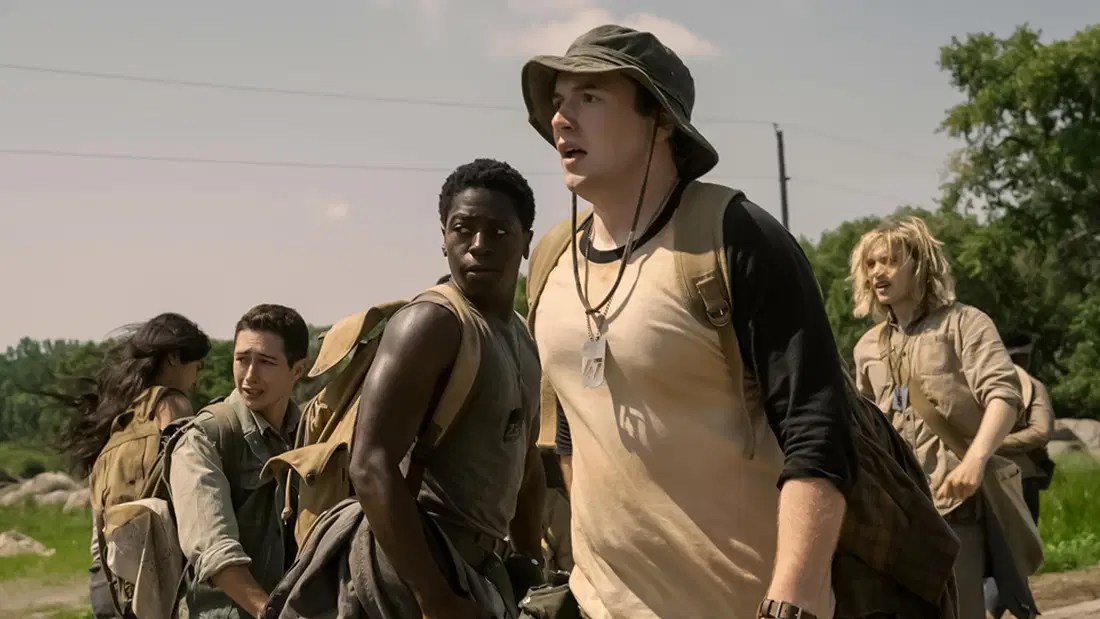
The Long Walk is set in a dystopian future ruled by the mysterious Major’s regime, where an annual event takes place where a group of youths must walk for miles until there is only one left. The event promises a wish and a large cash prize, as each contestant walks to win, and aims to not fall behind their pack or they will earn their ticket, or in other words, their death.
Dystopias and post-apocalyptic settings are the backbone of Francis Lawrence’s career, with only his second feature being the Will Smith-starring zombie feature, I am Legend. Though not directing the original, Lawrence would be the helmer of the Hunger Games franchise, directing 2013’s Catching Fire, 2014’s Mockingjay Part 1, 2015’s Mockingjay Part 2 and then 2023’s prequel film, The Ballad of Songbirds and Snakes. His next feature will even be 2026’s The Hunger Games: Sunrise on the Reaping. This long connection with the dystopian genre has made him the perfect choice to helm this adaptation, and Lawrence proves himself as the right choice throughout this feature. A relatively straightforward story, its essentially just one hundred minutes of walking and conversations between people, but Lawrence can breathe enough life and style into every shot that keeps the contained narrative continuously entertaining and intense. Frequent uses of beautiful long shots and tracking shots that showcase the scenery and landscapes, reminding the audience of the beauty of nature and the hope that comes from it in such a depressing narrative.
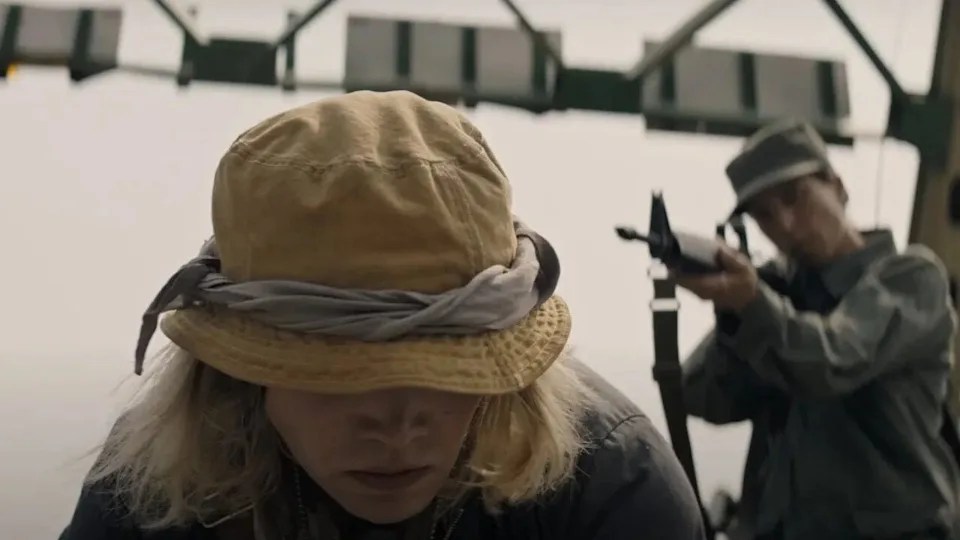
There’s a thrilling uphill sequence, as the camera tilts with the characters and the audience feel the pain and suffering. The film does not shy away from the violence, it is bloody and disgusting at times, with each kill bleak and depressing. Disorienting editing, shaky camera and a loss of audio are all used frequently to get a view into the character’s heads as they lose consciousness during the long walk, as a visual graphic showcases how miles they have walked. Jeremiah Fraites’ score also sells the terror at the centre of the plot, booming synths showcasing the meaningless of this event as the central characters face a threat that was made by their own society to cause them pain.
The tension of the film really comes from how much the film excels in making each contestant feel like a three-dimensional character, making the audience terrified for when each member falls. There are main characters clearly, but even the lesser characters, who go out early or are more in the background, have a scene or two to make them memorable, and make their deaths feel less like creating a kill count. Cooper Hoffman and David Jonsson serve as the central relationship of the film, the uniting characters that bring all the themes into play and surround every other character becoming developed and nuanced. They represent two separate sides of the coin in responding to a dystopian future, Hoffman’s Ray is pessimistic and easily succumbing to the violent nature of life, and Jonsson’s Peter is gentler and kinder, believing in humanity, nature and the possibilities that come with freedom. It is an interesting dichotomy that the film plays with, as they both argue their points but come closer together because of their shared pain but differing worldviews. Jonsson proved himself as a powerful actor with Alien: Romulus and he continues to wow here, coming out with the most heartfelt and human performance of the entire cast.
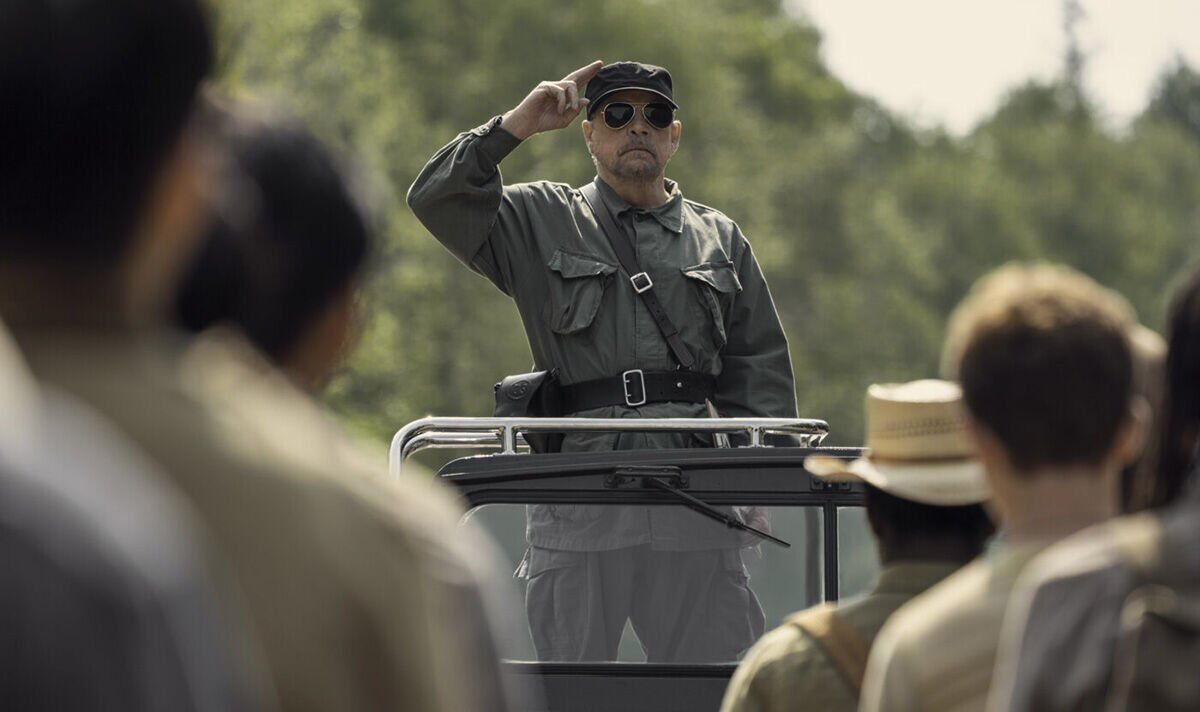
That is not to say, however, that the rest of the cast are anything to scoff at, Garrett Wareing, Tut Nyuot, Charlie Plummer, Joshua Odjick and Karate Kid-star Ben Wang all deliver memorable performances, with enough backstory and characterisation that their secondary roles do not ever feel secondary. Mark Hamill also slides perfectly into the role of the Major, he is in so little of the film that every scene feels completely memorable, as the film talks about him more than shows him, and everything that talk about makes him even more vile for when Hamill makes his presence known.
For fans of the novel, the film is an incredibly faithful rendition of the novel’s events, essentially just making changes to character’s backstories to make others hit more and remove the repetition of each character’s homelife. The source texts’ narrative is straightforward, so small changes are needed to make it more cinematic, but the series of events are the same, and the biggest changes do not come until the conclusion, which fits into the films various themes that are more present here than in the source.
The text features crowds following the walkers around the Long Walk, but this adaptation completely removes this, really hitting home the normalisation of violence and the commercialisation of violence when people can just sit at home and view. Pain comes as a necessity to the structure of this dystopia; the entire thing would fall apart without it and its that fact that drives the characters. The film is increasingly sombre, violent and depressing, but there is always a touch of humanity and hope through the characters’ humour and connection to one another, questioning what will succeed to the end, humanity or the governmental bodies that seek to crush that humanity.

 Rhys Reviews