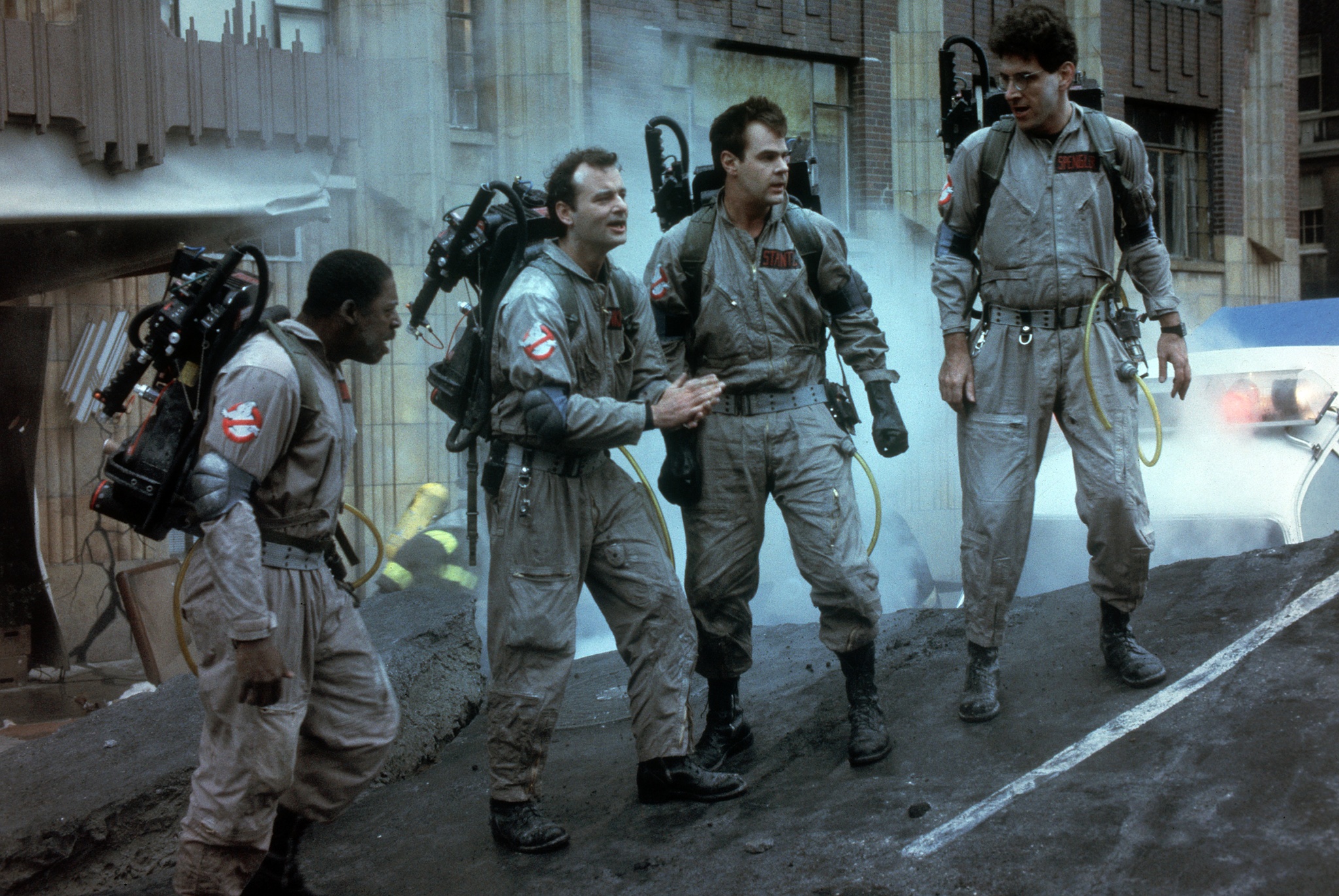
Released in 1984, a film about four down-on-their-luck working class men who start a ghost-catching business to make money became the start of a long-running multimedia franchise. Ghostbusters, the brainchild of star Dan Aykroyd, was originally conceived as a big-budget project featuring Aykroyd and John Belushi as they hunted down supernatural threats across time and space. After the death of the former and director Ivan Reitman joined the project, the film was downsized to the New York-set supernatural-comedy hybrid that it is remembered fondly for now. It is hard to argue against that Ghostbusters was a lightning-in-the-bottle film, releasing in the height of the careers of Aykroyd, Bill Murray and Harold Ramis after their stints on Saturday Night Live, and capturing a moment in Hollywood where blockbusters and franchise cinema were becoming a hot-commodity.
A film that spawned the future of big budget comedy features and set in a very specific time in America which formulated the narrative, and it’s a film that is hard to replicate. The popularity of the film spawned one of the pillars of multimedia merchandising, off the back of the success of Star Wars’ similar turn in 1977, launching the follow-up animated series The Real Ghostbusters in 1986 and its sequel, Extreme Ghostbusters in 1997. The theme song ‘Ghostbusters’ by Ray Parker Jr was a number one hit for 3 weeks, spending 21 weeks on the charts, and starting the trend of film-artist theme song collaborations. Reitman would return for a sequel in 1989, and a third film was eventually cancelled after the death of Ramis in 2014, instead being followed by a reboot in 2016, and a direct-follow-up to the original directed by Reitman’s son, Jason Reitman, in the duology of Ghostbusters: Afterlife in 2021 and Ghostbusters: Frozen Empire in 2024. Each subsequent film has been a success of course, successful enough to warrant continuations, but never has the franchise hit the peak of the original, with the first sequel seeing diminishing returns instantly, seeing negative reviews on release and a drop in box office, earning a worldwide gross of $215.4 million against the original’s $282.2 million.
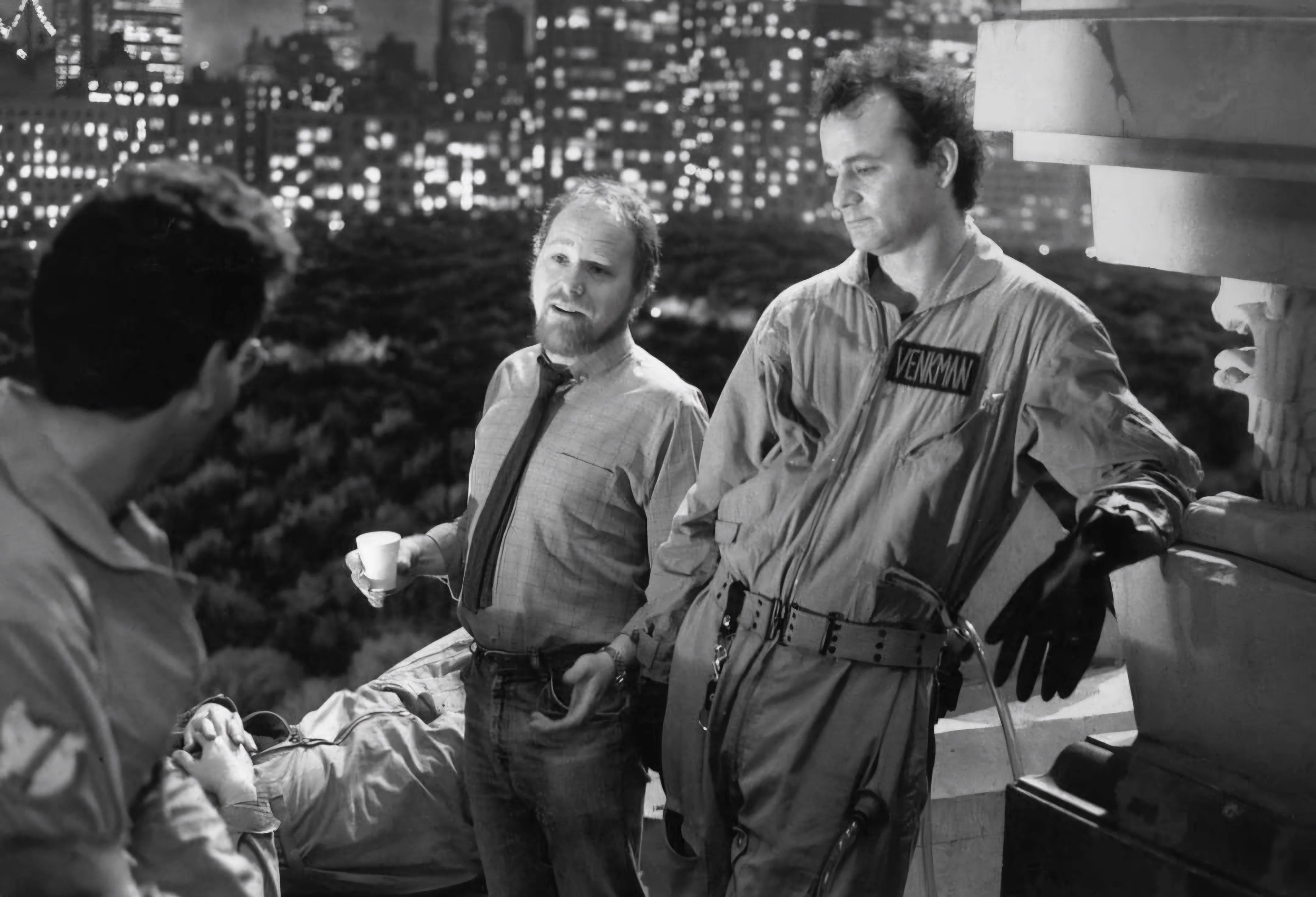
Director Ivan Reitman found success with his collaborations with star Bill Murray in comedies Meatballs in 1979 and Stripes in 1981, with his prior work being the horror-comedy feature Cannibal Girls in 1973. This collaboration between the pair would come as one of the biggest strengths of the feature, as the passion project of Aykroyd became a star vehicle for Murray, playing lead character Peter Venkman. Both star and director’s background in comedy lent the film a comfortable edge in bringing alive the SNL-like comedy that would be absent from the sequels. The ghost-catching business the protagonists would take part in would be a clear spoof on exterminators, capturing the reactions of the everyday working-class man as a blockbuster hero, while also making time for the scientific backdrop that Aykroyd was so interested in. Murray plays his role with deadpan expressions, playing the character as a suave conman who is straightened out by a romantic encounter with Sigourney Weavers’ Dana Barrett. Aykroyd’s Ray Stanz is the fanatic of the group, one of the two scientists that make up the cast as the character reflects the actor’s obsession with the supernatural.
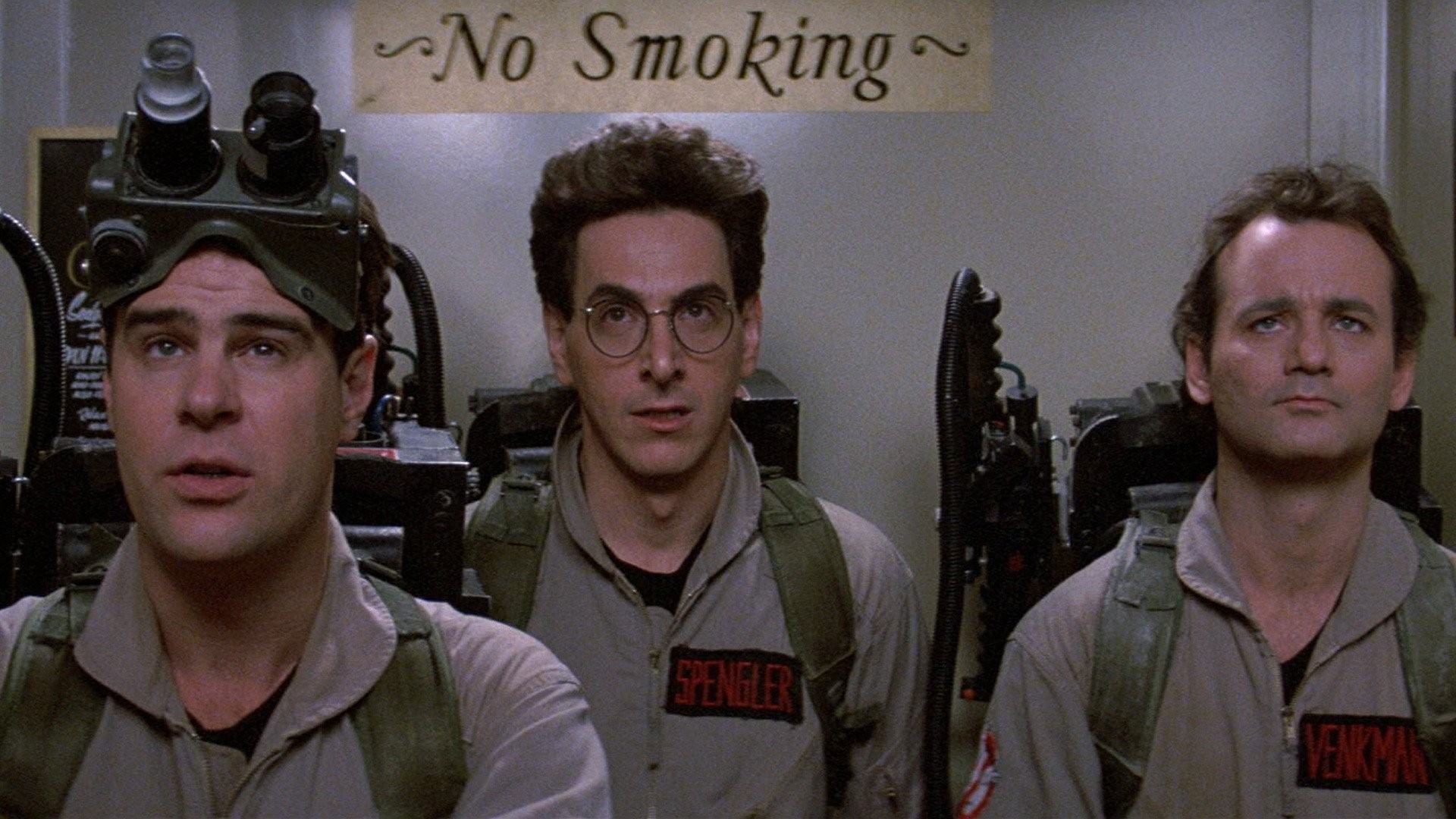
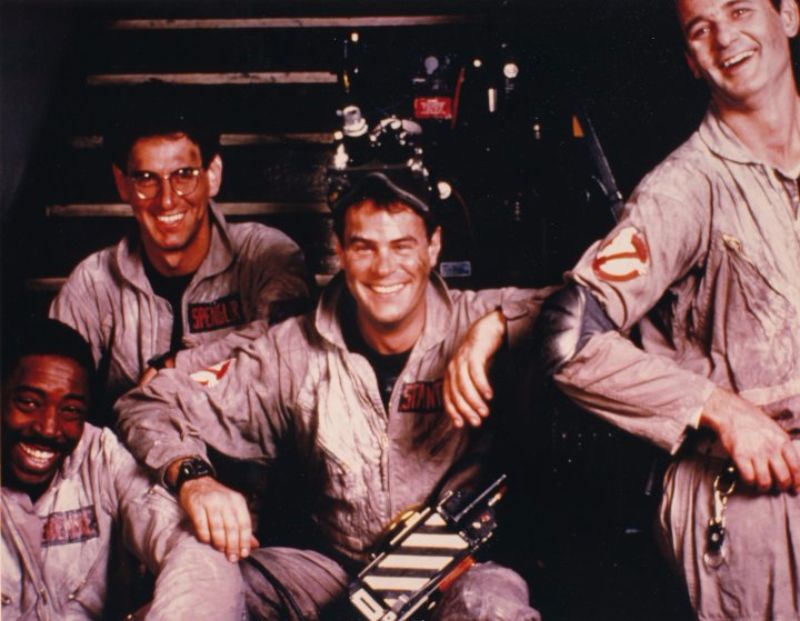
Ramis’ Egon Spengler serves as the straight man of the group, a colder and more serious scientist whose comedic input comes from his own deadpan delivery, a character favoured by Ramis when he co-wrote the script with Aykroyd. Ernie Hudson’s Winston Zeddemore joins the central cast late into the runtime and serves as the film’s ‘normal’ man of the group, just a man trying to make money with no scientific backdrop. These four characters are central to the film, using the supernatural elements as a backdrop for situational comedy and allowing the actors to bounce off one another. One of the key sequences to show this is the Ghostbusters’ first job, with the central three bouncing off each other in a still middle shot in the elevator. Once Egon turns on Ray’s proton pack, Egon and Venkman scoot further away from him, eyes raised high as they hope it doesn’t explode. They become startled once they exit the elevator, shooting a maid and her trolly with their proton packs as they scream in terror, and would soon follow that mess with destroying the entire interior of the building they are trying to save from Slimer. Scenes like this showcase the importance of the actors’ heightened performances and situational comedy to the success of the original feature.
Sequels struggled with continuing these comedic threads, with one of the major complaints of Reitman’s initial sequel was that the comedy was made more family-oriented in response to the success of the animated series. The film’s plot was also critiqued for its similarities to the original, replicating the events of the original and resetting most character’s arcs for the beginning of the film. 2016’s reboot made a return to the comedy of the original, but with a swapped gendered cast it became a controversial film on the internet. Both late sequels by Jason Reitman reflected two separate looks at the franchise, as Afterlife took focus as a serious-drama dealing with the brand as almost mythological, and then Frozen Empire being easy to be described as a live-action version of an animated series episode. This mismatch tones led to the former film to be seen as a failure critically and at the box-office, reflecting how far the franchise has strayed from the original. Ghostbusters becoming a franchise has become one of its major weaknesses in some regards.
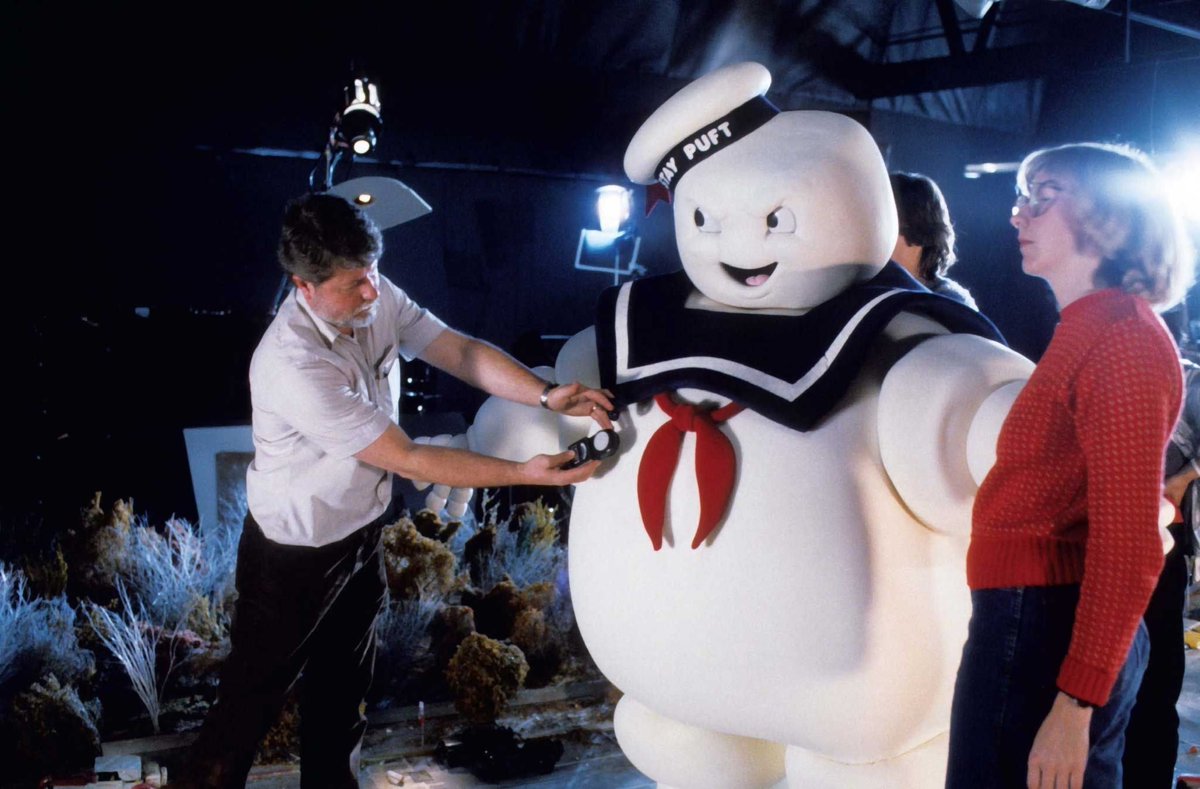
Socio-political commentary precedes over the narrative of Ivan Reitman’s original feature. The film reflected the new free market that came after the 1970’s financial turmoil that inspired the look of a grungy and uncomfortable New York that preceded over films like Taxi Driver and Escape From New York. The grunge was still present moving into the 1980s, but Ghostbusters reflects the freedom that comes from new President Ronald Reagan’s sweeping reforms, reflecting a feeling of togetherness and comfortability for the working-class people. Reaganomics focused on limited government spending and the removal of state regulations, in favour of a free market provided by the private sector and private businesses. The incoming movement of free markets and mass-consumerism because of so, is reflected in the film commonly, from Ray being unable to think of anything other than a consumerist mascot in The Stay Puft Marshmallow Man, or the first encounter with Zuul being in a stocked fridge. Ghostbusters’ draws its comedy from being a satire of American way of life moving into this era, spoofing the academia and intellectuals of the upper classes, governmental officials and tax officers, and the average New Yorker.
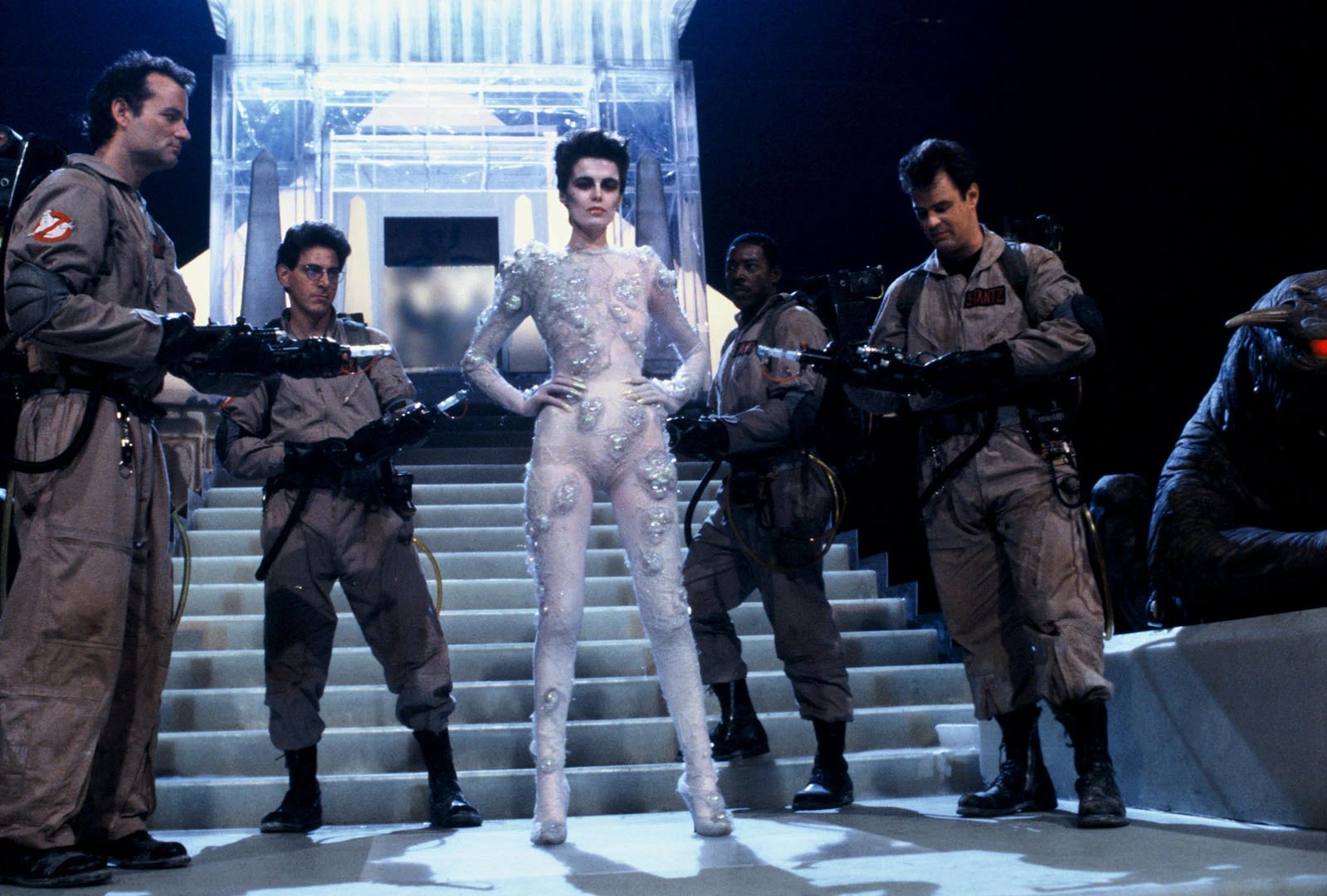
The entire plot is based around the private business owned by the four protagonists, as the governmental official, Walter Peck, played by Willaim Atherton, causes more problems for them. Peck’s involvement in trying to close this private business leads to the ghosts being freed and the eventual freedom of lead ghost antagonist Gozer, marking Peck as the true antagonist of the film. The movie sparks a connection to the new working class that had finally been given a leg over in making money, as the government is incapable of containing the threat, while the private sector comes in to save the day, working for a fee, however. The mayor picks a size in the conflict; paying for the Ghostbusters to save the day once he realises his own backers cannot do much to help and Peck reveals himself to be useless, and after being reminded that his choice will help to save millions of registered voters that could help him stay in power. It is a still cynical look at America, reflecting government officials only doing what is right, only helping the private sector when it benefits them as well.
Removed from this political context, the cynical nature of the first film is lost in the sequels. Ghostbusters II reflects the commercialisation of the franchise at the time, but in less of a spoof and more leaning into becoming a product. It’s central plot around a river of slime appearing in New York which is leading to New Yorkers becoming more hostile to one another feels more cartoonish in nature. There is still political commentary, with the Ghostbusters institutionalised after being outspoken around their ghost encounters, being forced to give up their jobs by the government that looked like fools because of them. They are only brought back into action when the government lift their ban to save the day when the government once again fail in containing the threat, reaffirming the private sector’s importance against governmental bonds.
What becomes the problem is that the film is mainly just reaffirming the political context of the original, copying the events and doing them just again, but this time in a less serious manner and with more childish antics. The Ghostbusters are locked away in the first film as well, with the franchise running out of ideas from its first sequel. 2016’s franchise reboot would see the same series of events happening, with governmental officials stopping the now-female Ghostbusters from doing their work, but removing the political context of the original, it just feels like an imitation. Similar could be said with 2024’s Ghostbuster: Frozen Empire, which brought back Peck to threaten the Ghostbuster’s with closure once again, ticking one more of the franchise’s tropes off the list.
In the years after the release of the original Ghostbusters, the popularity of the film’s mise-en-scene would transcend the original context of the film. A film about working class pest controllers who save the day because the government cannot stop the pests, and they save the day for a quick buck, would be remembered for the pop culture toys that hit the zeitgeist. Slimer, the Stay Puft Marshmallow Man, the Proton Pack, the Ecto-1 would all become the face of the franchise, morphing the franchise from one which placed comedy foremost other its blockbuster qualities, into one that would market itself as the newest summer action blockbuster. The newest entry, Frozen Empire, seen the entirety of New York encased in ice as an end-of-the-world threat, with almost eight Ghostbusters assembling to stop the threat. The days of the franchise being a simple situational comedy, using ghosts as backdrop, has long gone, but the original film remains as an important touchstone in cinematic history, a lightning-in-a-bottle feature.
 Rhys Reviews