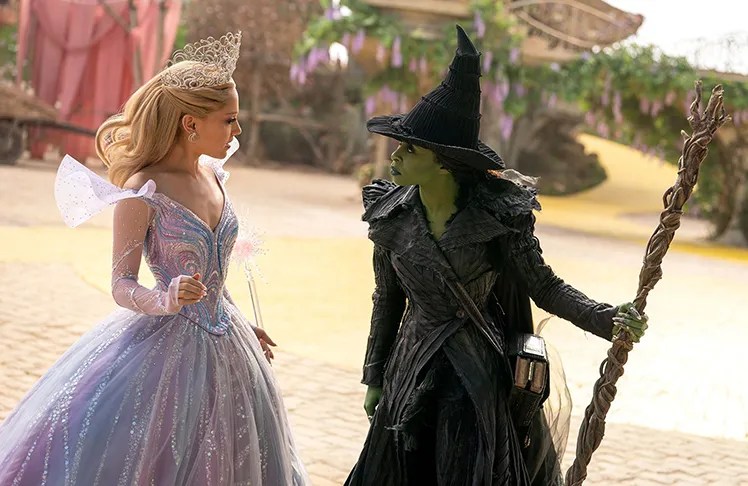
There have been various adaptations of L. Frank Baum’s novel The Wonderful Wizard of OZ since its release in 1900, from the 1974 stage version known as the Wiz, the NBC television series known as the Emerald City, or the iconic 1939 film that has become synonymous with the property to this day. One of the most bizarre takes on the material came in 1995, with Gregory Maguire’s novel, Wicked: The Life and Times of the Wicked Witch of the West, which reinvented the story of Oz through the eyes of the Witch herself, renamed Elphaba. The novel was more adult focused in its storytelling, with some of its sequel books, 2005’s Son of a Witch, 2008’s A Lion Among Men and 2011’s Out of Oz, being described sometimes as ‘edgy’ in content. The children novel made by Baum was reinvented in one focusing on themes of terrorism, racism, nature versus nurture and propaganda. The fact that this novel would be then turned into the second most popular Broadway musical of all-time would surprise anyone, with Universal Pictures acquiring the rights for a film adaptation of the novel, with actresses such as Demi Moore, Nicole Kidman and Whoopi Goldberg rallying for the lead role, before composer Stephen Schwartz convinced the studio to pivot to musical theatre.
Opening in 2003, the musical has become the fourth-longest running Broadway show in history and opened the door for Universal to once again become interested in adapting the musical now to film. Plans started all the way back in 2011, with director Stephen Daldry announced to direct in 2016, with Lady Gaga and Shawn Mendes rumoured to be up for major roles. Daldry left the project by 2020 after major setbacks in production, with the film missing various release dates in favour of Universal releasing films like Cats and Sing 2, alongside the COVID-19 Pandemic stalling production. 2021 hit the news that Jon M. Chu boarded as director, and the film finally hit theatres as part one of two in 2024, starring Cynthia Erivo and Ariana Grande. A year later, and the idea of splitting the musical adaptation into two films, one adapting act one, and one adapting act two finally shown the light of day, as Wicked: For Good has opened worldwide.
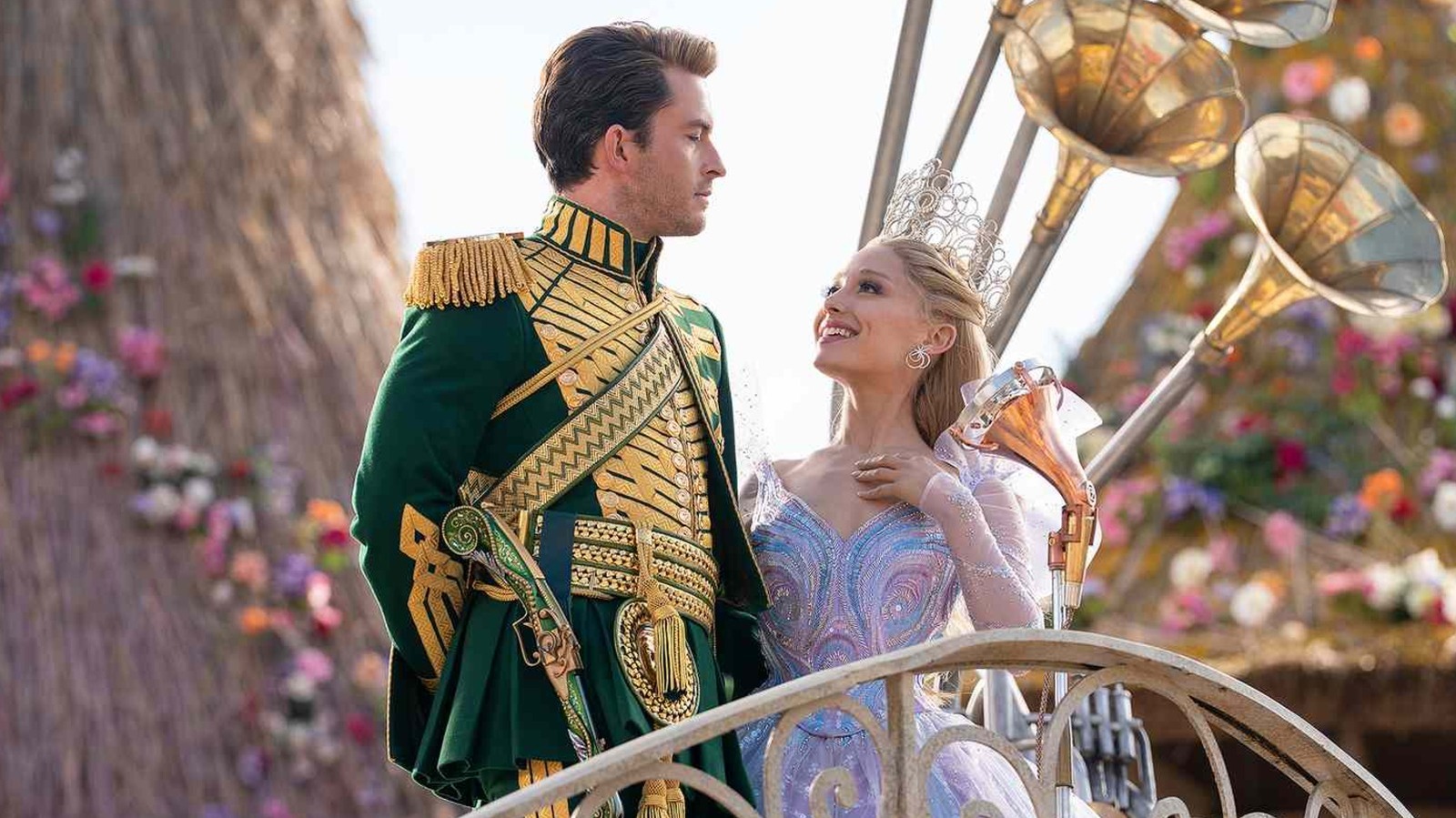
Adapting the second act of the play, Wicked: For Good follows after Elphaba found out the truth of Oz and the Wizard. Now with a rift between her and her best friend Glinda, the two begin to embrace their roles as The Wicked Witch of the West and Glinda the Good, as the film depicts the last days of the Witch, and eventually overlaps with the arrival of Dorothy as the events of The Wonderful Wizard of Oz takes place.
The original film became a cultural phenomenon when it was released a year ago, finding itself on various best of the year lists, the music trending all other social media and the film finding itself nominated for ten Academy Awards, including Best Picture. The film was not immune from having various faults showing through, the direction is very work-like at times and the colour palette is very dull and muted until the film’s glorious conclusion, but was filled with whimsy, charm and a wonder that made it popular. The film closed out the same way Act One of the plays does, with a triumphant rendition of Defying Gravity, a climatic moment that leaves the film off with a sense of wonder, all the film’s faults leaving the minute the song hits. Going into For Good, the film was in a good place, left on a wonderful hook, with massive boots to fill, but the film really fails to grasp the potential it could have. For Good picks up in the middle of the action, lacking a clear three-act structure, instead having a various number of events happening in a row because the plot demands it and because the book it is trying to connect to has those events happen. It has been long debated that the second act of Wicked is where the play faulters, and it really shows here in this adaptation.
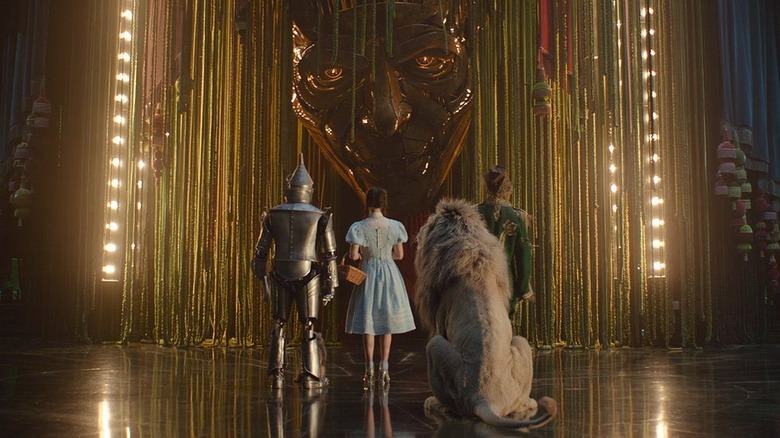
Splitting the play into two films leaves the first film with the fun and the whimsical aspects of the story, and the second film with the dull and contrived. Every character in the narrative must become a character from the original novel, and most of them feel shoe-horned in, in a movie overstuffed with continuous contrived plot elements. It is a tonally confused film, trying to both handle the characters it had introduced in the original film and then also addressing the events of Baum’s novel, and attempting to turn that childlike wonder from those books into serious plot elements. The addition of characters like the Cowardly Lion, The Scarecrow, Dorothy and The Tin Man feel shoe-horned into the narrative, less like they are part of the story and more like ticking boxes to signal the classic elements missing from the prior feature. The prior’s film left off in such a way that it did not even need a sequel, it tells a completed story that could have lead into the events of the 1939 original film, and this film lacks that satisfactory open and close, lacking any substantial character arcs or natural plot progression, everything happens in a rush to get to the ending, and because it needs to tie into the original novel.
The three central performances of the original film continue to impress. Cynthia Erivo, Ariana Grande and Jonathan Bailey are the highlights of the film in their roles as Elphaba, Glinda and Fiyero respectively. Erivo and Grande received Academy Award nominations for Best Actress and Best Supporting Actress for the previous film, and for good reason, they are incredible in both these films. They share wonderful chemistry in their scenes together, and some of the few charming and humorous moments from the dreary film come from their moments together. Bailey is a Bonafide star, he commandeered the screen in his small number of scenes in the first film, and this film turns him into more of a serious star, and gives him a more sizeable role, but he is easily able to hold his own here. One of the major problems with this film is that there is no song featured here that can rival any of the songs featured in the original, and no song that can hit the same heights as Defying Gravity.
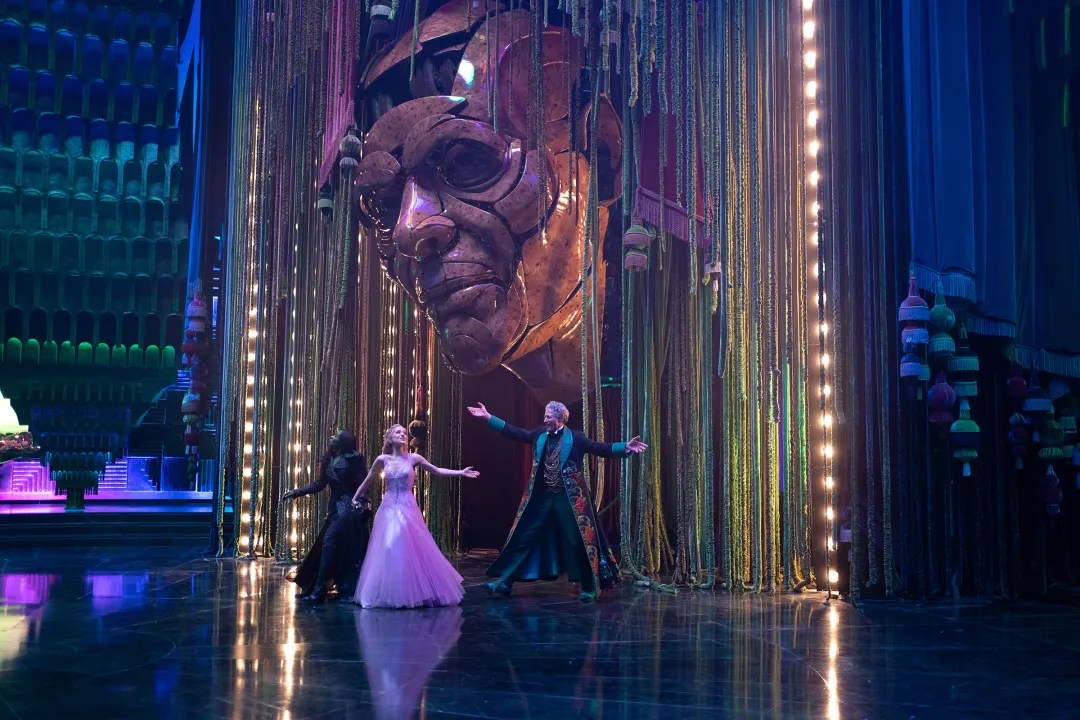
‘No Good Deed’ and ‘For Good’ are both songs that attempt to hit those heights and fall short but are easily the highlights of the film’s soundtrack, and ‘Wonderful’ feels like one of the only musical numbers that attempts something visually distinct. The three central performers do wonders across all the film’s tracks, even if the songs aren’t as memorable as the ones featured in the original. The appearances of Michelle Yeoh and Jeff Goldblum continue to provide small problems for the films, similarly to the first feature, as Yeoh delivers another confused performance as Madame Morrible. Both performers are not as gifted musically as the other stars, which leaves their musical numbers as feeling awkward and stilted.
The tone of the film is incredibly sombre and serious, leaving the whimsical nature of the first half behind for a film which feels ridiculously unpleasant to watch at times, taking it so serious at points and ending up with some elements feeling humorous accidentally. The biggest problem of the original feature came from Chu’s direction, which was lacking visual creativity, and looking washed up and grey in the lightning and colour grading department. It was a visually dull musical, which is the last thing a musical really should be, and this film matches that visual dullness with a dull narrative and tone as well. The colours of the film are washed out and incredibly dark in the lightning department, and the musical numbers lack any creativity visually. There are no big set pieces, with each musical number essentially being two characters singing at each other in flat shot-reverse shot or long takes. Chu can do interesting looking musical numbers, he showed it off in 2021’s In The Heights, but he fails to showcase those directing skills here.
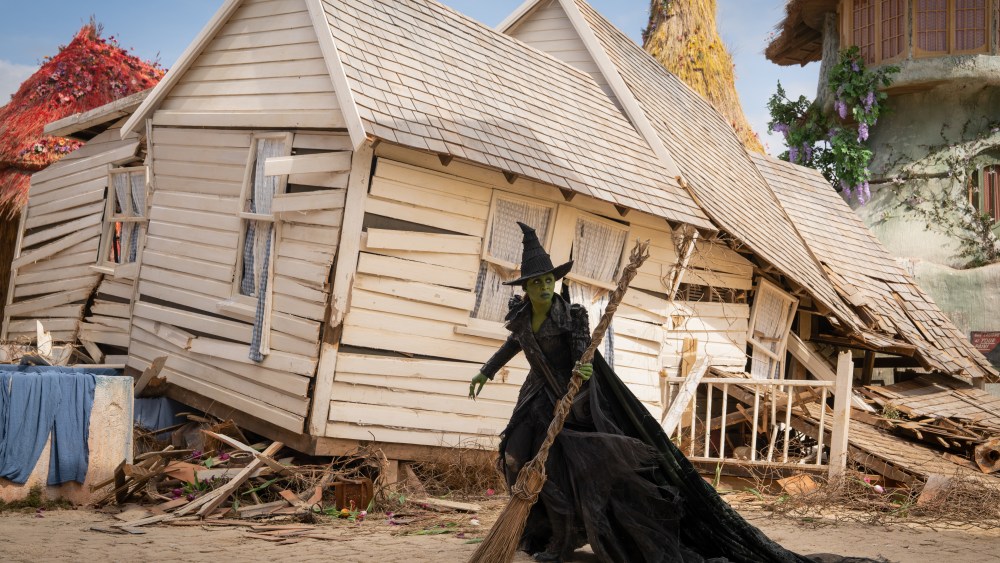
Wicked: For Good just pails in comparison to its predecessor, it is a film attempting to justify its existence in reinventing moments that have been done in the original text and the iconic 1939 film. Wicked left on such a triumphant note that the change to a sombre tone for the sequel leaves the film feeling like an unpleasant watch, as the great performances from Bailey, Erivo and Grande get lost in the shuffle of middling music and a horrendous colour palette. The problems that shown up in the prior feature are only more apparent here, as Chu fails to deliver a visually spectacular film, leaving off with a muddy and grey film which looks at home with a funeral.
 Rhys Reviews
Leave a comment