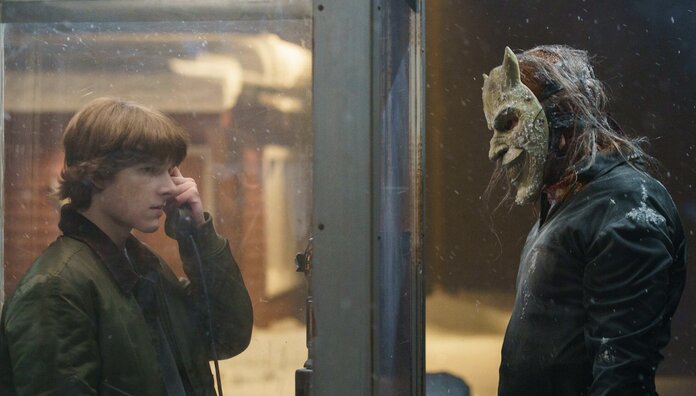
Director Scott Derrickson’s career was encapsulated around his work in the horror genre, getting his start with directing the direct-to-DVD Hellraiser follow-up, Hellraiser: Inferno in 2000. This horror work would continue with notable features like 2005’s The Exorcism of Emily Rose, 2012’s Sinister and 2014’s Deliver Us from Evil. Derrickson would then briefly detour away from the horror genre with the release of 2016’s superhero feature Doctor Strange. When creative differences severed his ties with Marvel Studios amidst discussions around the film’s sequel, which would become 2022’s Doctor Strange in the Multiverse of Madness, directed by Sam Raimi, Derrickson returned to the horror genre. This return would come in the form of 2022’s The Black Phone, which was an adaptation of Joe Hill’s, son of Stephen King, 2004 short story from his anthology collection 20th Century Ghosts. The film was a commercial and critical success, grossing $161.4 million globally against a $16-18 million dollar budget, marking a potential for a new horror franchise.
Three years later, and after a canonical spin-off short in 2023’s anthology horror feature V/H/S/85, the lead villain, The Grabber, appearing in popular video game Fortnite, and the same villain appearing in Halloween Fanta merchandise alongside horror giants like Chucky, the franchise finally has its long-awaited sequel. The Black Phone 2 follows four years after the events of the original film, where survivor Finnley Blake was able to kill the Grabber after using the mysterious black phone, which allowed him to communicate with the victims of his captor. With the help of his psychic sister, Gwen, he was able to escape, but four years later, the pair become haunted by victims of a murder at the Alpine Lake Camp in 1957. Arriving at the Camp, the pair learn the connection that the camp has to their deceased mother and learn that The Grabber may still be alive from beyond the grave.
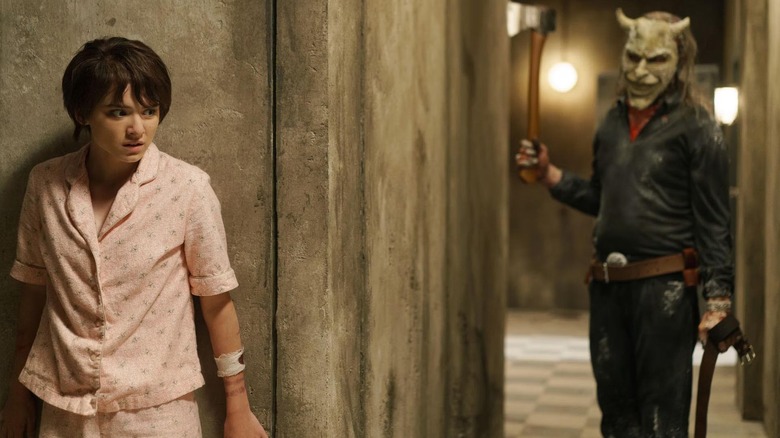
Derrickson’s sequel takes a long time to get going, it’s almost fifty minutes into the feature until the titular villain appears, and an audience’s patience will vary based on how invested into these characters they are. The film’s first act is heavily focused upon centring itself on the fallout of the previous feature, and how the various characters react to their trauma. Massive changes have been made in the lives of our central characters, namely the sobering up of their formerly abusive father, with the film’s depiction of trauma and grief being nothing groundbreaking or original, but strong, nonetheless. Mason Thames’ career has been on the up since getting cast as Finnley in the original feature, starring in Dreamworks’ live action take on How to Train Your Dragon this year, and he shows an impressive amount of control here in his performance. The character’s journey is predictable and may seem cheesy, but Thames delivers two strong distinct versions of his character, the wall that Finnley puts up to not deal with his trauma, and then when the walls come crashing down and he’s revealed to still be a scared child.
The film also makes a clear decision to move the plot to one focused around the former film’s lead and instead make him part of an extended cast. Most of the new characters introduced are slightly underwhelming but serve their purpose, but the improved focus on sister character, Gwen is an improvement. With her psychic abilities, the film puts her to the forefront and essentially makes her the lead, and Madeleine McGraw really impresses with her performance. It is not easy for a young actress like herself to carry a film of this magnitude, but she excels, portraying the pure terror she faces in not just the Grabber, but also her own abilities.
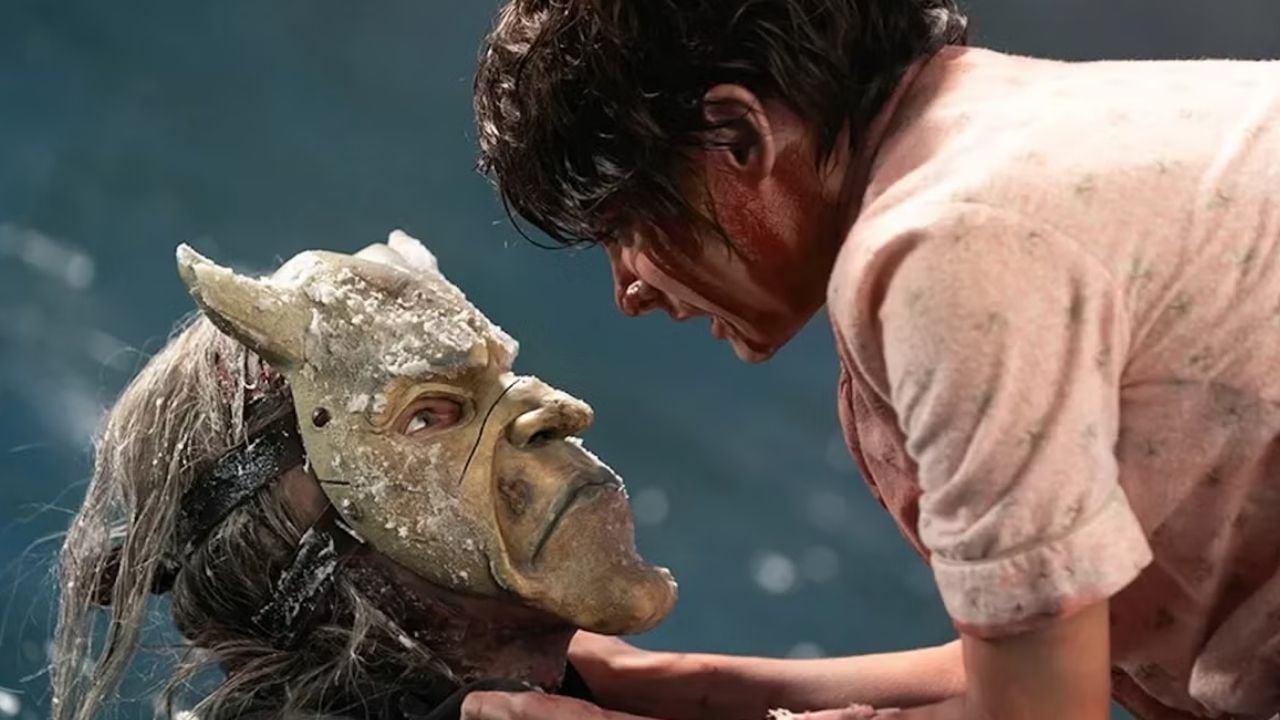
Derrickson uses her abilities to fall back into some creative sensibilities, as the walking dream sequences feature a grainy, home-movie look. The scenes call back to the disturbing home videos featured in 2012’s Sinister, as Ethan Hawke’s character watches the murders of multiple families filmed in grainy 16mm film. It is an entertaining call-back to this classic in his filmography and opens the film too operating under two separate filmic styles, which set the sequences apart. These dream sequences offer the best scares, and the only kills featured throughout the film’s runtime, as grainy footage showcases graphic deaths and a score by Derrickson’s son, Atticus, which gives the feeling of static. The score also makes the film have a rock aesthetic, brimming the film with 80s aesthetic, with C. Robert Cargill’s script being filled with 80s references and dialogue that feels close to be irritating but also feels fitting for the films released at the time.
The film’s plot and setting call back to many famous horror features, from the Grabber haunting dreams and acting as a ghostly boogieman like Freddy Krueger from the Nightmare on Elm Street franchise, to the camp setting featuring a slasher like the Friday the 13th franchise. The snowed-in location also calls back to Stanley Kubrick’s classic film, The Shining, alongside the psychic sequences.
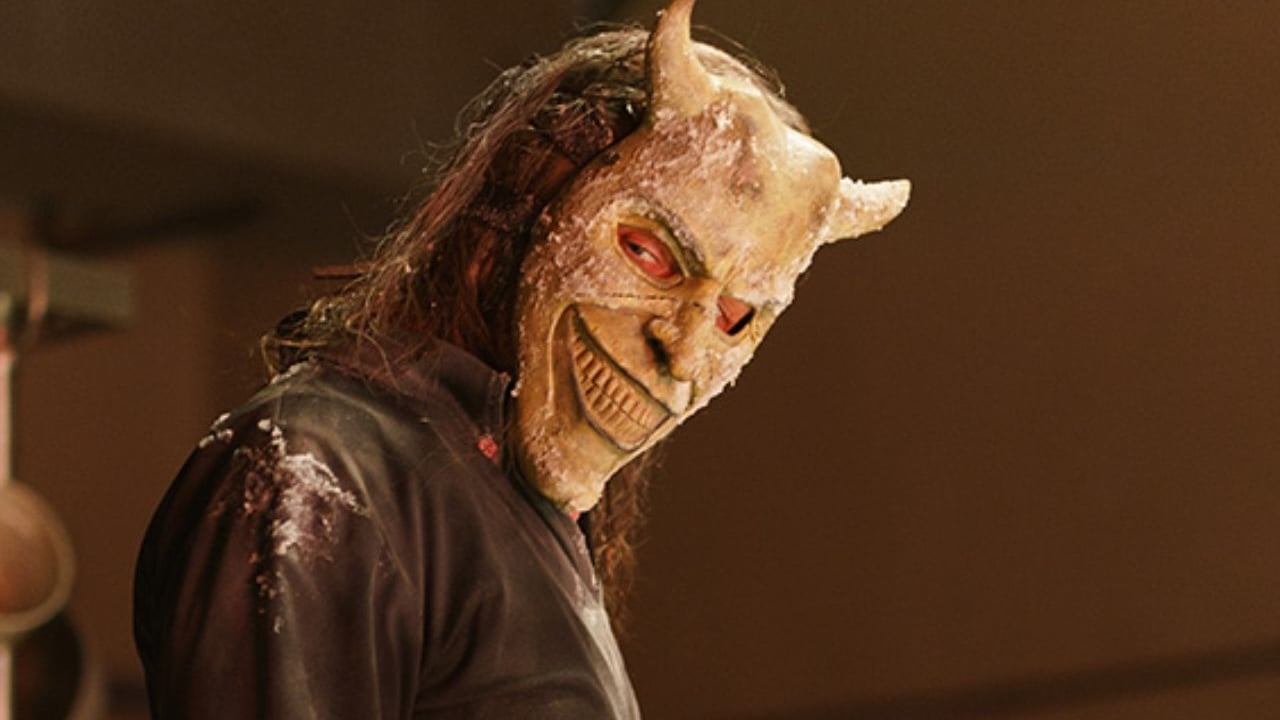
Ethan Hawke’s The Grabber really does serve as a modern interpretation of Freddy Krueger, and Hawke’s performance continues to awe. He’s one of the best working actors currently, delivering great indie performances in films like the Before trilogy and Paul Schrader’s First Reformed, but still delivering great performances in mainstream genre features like The Purge and Sinister. He is unsettling in this film, spending most entirety of the film either masked or with a deformed face, relying on a fantastic physical performance to send across terror. His voice commands the screen to him, and it is rare for a horror villain to feel this evil, with the film offering a central reveal that cements his villainy and gives the film a reason to exist, outside of just continuing the story of a box office success. Fans looking for the villain to stay true to any rules set up will be disappointed by this villain, as its never clear what the Grabber can and can’t do as a supernatural ghost, but Hawke delivers a strong enough performance that it is easy to forget what doesn’t make much sense.
Interest has been shown by all the parties involved in making a third film in the Black Phone series, marking this as a big new modern franchise, and Derrickson’s sequel sets the groundwork to keep this going. There are small growing pains, but Derrickson has delivered a film that can easily stand alongside its predecessor. Hawke, Thames and McGraw deliver exceptional performances, and the film has a clear visual flair that allows it stand above a lot of the usual franchise affair. If the phone rings once again, it seems that there is more than enough reason to watch The Grabber once again.
 Rhys Reviews
Leave a comment