Martin Scorsese is one of the most important filmmakers to come out of Hollywood, a pioneer who came out of the New Hollywood movement in the 1960s, releasing 26 different films which has ranged a career spanning between 1967 to the modern day. The director has also created various documentaries, and here we will be ranking his core 26 features, which are ranked as follows:
26) Boxcar Bertha

Scorsese’s second feature film, Boxcar Bertha feels like a proof of concept of the future of the director’s career in the crime genre. The film was offered to Scorsese after producer Roger Corman had seen his previous feature and requested him to make a sequel his exploitation feature, Bloody Mama. This would soon be reworked into an adaptation of Ben Lewis Reitman’s 1937 novel, Sister of the Road, which follows the titular character as she begins a career in bank and train robberies after becoming orphaned after the death of her father. A low budget feature, there feels like a lack of creative freedom from Scorsese, as the lower budget and the overwhelming sense of exploitation takes over an incredibly simple narrative. Corman was well-known for his cheap to make and produce low-budget features, commonly making the use of sex and violence as a pull for both filmgoers and VHS pullers. Scorsese would have more successful attempts at both the crime genre and the western genre, which knock this movie down his filmography
25) Kundun
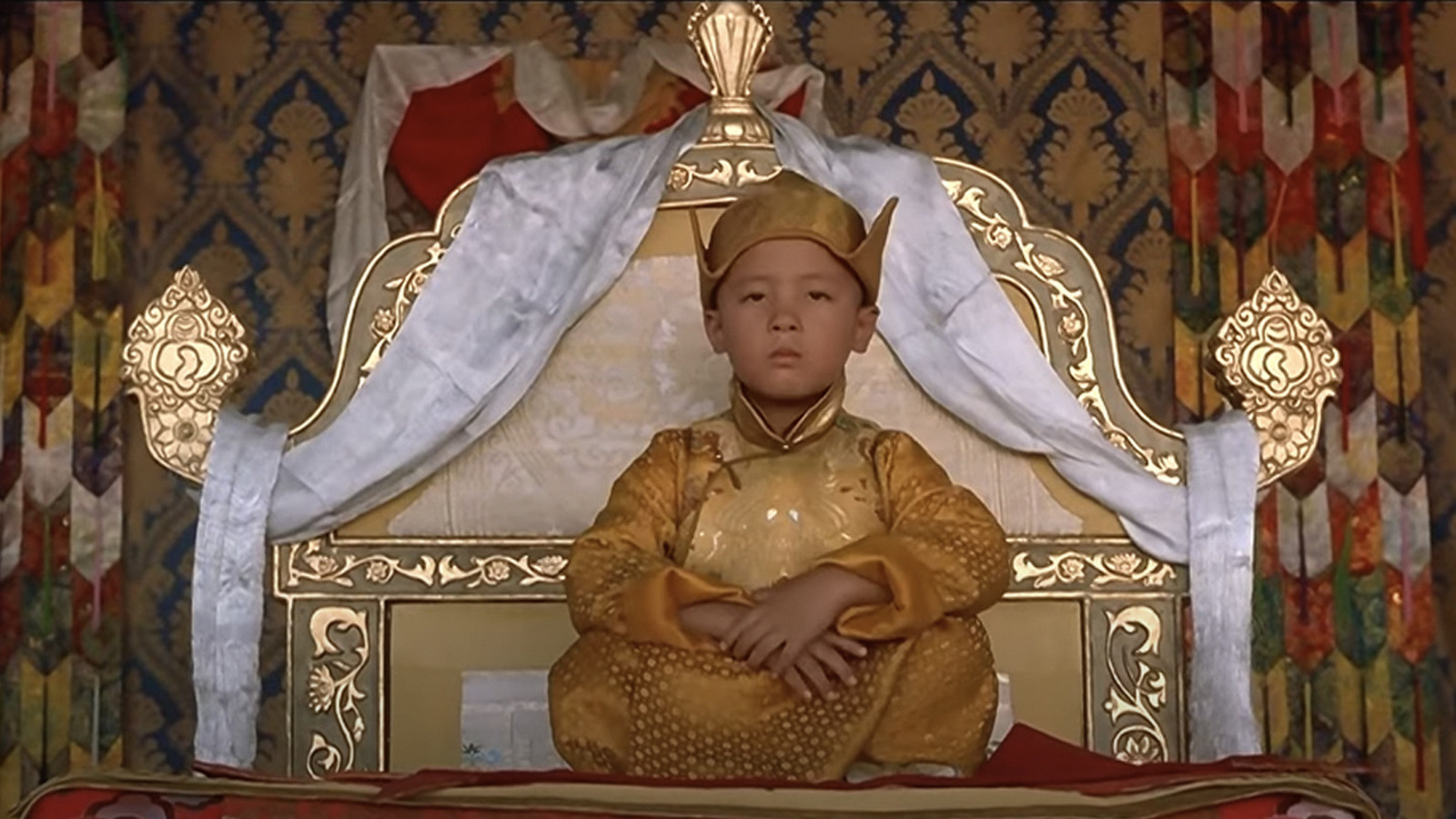
The first of three religious features that will appear on this list, Kundun differs from the two other focus features because of its focus on a religious figure outside of Christianity. The film tells the life of the 14th Dalai Lama, Tenzin Gyatso, an exiled spiritual leader of Tibet, being based on the writings of the famous figure. The film was a massive political concern for distributor Disney, when being released, as the Chinese government threatened to block Disney from accessing the Chinese film market, leading to the distributor to limit the distribution of the film. The director would become banned from ever entering China, a ban which would eventually be lifted by 2015, when the director attended the premiere of his short film, The Audition, in Macau.
Kundun is a grand feature for director Martin Scorsese, ambitious in its storytelling as a film epic, and though breathtaking in its visuals by cinematographer Roger Deakins, the film’s narrative core falls flat. There is very little attention to helping the audience become closer to the person at the heart of the narrative, walking out of the feature, an audience member will still know very little about how the Dalai Lama was as a person. A two hour plus film epic can only be held together if the central performances are strong, and the Chinese actors clearly struggle acting out of their native language, rendering a lot of the film tonally dull, with wooden performances hampering a technically superb feature
24) Gangs of New York
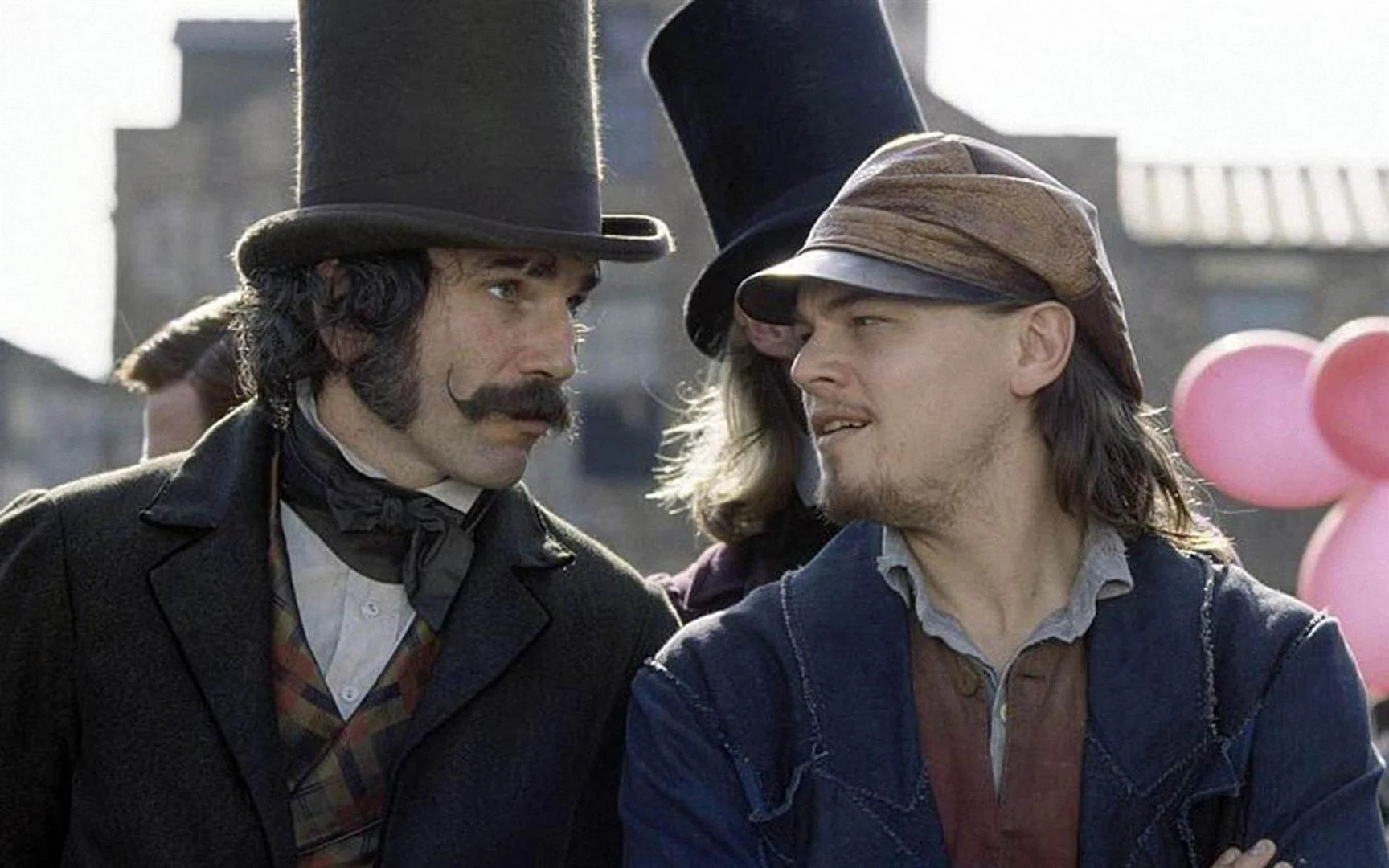
One of Scorsese’s features that was in the pipeline the longest, the director originally becoming interested in directing the feature in his early career, before the release of either Mean Streets and Taxi Driver. The director would then acquire the screen rights to Herbert Asbury’s novel, The Gangs of New York: An Informal History of the Underworld, in 1979, but it would take twenty years for his film adaptation to finally come to life. Starring a broad ensemble cast which includes the likes of Leonardo DiCaprio, Daniel Day-Lewis, Cameron Diaz, Brendan Gleeson and Liam Neeson, the film follows the Catholic-Protestant feud between 1862 and 1863, just as an Irish immigrant group is protesting forced conscription during the Civil War. The film’s glaring problem comes from the lacking Irish accents from most of the cast, failing to feel authentic and true to the time when the film’s set dressing and script holds up such an authentic look at the period. Diaz sees herself being vastly miscast, with her storyline holding the film down from being at all possible to being one of Scorsese’s greatest films. The film tackles may variously themes and characters, but in such an ambitious way that leaves many of its feeling empty, with the film deciding to tackle everything to a minimal effect, compared to a minute amount to a wider effect. Daniel Day-Lewis holds the film together, holding as one of his strongest performances in a vast and creative career
23) Who’s That Knocking at My Door
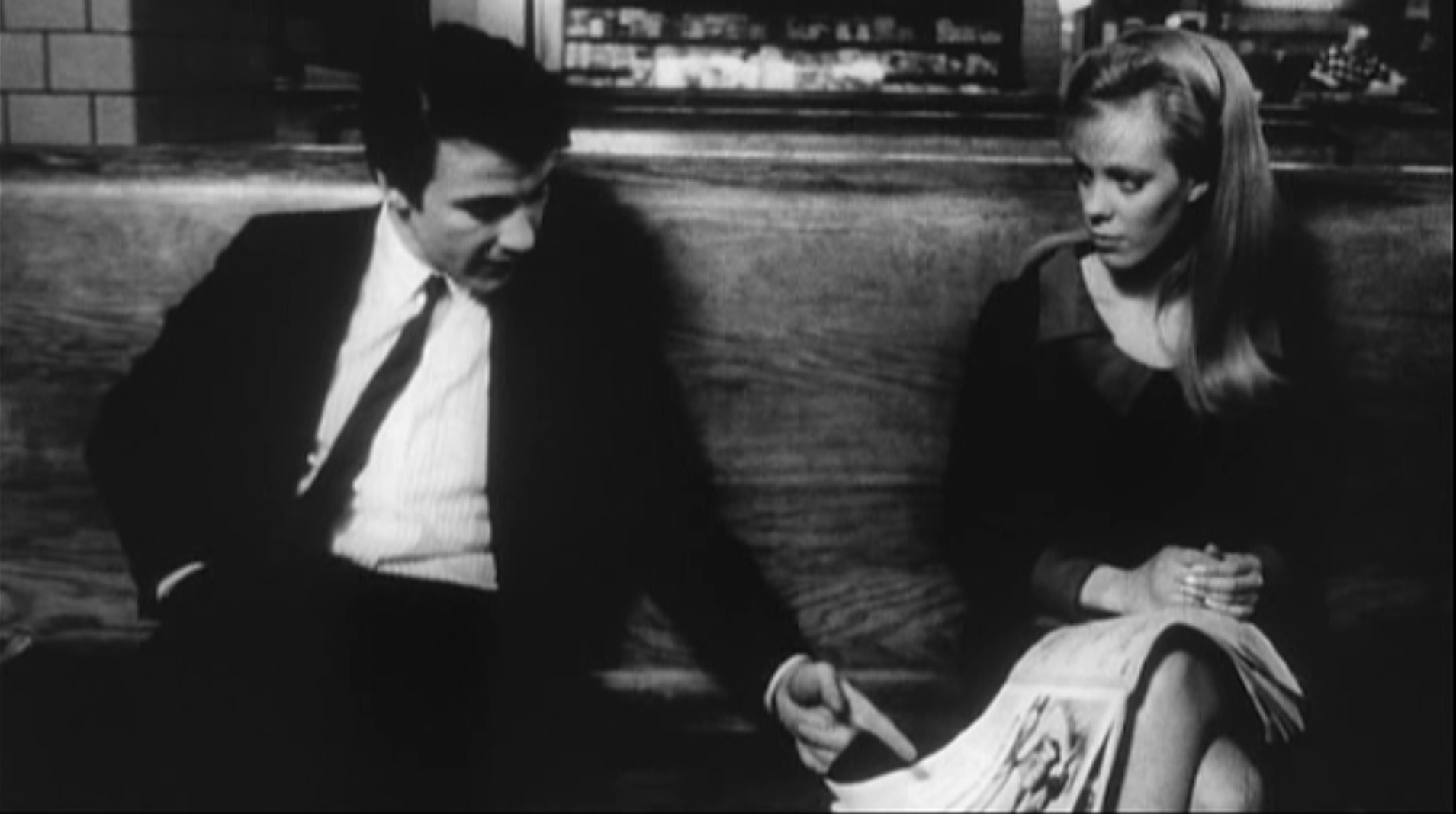
A nominee at the 1967 Chicago Film Festival, Scorsese got his start as a director with the release of Who’s That Knocking at My Door. Starring Harvey Keitel, in one of his first collaborations with the director, the film follows the pull between sex and a free-spirited life and the connection to religion. This narrative comes forth from the character of JR, as he struggles to accept the fact that his romantic interest, played by Zina Bethune, has been raped. Based heavily in location on Scorsese and Keitel’s youth as Italian Americans, the film holds a level of authenticity to its locations, and its black-and-white photography gives it a very down-to-earth and documentary feel. The film roots a connection in Scorsese’s films through his exploration into religion, with the film capturing the void between the free-spirited life of sex and violence and how frowned upon that is in a world of faith and religion. Like Boxcar Bertha, a lot of the themes lack the punch that would come of Scorsese’s career, with a lot of the themes becoming even more prevalent in films like Mean Streets, which essentially acts as an improved version of this very film
22) New York, New York
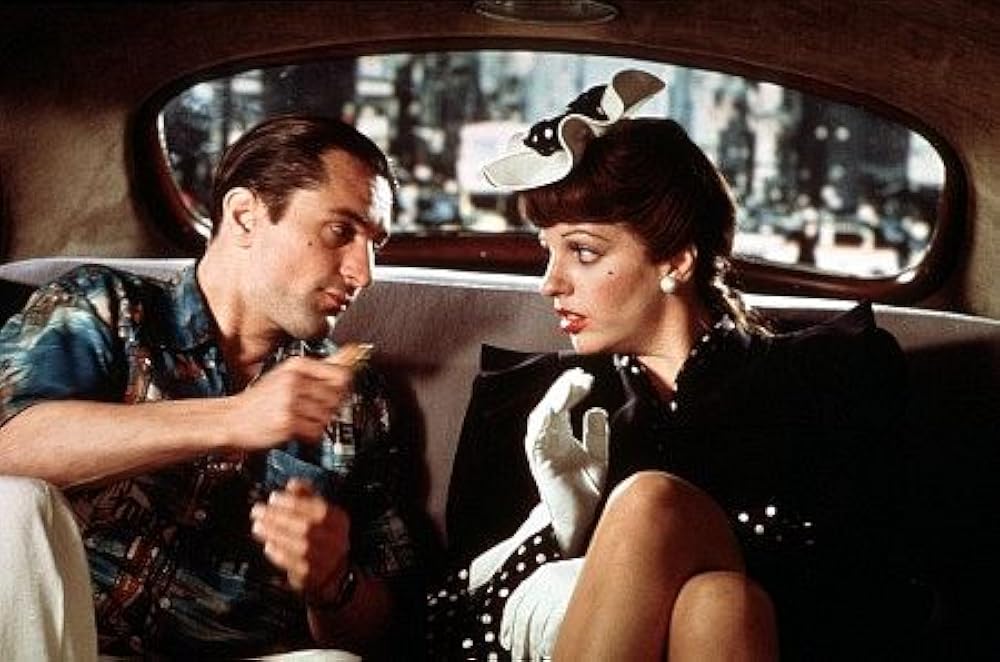
In the DVD introduction to the film New York, New York, Martin Scorsese states that his intentions for the film were to make it into a homage to the musicals of Classic Hollywood that he grew up with, and to finally break away from the gritty realism that he was well known for. This break away from the norm has led to the film being mixed in reception, becoming a box office bomb when it was released against the competition of Rocky in 1977. It stands out as an outlier in Scorsese’s filmography, the artificial sets, bright colours and the music numbers stand out when compared to the realistic depictions of religious turmoil and the exploration into the mafia that the director is known for. However, that is where the film also fails at points, as Scorsese seems to still want both sides of the coin. Tonal incongruities exist across the film, as the film seems to almost spoof or critique the musical rather than pay homage to it. Every scene with powerful musical numbers is matched with a tonally different scene of tension-inducing fights between stars Robert De Niro and Liza Minnelli. It is a tonally confused film, which delivers on the promise of a Martin Scorsese musical, at least the film’s main single, titled the same as the movie, would become a worldwide hit
21) Mean Streets
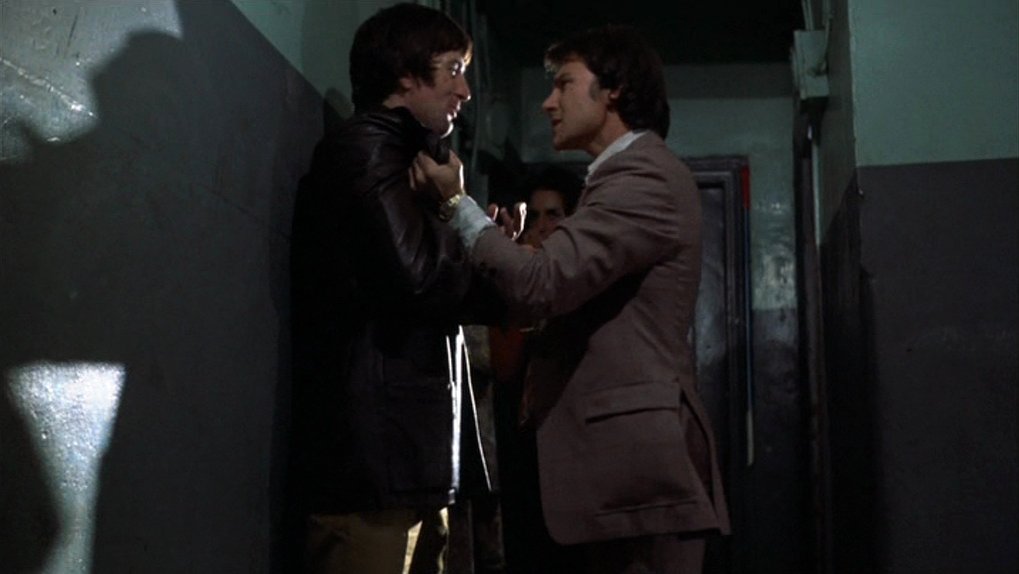
The first collaboration between Scorsese and Robert De Niro, who was introduced to the director through mutual friend Harvey Keitel, Mean Streets is the blueprint for the director’s most famous films to come, crime-mafia features. Being Scorsese’s first critical and commercial success, the film follows Keitel’s Charlie Cappa, who works as a gangster in Little Italy, Manhattan, as he attempts to keep the peace between his fellow gangsters and his psychotic childhood best friend, De Niro’s ‘Johnny Boy’ Civello. As a follow-up to Boxcar Bertha, the film sees Scorsese returning to his roots featuring characters and settings that he recognised from his childhood, making a movie personal to him rather than a movie designed by Roger Corman.
Corman originally wanted involvement in the feature but only requested for the film to be a blaxploitation feature if he would back the film with funding, but the director would soon find other ways to fund the feature when being introduced to the road manager for The Band, Jonathan T. Taplin. As mentioned previously, the film almost acts as an improved version of Who’s That Knocking at My Door, as Charlie seeks to stay true to his religious beliefs as a low-level gangster, as he wishes to cause harm to no one, but also continues in his sexual relationship with Civello’s cousin, Teresa. It acts as a more developed version of the director’s first feature, with a more compelling side to it as a gangster feature, and shows the continued development of the director’s filmmaking skills
20) The Age of Innocence
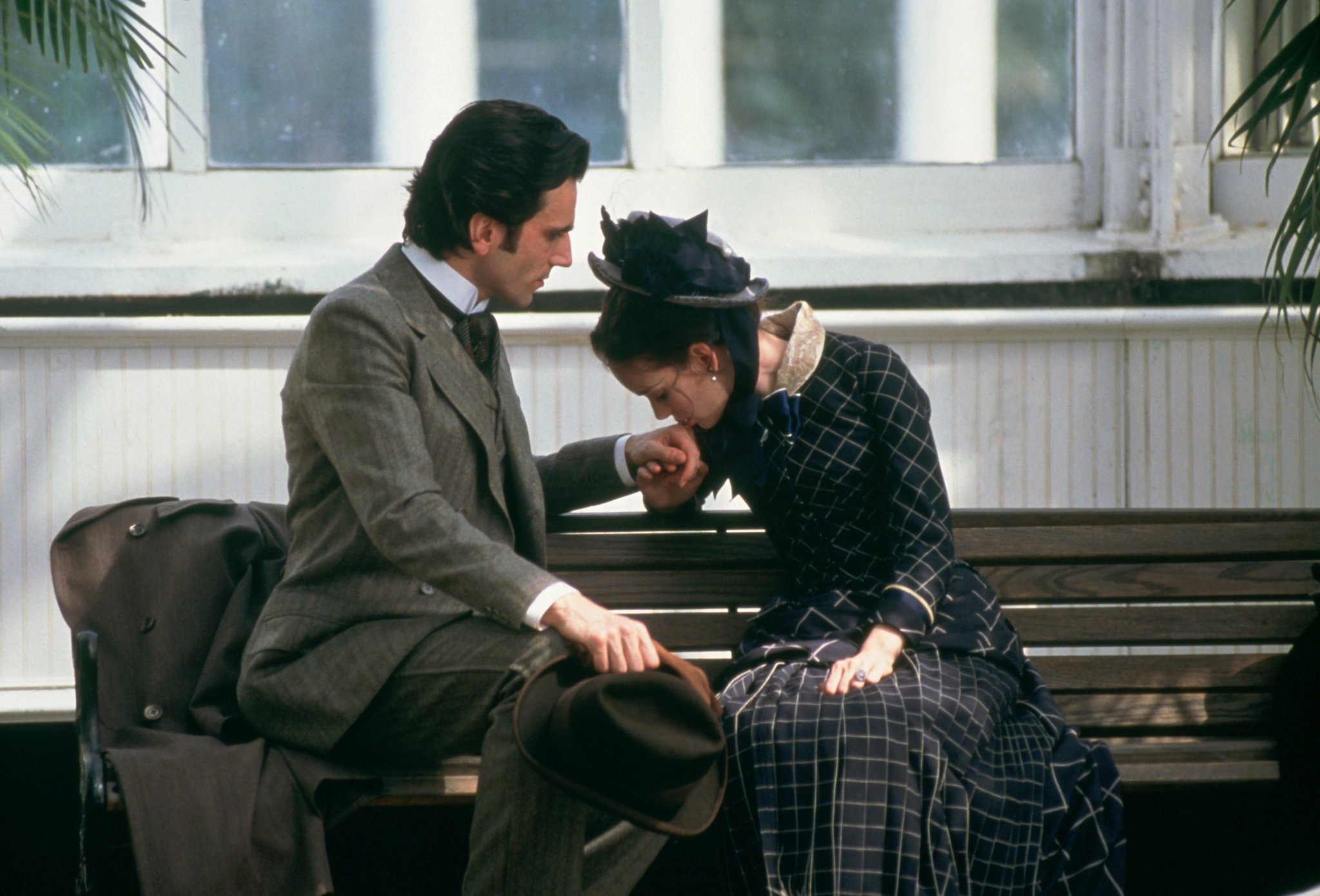
Adapted twice already, as a silent film in 1924 and once again in 1934, Scorsese would direct his own film adaptation of Edith Wharton’s 1920 novel The Age of Innocence in 1993. Both film and novel follow the life of Newland Archer, played by Daniel Dey Lewis, who finds himself caught in a love triangle between two women, the conformist and safe May Welland, played by Winona Ryder, and the striking and unconventional Countess Ellen Olenska, played by Michelle Pfeiffer. Unlike New York, New York, which stands out from Scorsese’s filmography as a tonally confused collaboration between the Hollywood musical and Scorsese’s original drama features, The Age of Innocence acts as straight-up romantic-historical drama, with Scorsese allowing the narrative to form itself away from his sensibilities. The film stands apart because of its authenticity to the genre, which gave the film the Academy Award for Best Costume Design, as Dey Lewis gives an incredible performance among a talented cast, as the film delivers on the novel’s sad look at love, and the powerful nature of need and the romanticism of wanting more. The film’s exploration into class, and the forbidden nature of love in such a high society, marks a connection to Scorsese’s earliest works around sex and the society you are birthed in
19) Cape Fear
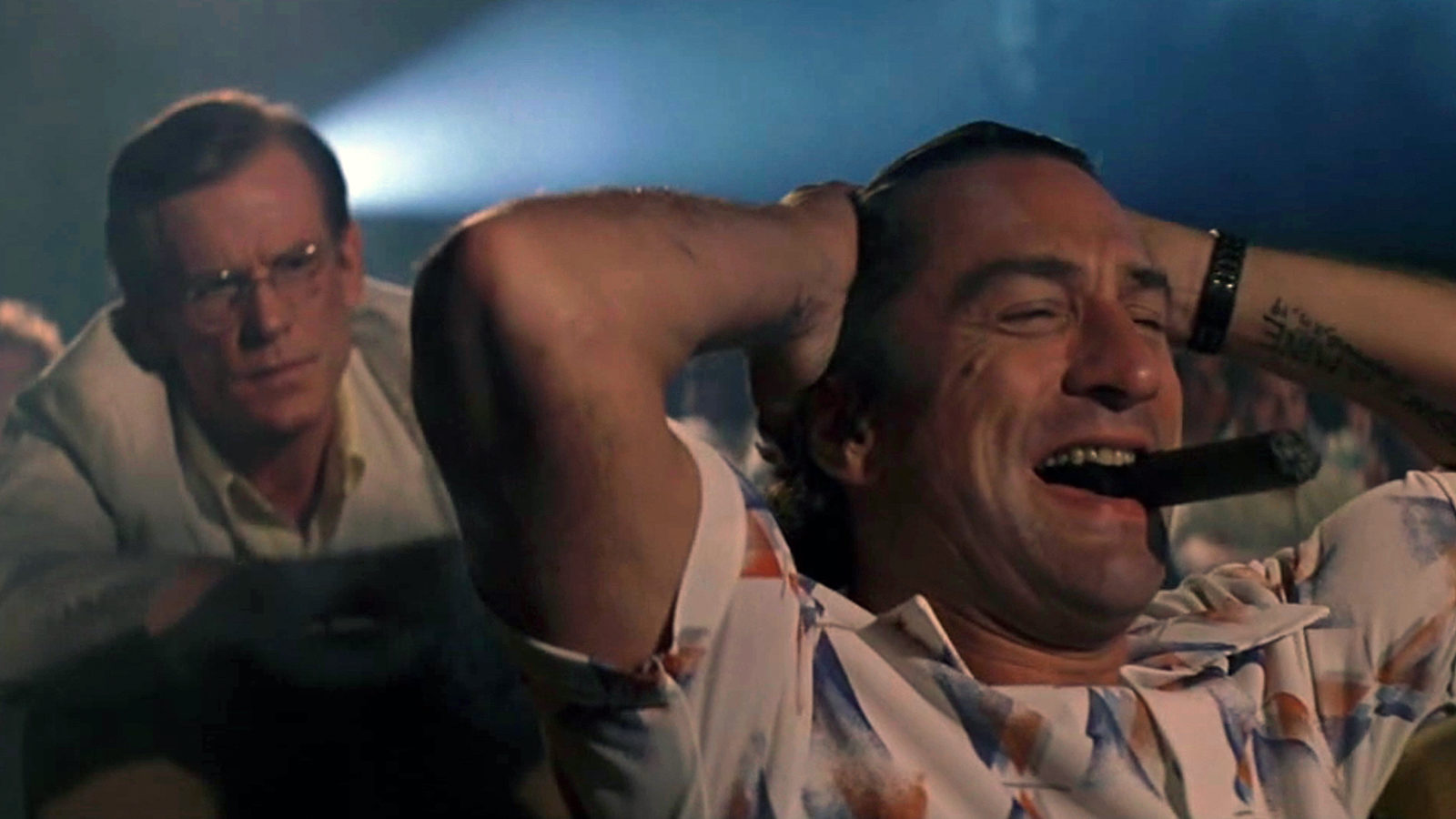
Cape Fear, a 1991 remake of the 1962 film of the same name, proved that Scorsese could make an easily accessible and commercial thriller, which combined his filmic characteristics with the crowd-pleasing fun you would expect from the genre. Originally conceived as a film through Amblin Entertainment, and to be directed by Steven Spielberg, Spielberg and Scorsese swapped projects once Scorsese realised, he had little drive to tell the story of what would become Schindler’s List. Starring Robert De Niro and Nick Nolte in the main roles, the film, which is also based on the 1957 novel, The Executioners by John D. MacDonald, follows a convicted rapist, played by De Niro, who seeks revenge on a former public defender who he blames for his imprisonment. Using his new knowledge of the legal system, De Niro’s Max Cady tracks down the man who caused his downfall, played by Nick Nolte, and attempts to terrorise the man and his family.
Through this pursuit of the man’s family, the film draws upon the continued narrative thread of sexual development and sexual violence in a world with laws and rules, with Cady first being shown as an evil man when he rapes Nick Nolte’s Samuel Bowden’s flirtatious friend, who seems to be close to becoming an affair. Cady also impersonates Bowden’s daughter’s teacher and attempts to seduce her, going as far as to kiss her, marking a connection between violence and sex in the film, with various of the sexual acts in the film coming from the villain. Robert De Niro plays the character with so much charisma but also with clear venom, levelling up to a pure camp-filled performance in the closure, as the film goes for a clear Hollywood ending, unlike Scorsese’s usual efforts. A faithful remake of a Hollywood classic, which feels unlike Scorsese outside of his trademark topics thrown into the script, the film would go on to be marked as Scorsese’s first 100-million-dollar grosser at the box office, showcasing Scorsese’s talents for commercial hits.
18) The Aviator
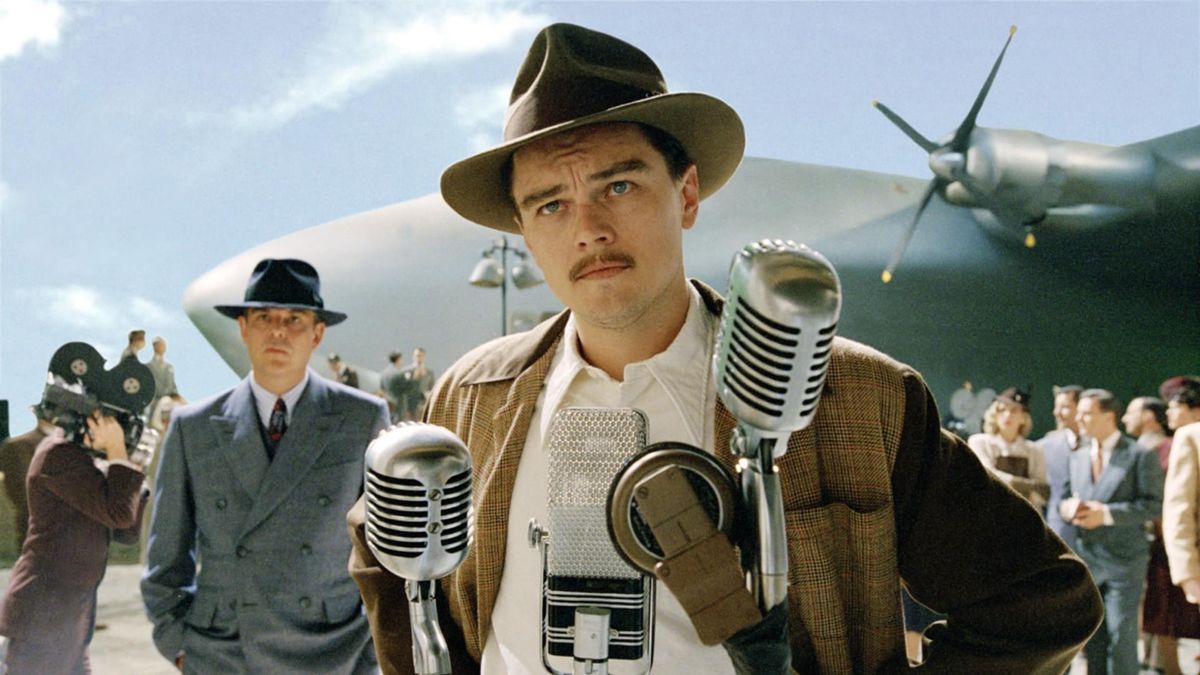
A film project focusing on the life of Howard Hughes had been in the works across various Hollywood studios through the years before The Aviator’s release in 2004. Famous directors like Brian De Palma, William Friedkin, Christopher Nolan and Michael Mann were involved in film adaptations at various times, with stars like Johnny Depp, John Travolta and Nicholas Cage attached as well, but it was with Mann’s exit that Scorsese jumped onto the project. Based on the 1993 novel Howard Hughes: The Secret Life by Charles Higham, the film follows the life of aviation pioneer and director of the 1930’s war epic, Hell’s Angels, Howard Hughes. The film follows his life in the period between 1927 to 1947, during which the director had to juggle his aviation career, film career and his battle with obsessive-compulsive disorder. One of Scorsese’s most ambitious features, releasing with a 100-million-dollar budget, the film is highly entertaining, if not a little disjointed in the amount of content it needs to explore in Hughes’ life. It falls into the traps of many biopics, focusing on too much in such a large period, that at times elements feel very undercooked, but the film looks excellent. Cinematographer Robert Richardson breathes life into breathtaking flight sequences, as Leonardo DiCaprio gives a soul-crushing performance in various intimate moments, even if co-star Cate Blanchett clearly steals the show. Proved even more, by the fact, that she won the Oscar for Best Supporting Actress for the role
17) Shutter Island
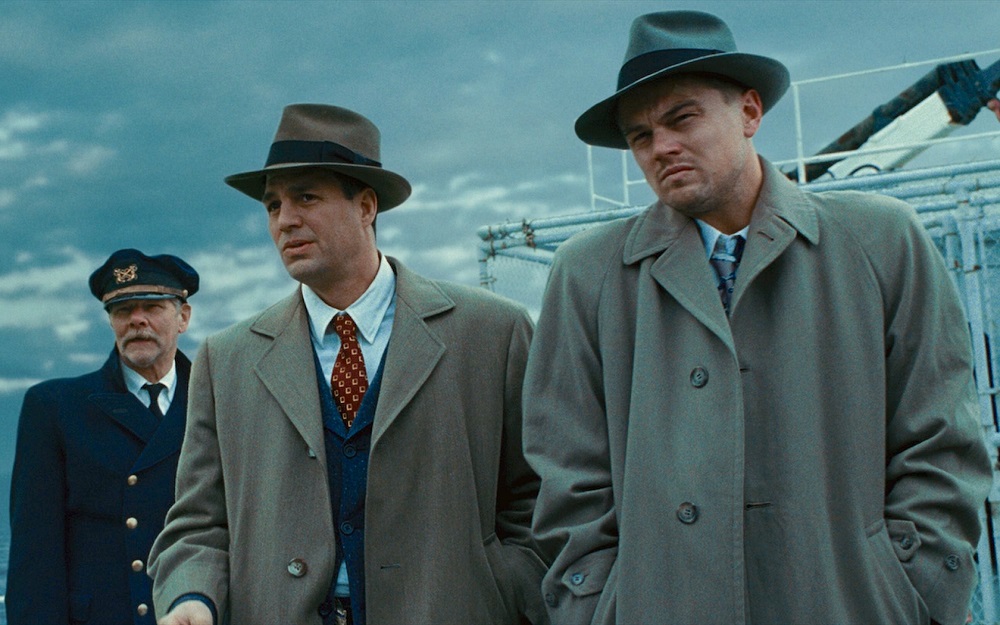
Shutter Island is a simple story told in an engaging way with various stylistic quirks that make up for its narrative simplicity. It could easily be seen as another Cape Fear, Scorsese taking on a commercial thriller but involving enough of his own creative intent to make it something worth seeing. The film blends so many genres that matches the confusing nature of its narrative, making the use of unreliable narrators to it’s very best to make the movie incredibly rewatchable once you know the central twist. The film’s a neo-noir feature, with a detective narrative mixed in with supernatural and fantasy elements in the mystery, while the characters go through a psychological thriller, blending a film that both resembles the Cabinet of Dr. Caligari and Se7en.
Based on the 2003 novel of the same name by Dennis Lehane, the film follows a Deputy Marshall, played by Leonardo DiCaprio, who comes to the titled Shutter Island to investigate a psychiatric facility after one of the patients goes missing. DiCaprio stars alongside other Hollywood giants like Mark Ruffalo, Ben Kingsley, Michelle Williams and Max Von Sydow, as they deliver thrilling performances that give the film its aura of mystery and horror, forever unknowing who to trust as the film thrusts you into DiCaprio’s character’s shoes. Similar in a sense to Alfred Hitchcock films like Vertigo, it’s a mystery where the audience’s involvement in figuring out the mystery and feeling the mood of the location is the most important, and the film delivers exceptionally as so, and was successful enough commercially to become Scorsese’s second highest grossing film at the box office
16) Hugo
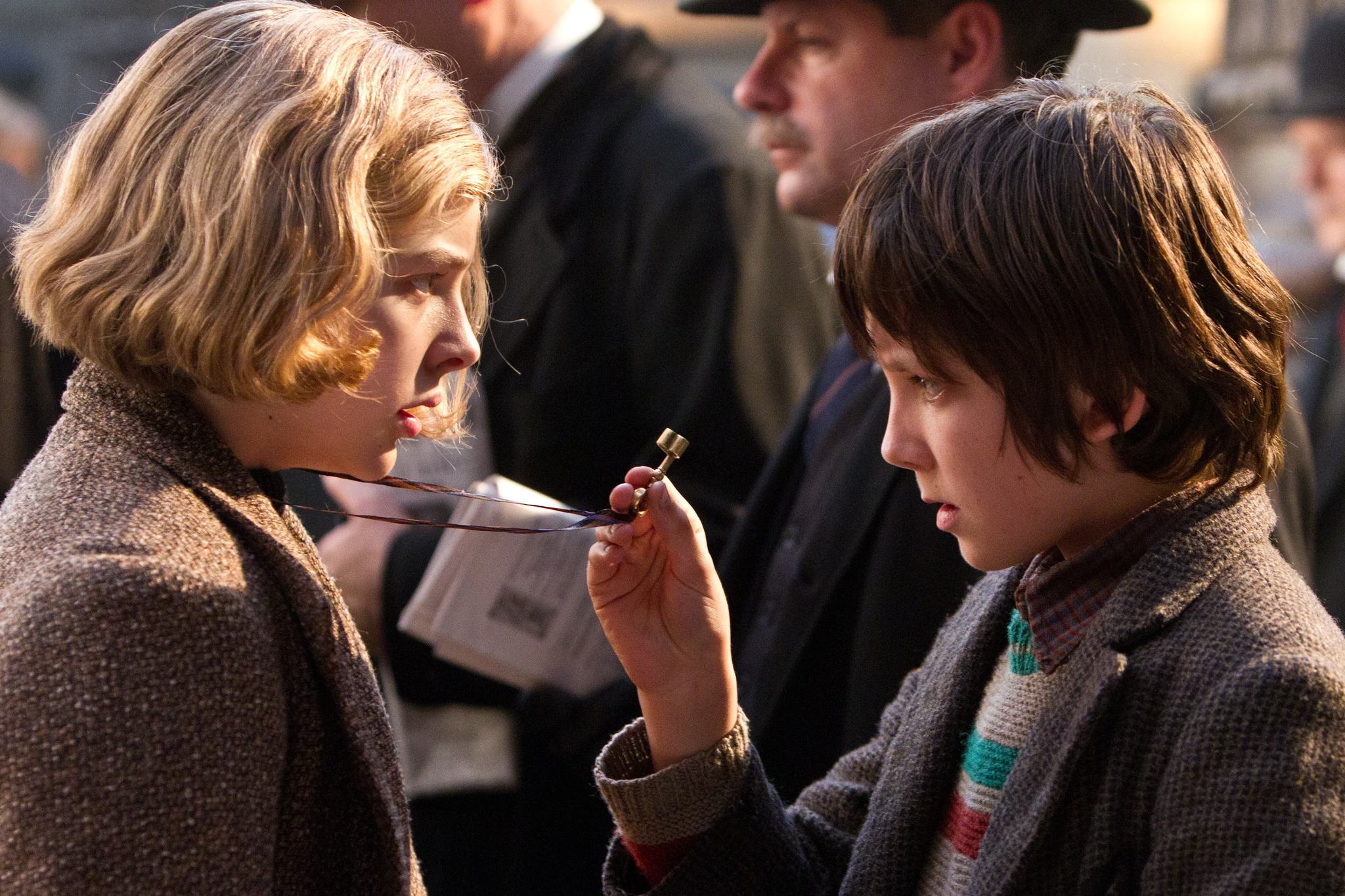
1902’s A Trip to The Moon and 1904’s The Impossible Voyage may be two of the most important films ever made, films created by legendary French silent film director George Melies. Melies is an important director in his ground-breaking use of special effects in his fantasy and science-fiction features that would soon inspire the rest of the filmmaking world to follow, with the director pioneering the use of such important film techniques such as dissolves and time-lapse photography. Come 2011, Scorsese would release a rare film for the director, a feature aimed at the younger generation with connection to the filmmaking past, a film designed as a family picture. Though Hugo would disappoint at the box office, grossing only $185 million on an estimated $150 million dollar budget, it remains an interesting outlier in Scorsese’s filmography.
Based on Brian Selznick’s 2007 book, The Invention of Hugo Cabret, the film tells the story of a boy who lives alone in a railway station in Paris, growing up in the 1930s. Soon, the boy becomes pulled into an adventure focused on his late father’s automaton and the filmmaker George Melies. This film is Scorsese’s film about the magic of cinema, in a similar way that The Fabelmans is for Spielberg, it’s a movie that connects itself to the passion Scorsese has for the medium and the medium’s history, and that passion shines through, Wonderful sets fill the screen, recreated in an attempt to be historically accurate to the director’s life, and the film is brimming with a sense of wonder and excitement that is needed for a family feature. Sacha Baron Cohen delivers a memorable comedic performance, and the 3D work gives the film a wonderful sense of child-like mystery
15) The Color of Money
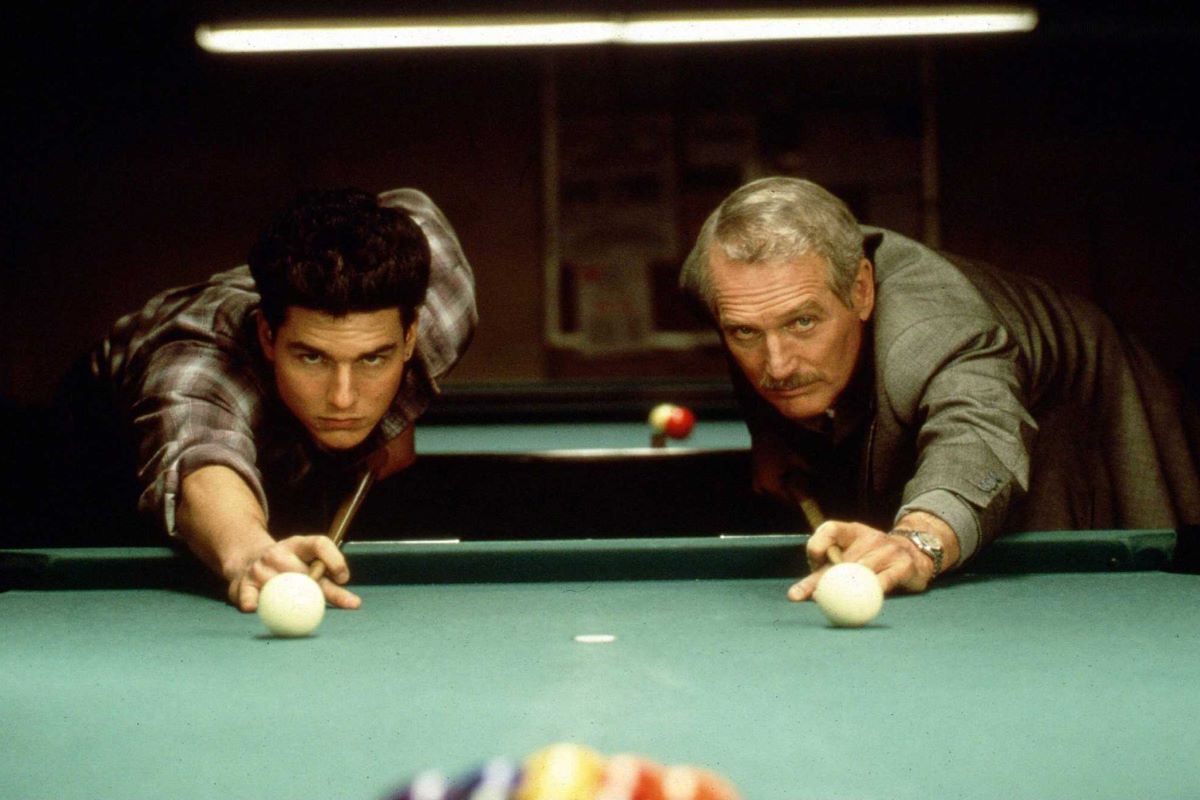
Scorsese’s only sequel across his filmography, The Color of Money serves as a sequel to the beloved Hollywood classic, The Hustler, released in 1961. Both films are based on novels of the same name by writer Walter Tevis, with The Color of Money released as the author’s final novel, dying in 1984. Both film and novel follow the return of ‘Fast Eddie’ Felson, portrayed by Paul Newman, as he trains a protégé in Vincent Lauria, portrayed by Tom Cruise, as the two, and Lauria’s girlfriend, attempt to hustle various pool halls until they eventually make their way to a nine-ball tournament in Atlantic City. The film stands strong as proof of Scorsese’s brilliant ability to breathe life into what could be generic genre cinema, as he makes the sports-drama so entertaining and thrilling.
It is hard to match up to the original feature that this film follows, with one of the major criticisms that this film faced in the press being that is not as good as The Hustler, but it can easily stand on its own. Newman delivers an engaging performance, that earned him the Oscar for Best Leading Actor at that years’ ceremony, and the actor bounces off Cruise well. The brewing respect and rivalry that builds between the two is delivered perfectly by both actors and through the undeniability powerful script by Richard Price, as the film hinges on this central dynamic. Scorsese manages to also breathe new life into pool on film that hadn’t been seen since the original film, with the dynamic camera work leaving the drama-based moments and the sports focused movies feeling as dramatic as one another
14) Killers of the Flower Moon
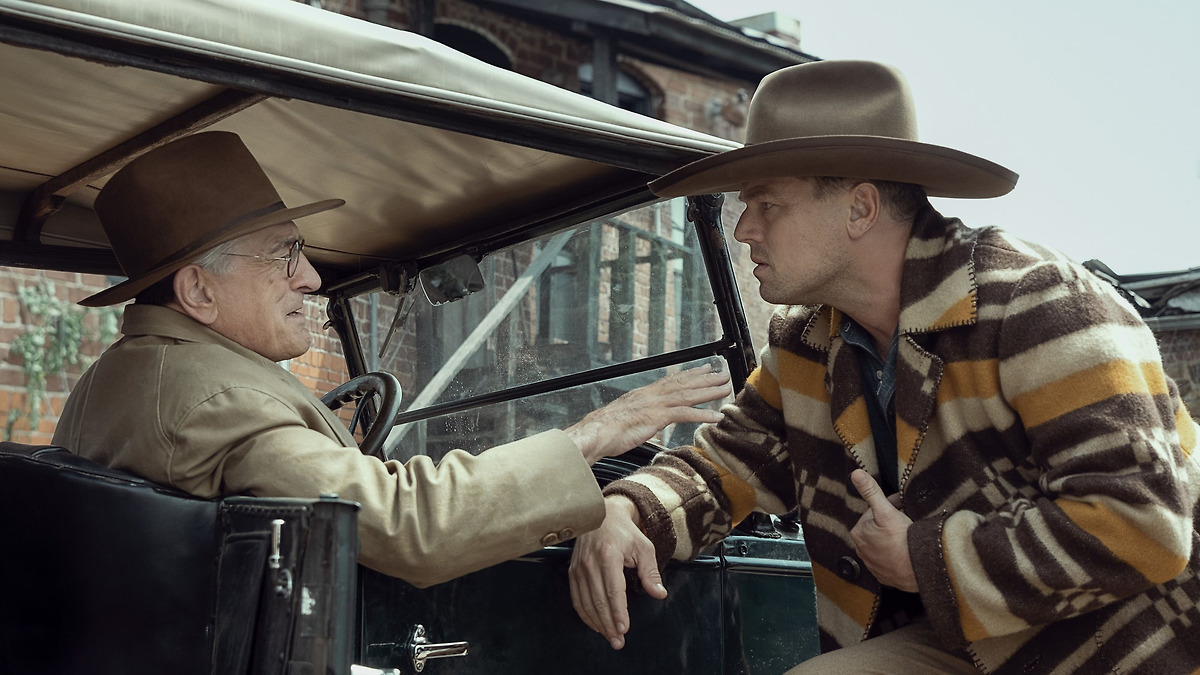
The newest film released by the titanic director, Killers of the Flower Moon, was an Apple TV+ collaboration for the director, releasing both on the streamer and for a short while in cinemas. Based on the non-fiction novel of the same name, subtitled The Osage Murders and the Birth of the FBI, the film can be described as an anti-Western, or a revisionist Western. The typical Western believed in the traditional battle between good and evil, simplistically boiling down the cowboy into a traditional hero, and rooting itself in the American Dream. By 1968, once the Hays Code restrictions were relaxed, the genre became more open to less traditional depictions of the cowboy, subverting the romantic outlook of the West and the American Dream. Killers of the Flower Moon continues this look into the American West, following a series of murders of Osage Native members, after oil was discovered on their land.
The 206-minute-long epic showcase the evil of the American hero, as they attempt to marry the Osage members for their wealth, led by Robert De Niro’s William King Hale. Unlike the novel, which displays a weighted series of events, focusing on both the Osage members and the FBI investigation, Scorsese’s film adaptation displays the troubles of the Osage members specifically, and the horrors that leads Leonardo DiCaprio and Robert De Niro deal on those members. The film is rooted in the corruption of greed, as Scorsese does for the Western which he had already done for the neo-noir, the musical and the thriller, depicting a typical genre through his own revisionist tendencies, a realistic outlook on Hollywood’s romanticised version of events. A powerful feature, the film was nominated for ten Academy Awards, but sadly did not receive any wins, though the Award season was marked by frequent wins for breakout star Lily Gladstone, who won the Golden Globe and Screen Actors Guild Award for Best Actress. The film showcased the ability for Scorsese to still be relevant in the modern day, crafting a superb feature which shone light on an important story
13) The Wolf of Wall Street
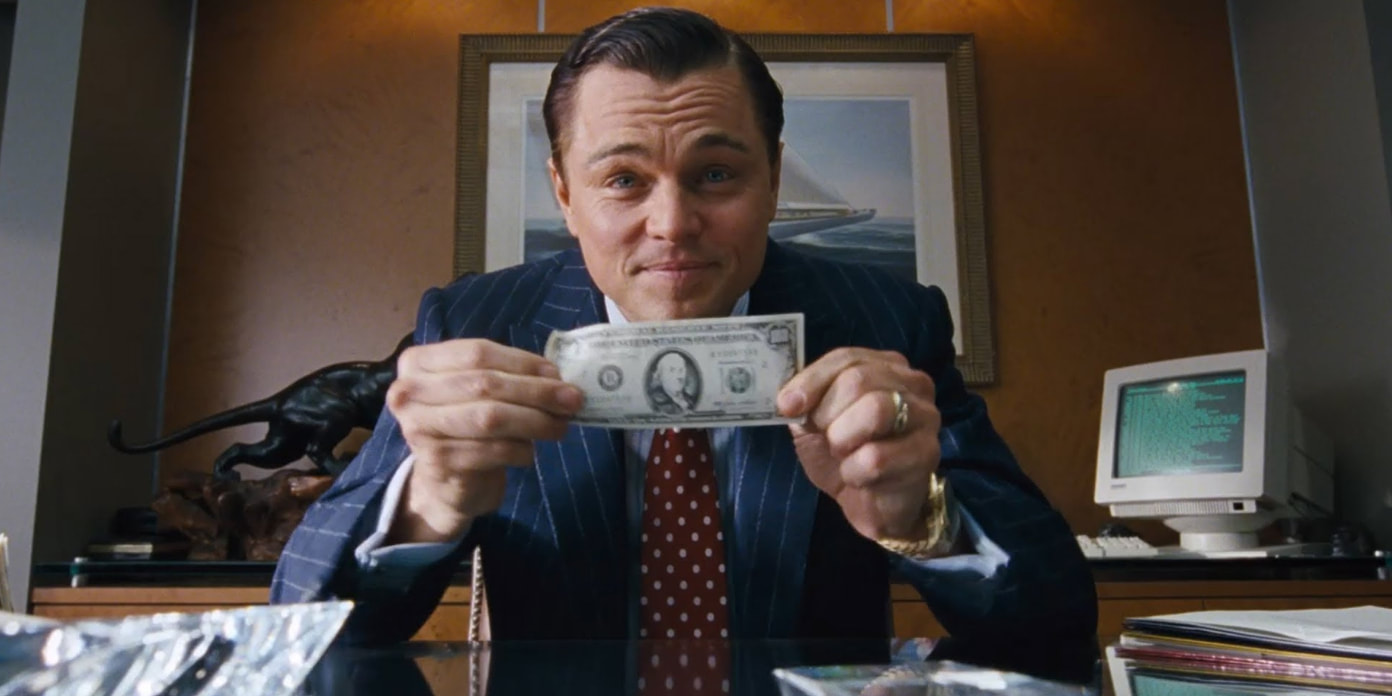
Scorsese’s biggest commercial success, The Wolf of Wall Street drew in a $407 million dollar gross during its theatrical run. The film was based on Jordan Belfort’s 2007 memoir, as it recounts his career as a stockbroker and how his firm, Stratton Oakmont, engaged in fraud on Wall Street, eventually leading to his downfall. The film was met on release with both widespread successes critically and commercially, but a level of criticism that was never displayed at a Scorsese feature before. Its depiction of its lead character seems to display a level of moral ambiguity, being seen as almost glorifying these horrendous actions, and its depiction of graphic sexual content, extreme profanity, hard drug use and the use of animals in production, lead to various criticism.
What seems to be lacking in initial professional criticism of the film is its satirical nature, DiCaprio’s Belfort seems cool and collected, the film depicting the fun and games that came with the job, but the film ends with him being caught and losing everything. His relationship with Margot Robbie’s Naomi seems to infantilize the character, as he is stripped of all identity at both his job and at home, as she takes everything and even takes control of the relationship sexually. Like films like American Psycho, the film builds to a reveal that its character is ridiculous and not meant to be pitied, the film just needs to get though the glorification of the character’s actions to get to the actual reveal. The Wolf of Wall Street is a brilliant depiction of greed and corruption, brought together by one of Leonardo DiCaprio’s strongest performances
12) The King of Comedy

The King of Comedy continues to showcase Scorsese’s knack for crafting features around both unreliable narratives and morally confused individuals. One of Scorsese’s most uncomfortable films, and it is not even part of the horror genre, the film follows an aspiring stand-up comedian who is willing to do anything to make it big, as he becomes obsessed with a successful comedian who he met once by chance. Robert De Niro plays the central character, Rubert Pupkin, in one of his finest performances with Scorsese’ direction, portraying a character who is both sympathetic and terrifying at the same time. The film makes you feel uneasy with being the shoes of its lead, unwilling to trust his turn of events, as the film relies on its satirical black comedy tone to make its narrative both hilarious and harrowing all at once. It’s satirical depiction of celebrity culture and American media matches the tone perfectly, showcasing how far people can truly go when seeking fame and when following a celebrity that must not be treated as a martyr. The film was a flop at the box office, even if being released to strong critical reviews, grossing only $2.5 million dollars against a $19 million dollar budget. This marks the film truly as one of Scorsese’s lesser appreciated features
11)The Last Temptation of Christ
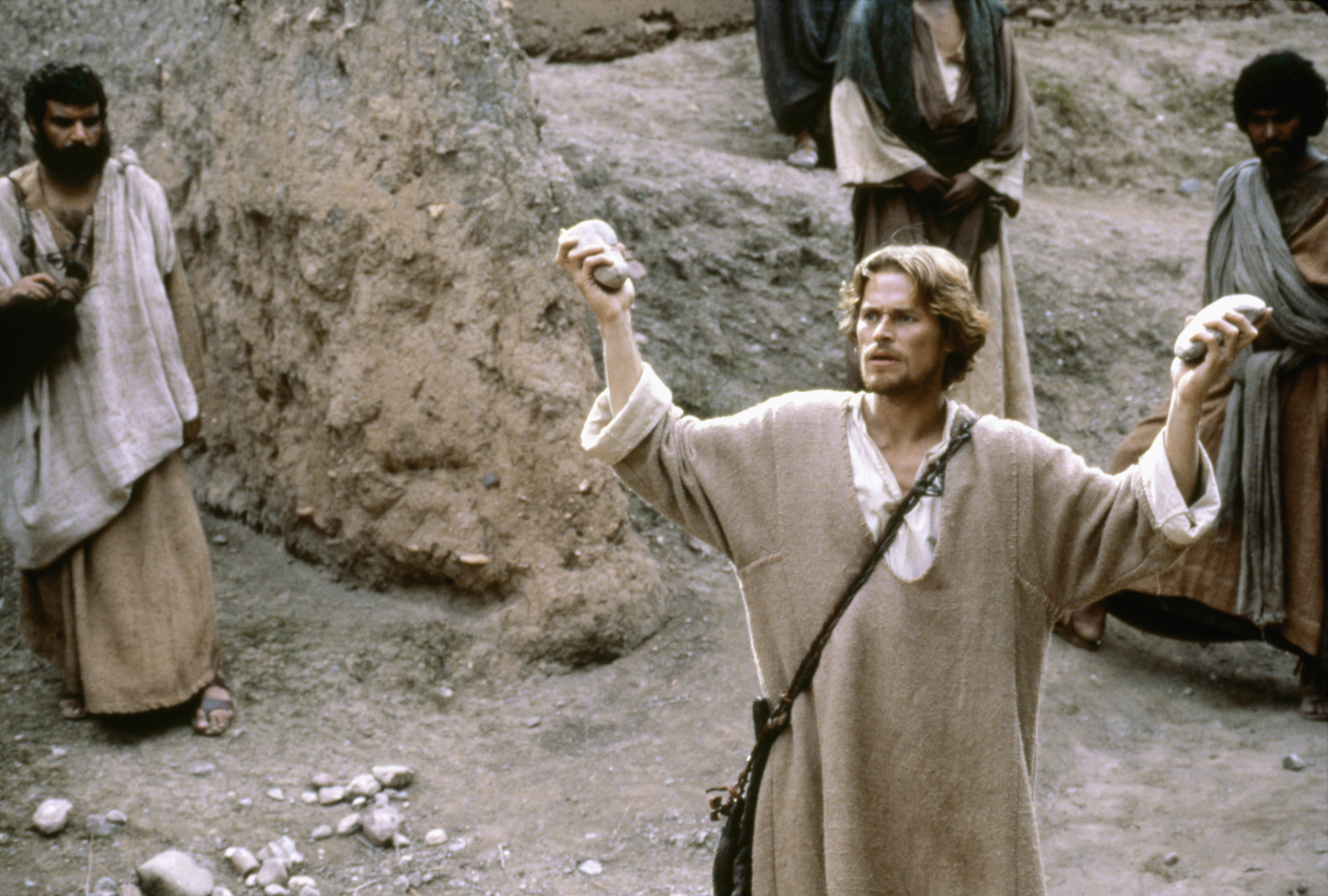
A film depiction of the life of Jesus Christ had been in the works through Scorsese for decades, from the production of Boxcar Bertha to The King of Comedy, only eventually receiving funding for the film from Universal Pictures after agreeing to make a commercial feature for them in the future, which would become Cape Fear. Scorsese received $7 million for a 58-day shoot. With a screenplay by Paul Schrader, the film was based on Nikos Kazantzakis’ controversial 1955 novel of the same name, which followed the life of Jesus Christ and the temptations that displayed themselves to him across his life, from fear, depression, lust and reluctance. The film was incredibly controversial, namely from various Christian groups who claimed the work was blasphemous for its depictions of Christ imagining himself engaging in sexual acts. The film was banned and censored in various countries, namely Greece, South Africa, Turkey, Mexico, Chile and Argentina, and remains banned to this day, in the Philippines and Singapore.
Both novel and film depict Jesus Christ as a fully formed man, who must come to terms with the fact he will have to sacrifice himself, with Willem Dafoe delivering a moving performance as Christ. The film’s gravitas comes from its depiction of sexual need and lust in balance with the power of religion, a continued theme for Scorsese’s filmography, but made even more powerful when being depicted through Christ himself. Christ is besieged by promises of the Devil, as he balances his life with the need of his fate, as the film’s most powerful moment comes from Christ’s imaginations of the life he could have had if he did not die on the cross. Blasmephous to some, but it’s a moving portrayal of a figure you could never get outside of a Scorsese picture
10) The Irishman
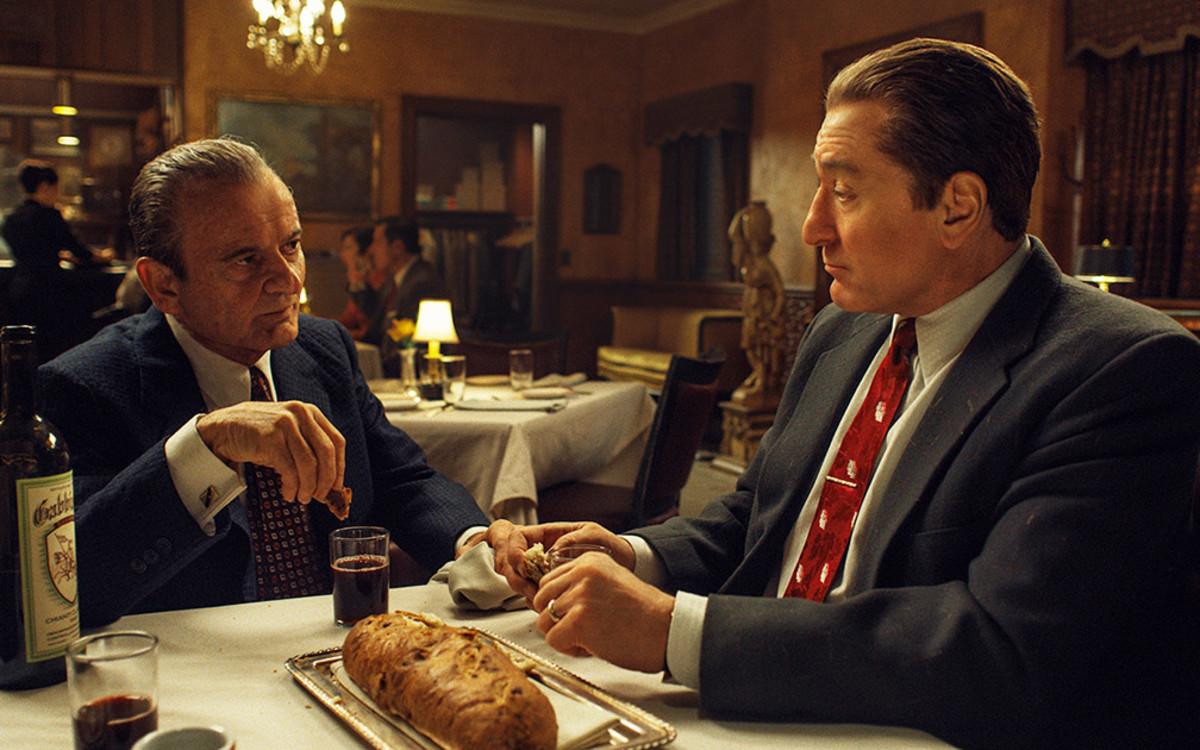
The Irishman is one of Scorsese’s most important works of the modern day, or even of his whole career, a film that feels like a send-off note to his time with the gangster feature. Based on the 2004 book I Heard You Paint Houses by Charles Brandt, the film follows Robert De Niro’s Frank Sheeran, a truck driver who soon becomes a hitman for mobster Russell Bufalino, played by Joe Pesci, who came out of retirement for the role. Later, he begins work for Teamster Jimmy Hoffa, played by Al Pacino, as the film chronicles his life from first hits to old age. Released with a limited theatrical run on 1st November 2019 and then followed by a streaming release on Netflix on 27th November of the same year, the streaming nature of the film allowed it to become the longest Scorsese feature yet, running for 209 minutes. The film seeks to squash the dream of the American gangster, telling its narrative from the perspective of the aging Sheeran, who begins the film recounting his story while in a nursing home.
Marketed around its de-aging digital effects that made Pacino, De Niro and Pesci look younger based on the period, the film brings together gangster giants for a film that feels like a classic gangster narrative. Uniting three actors who have long been the faces of the genre, the film acts as almost an anti-gangster film, revealing the meaningless of the gangster’s actions, the years of work put into their personas and the secrets kept meaning nothing when they just age like the rest of us, and die all the same. The film can be easily seen a Scorsese coming to terms with his own age, exploring his most famous genre again but through the lens of a man who is aging and doesn’t know how much time he has left, seeking out what he hopes he will be remembered for. It only makes sense that the National Board of Review called The Irishman the Best Film of 2019
9) Alice Doesn’t Live Here Anymore
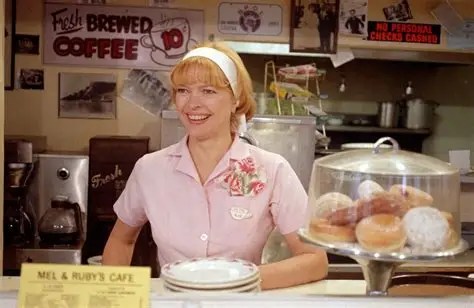
Star Ellen Burstyn was offered another leading role by Warner Bros Pictures during the production of The Exorcist, and after a recommendation by Francis Ford Coppola and a screening of Mean Streets, Scorsese would be hired for his first major studio feature. Scorsese’s films have been heavily criticised for their lack of female representation, with outside of Alice Doesn’t Live Here Anymore and Boxcar Bertha there is very little leading roles for females in his features, mainly reserved for roles like daughter, mother and wife. Alice Doesn’t Live Here Anymore place the narrative completely around the female character, a woman’s film in genre, but with enough grit and realness that only Scorsese could bring to the feature. The film follows a widow who travels with her preteen son across the Southwestern United States in search for happiness and a better life, finding work in a local diner.
The film is unlike any Scorsese feature, its sweet and warm, hopeful and pleasant, wrapped in a Scorsese bow with his signature level of darkness that balances out the pleasant nature of the feature. It avoids the tropes of the melodrama, with one of the goals of Burstyn and Scorsese being that it would not feel like a soap opera, those elements only come into play when needed, when Alice finally gets the life she wanted, after all the turmoil she must go through. The film would inspire a soap opera adaptation, just known as Alice, which ran on CBS between 1976 and 1985, and the film would garner Burstyn a well-deserved Oscar for Best Actress
8) After Hours
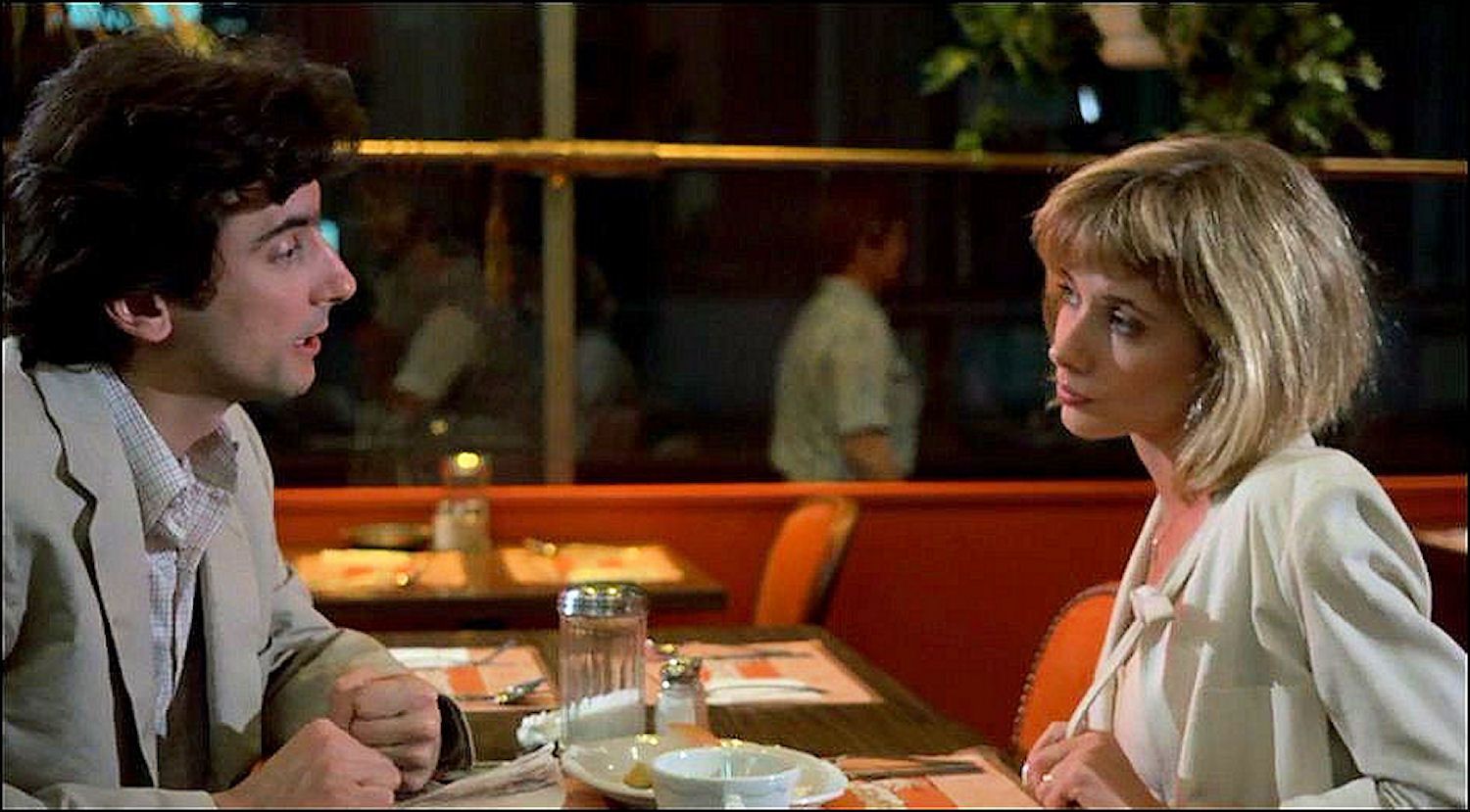
Director Tim Burton originally had his eyes on directing After Hours, a at-the-time upcoming director who had just come off the release of his short film Vincent but pulled away from the project when Scorsese shown interest. After Hours currently stands as the director’s latest feature to not be an adaptation or a biopic. The neo-noir comedy follows Griffin Dunne’s Paul Hackett, a regular day office worker who becomes interested in a woman he meets one night and soon experiences a series of misadventures while attempting to make his way back home after initially going to meet her.
The film can be summed as part of a growing subgenre of films at the time, known as the ‘yuppie nightmare cycle’, a genre which follows a young professional who is thrown under threat through events resembling both the film noir and a screwball comedy. The film containing itself to one night and one series of events gives it a serious sense of fast pacing and an energy that is unlike any other film from the director, its darkly comedic and in a way that Scorsese has never been able to pull off before. Themes focused on sex is still prevalent as always however, with Paul consistently emasculated by the various women that make their appearance known across the film, from Kiki with her sexual aggressiveness, Marcy’s neglect of his sexual want for her, Julie and Gail causing a mob to chase him, and then June trapping him in a phallic shaped plaster. The film seems to be about a search for masculinization, Paul going across the night attempting to both go home but also find himself as a man in a city full of women who are attempting to castrate him. The film portrays itself as a living nightmare, one that is both darkly humorous and narratively driven
7) The Departed
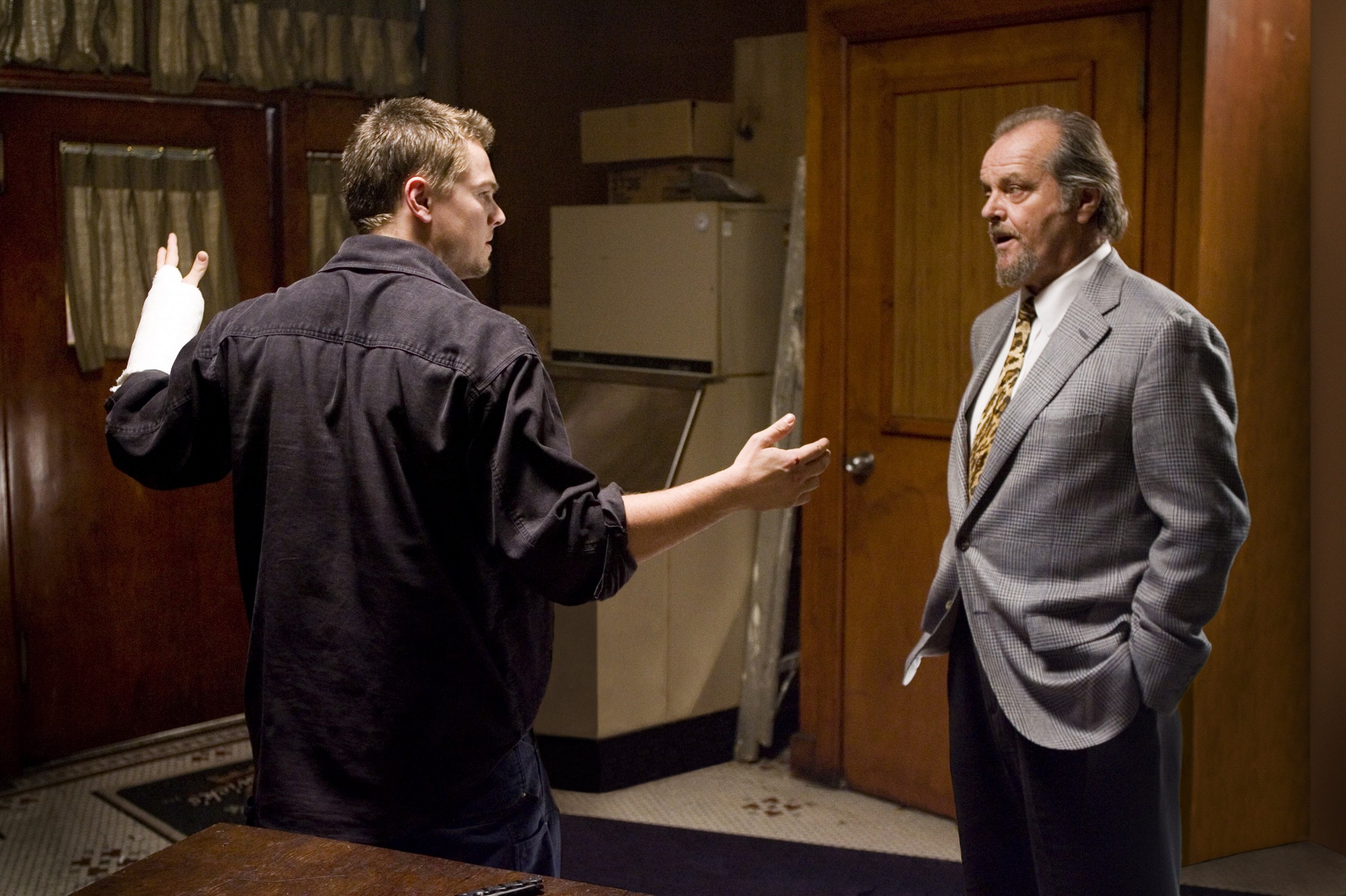
An American remake of Andrew Lau and Alan Mak’s Hong Kong feature, Internal Affairs, had been bought by Warner Bros Pictures in 2003, with Brad Pitt among the proceedings to get the film made. Pitt would eventually walk away from the project, once Scorsese joined the project, and the central cast was formed as Leonardo DiCaprio, Matt Damon, who replaced Pitt when the actor left believing someone younger should be cast in the role, and Jack Nicholson. The remake, partially also based on the real-life Boston Winter Hill Gang, follows the Irish Mob Boss Frank Costello, played by Nicholson, who plants Colin Sullivan, played by Damon, as a spy within the local police force. At the same time, DiCaprio’s Billy Costigan is assigned to go undercover for the police in Costello’s mob. The film pits the two spies against each other as they both attempt to find the identity of the other.
Scorsese wears his film influences on his sleeve in this crime feature, combining his inspiration from the original feature with films like 1932’s Scarface, 1931’s Little Caesar and 1949’s White Heat. Original film directors saw the film as a remake of all three Internal Affairs movies, with two sequels released in 2003, and the film is as ambitious as that sounds. It delivers an exceptionally crafted film focusing on identity, the sacrifices one must make to keep up appearances in society, and what people can do when pushed to conform to family and work’s expectations. The exploration into distrust could also be clearly read as reflecting the current state of the American population post-9/11, and the distrust that came after those events. The Departed held a true level of importance at the time of release, proving Scorsese’s increasing relevance in the 21st century
6) Casino

Based on Nicholas Pileggi’s nonfiction book, Casino: Love and Honor in Las Vegas, Casino plays out as greatest hits of Scorsese’s mafia features and could even be called a follow-up in a sense to Goodfellas. Starring Robert De Niro, Sharon Stone and Joe Pesci, the film follows Sam ‘Ace’ Rothstein, a gambling expert who is asked to oversee the day-to-day casino and hotel operations at the Tangiers Casino in La Vegas. The film tracks his operations in the casino, the sudden appearance of the Mafia in the Casino business, and the breakdown of his relationships with wife Ginger McKenna and best friend Nicky Santoro. All primary characters are based on real people, with Sam being inspired by Frank Rosenthal, who ran four separate casinos in Las Vegas, while Nicky and Ginger are based on mob enforcer Anthony Spilotro and former dancer and socialite Geri McGee respectively.
Released a mere five years after Goodfellas, the film almost seems inferior, but it is hard to match up to one of Scorsese’s very best, and Casino still stands strong alone by hitting the same beats incredibly well. It was called a safe narrative for Scorsese, off the back of such a thematically similar feature, but the longer runtime and the glossy direction in the Casino backdrop allows a more in-depth exploration into the setting and characters. What sets it apart is how much it strives to be like a film epic, it does not just rely on the characters and their dynamics, but the history and setting that the audience feels like they are peering on, collecting moments that feel like a well-developed and realised world
5) Silence
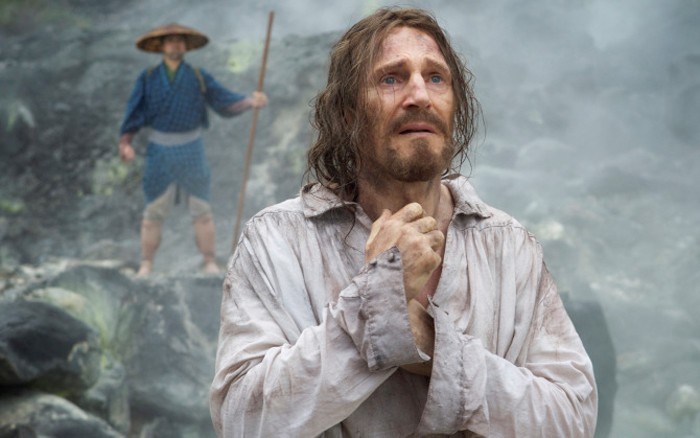
The final piece of Scorsese’s central trilogy focused on spirituality, following The Passion of the Christ and Kundun, Silence went through almost two decades of production hell before finally being released in 2016. Based on Shusaku Endo’s novel of the same name, the film follows two 17th century Jesuit priests who travel from Portugal to Edo period Japan via Macau to locate their missing mentor and to spread Catholic Christianity. A cast led by the trio of Andrew Garfield, Adam Driver and Liam Neeson, this is one of Scorsese’s most thematically complex features, dealing with the comparisons between colonialism and the spreading of religion. The film introduces its ‘villains’, a group of disillusioned Japanese men and women who seek to force Garfield and Driver into joining them in their disillusionment, and the film then curves to reveal the balance between villain and hero here.
The Japanese men and women see Garfield and Driver as a threat, Jesuit priests who are here to only cause them more pain in forcing them to believe in a God who they already believe has failed them, and they are pushing the same pain by torturing them into denouncing their God. It is a brutal, tragic and dark film, probably one of Scorsese’s most depressing and violent features, but its exploration into hope and compassion shines through thematically, feeling almost like a religious take on a future entry on this list, Bringing out the Dead. Silence comes in the acceptance that God is watching and helping even if he doesn’t make his presence known, that pain and suffering does not mean that God is not there, his Silence means just as much
4) Taxi Driver
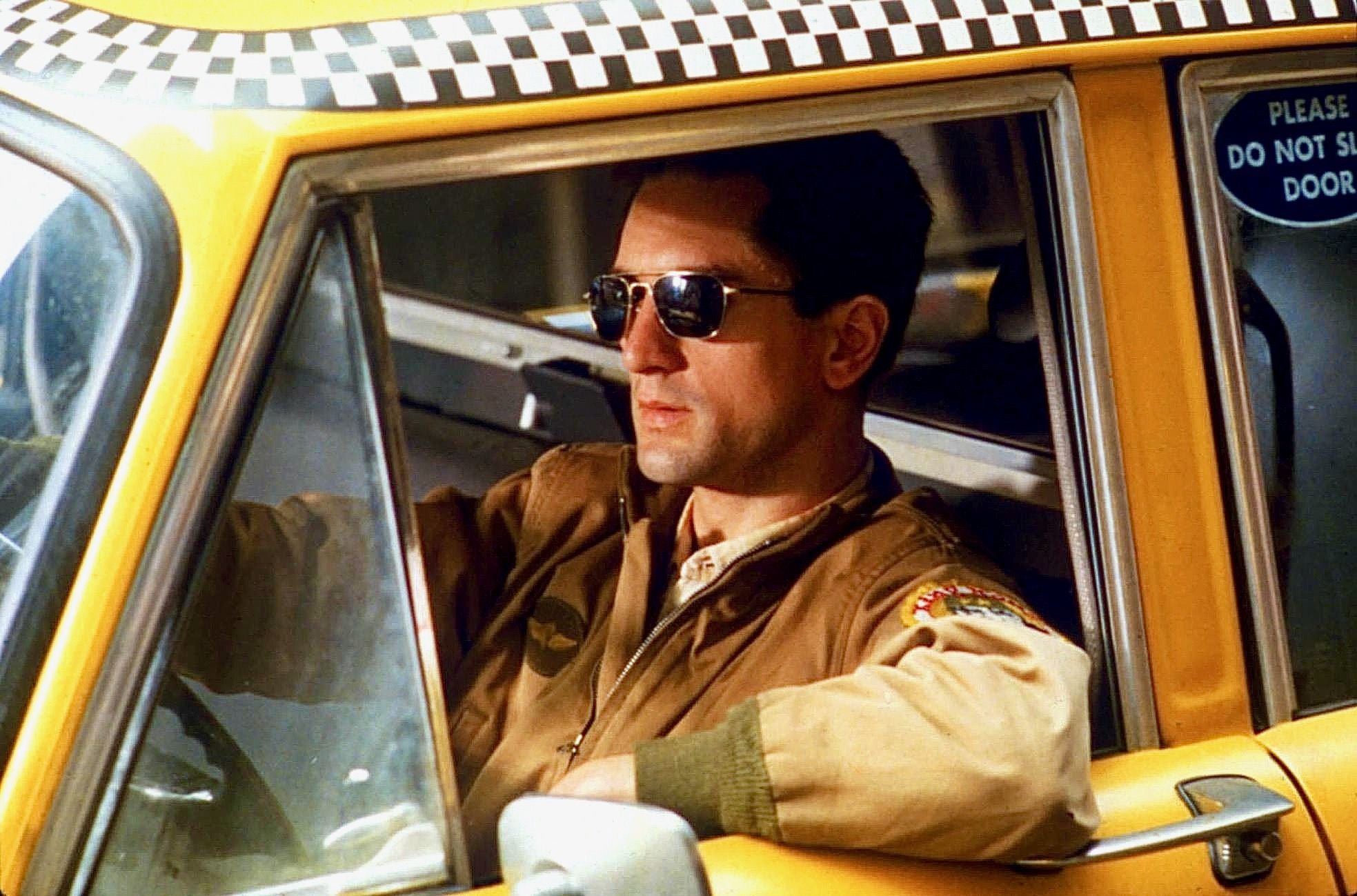
One of Scorsese’s most important features, Taxi Driver could be argued to be his most well-known feature along his long career. The first collaboration between Scorsese and writer Paul Schrader, the film follows Robert De Niro as Taxi Driver Travis Bickle, a mental unstable man who only gets worse when working nights across the city, as he becomes enrolled in a plot with a young prostitute. Considered now as one of the most important American features, the film released to various different controversies, namely the casting of twelve year old Jodie Foster as a child prostitute, the film inspiring John Hinckley Jr to attempt to assassinate US president Ronald Reagan and the threat of the film being given a X rating when initially released, moved down to a R once Scorsese desaturated the colours in a climatic battle with much bloodshed.
The frightening thing about Taxi Driver, which many films inspired by the project, such as films like Joker, would forget about, is how straight De Niro plays Bickle. Bickle is the original Scorsese protagonist, the original character that would inspire, in parts, characters from films like The King of Comedy to The Wolf of Wall Street, a character who is intentionally a terrible person but is still the film’s protagonist. He is an outcast of society, but De Niro plays him as socially aware, socially conscious of how people are meant to act in society, but there are small subtleties about him that don’t work with societies’ norms.
He takes a date to a porn film is one of the biggest giveaways, and Scorsese amounts him to a religious saint who is attempting to purge himself away from weakness, no matter if he goes to far in that quest. The direction is gritty and dark, with a view of New York that matches the grimy nature of its character, ending on an interesting note. After a bloody battle to save the life of Foster’s prostitute character, the film ends on a confusing note, as the social outcast becomes social hero, welcomed into society for his heroism, where if he was a moment earlier, it could have been seen as vigilante justice. The scene questions whether the scene is a dream, the dying thoughts of Bickle, or the cycle of delusion just repeating again, a compelling end to a compelling feature
3) Raging Bull
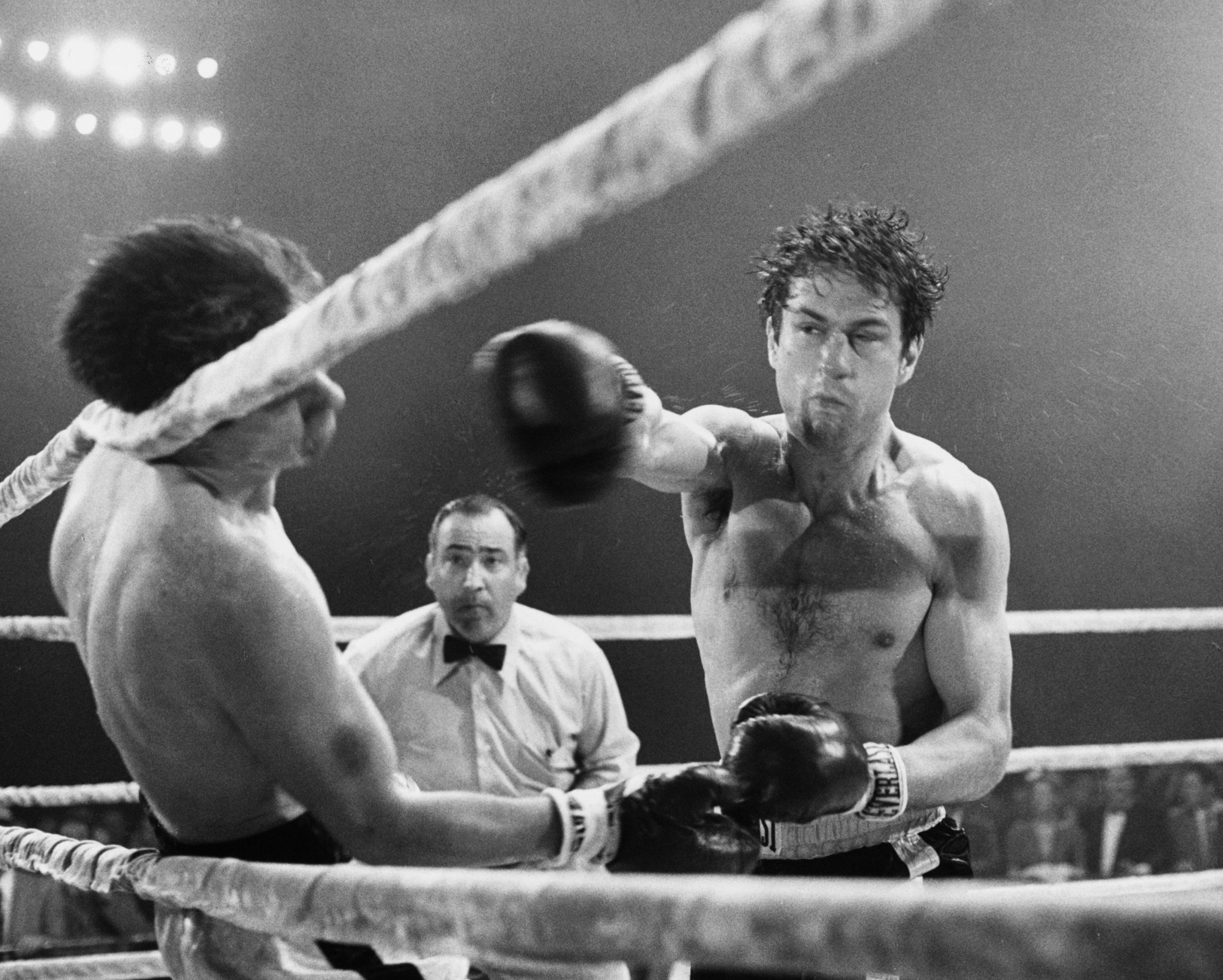
Raging Bull awarded Robert De Niro his second Oscar for Best Actor, an award perfectly deserved for the best performance in any Scorsese feature. The project was offered to Scorsese by De Niro, who had become enamoured by the story of Jake LaMotta while on the set of Francis Ford Coppola’s The Godfather Part II, but Scorsese turned it down for having a lack of familiarity or passion around a boxing feature. After nearly dying from a drug overdose, Scorsese took on the project to save his career, seeing a new passion in the battle in the ring. A battle in the ring could mean anything in Scorsese’s mind, a relatable battle to save his career, to become sober, or even to just get the movie made. The film, based on former middleweight boxing champion Jake LaMotta’s 1970 memoir Raging Bull: My Story, follows the career of the boxing champion, his rise and fall in the world of professional boxing and his personal life that was beguiled by his rage and jealousy. Shot in black and white, the film gives off the idea that it is a personal documentary about a man who is losing everything, giving the audience a fly on the wall-type perspective on the life of a man who lost everything because of his anger.
That is the central narrative thrust of the movie, exploring the all-consuming nature of rage, outside and inside the boxing ring. De Niro plays LaMotta with such venom, making the boxing champion feel as sympathetic as he does look terrifying and scary, a boxing champion who is ready to burst into fists at any minute. The film’s balanced focus at both the boxing side of his life and his personal life allows the over-two hour film feel developed and deeply layered, with Joe Pesci, who works for Scorsese for the first time here, delivering a heartbreaking performance as a showcase of the horror that anger can cause, the destruction of their friendship is one of the many lynchpins of an amazing script by Paul Schrader and Mardik Martin
2) Goodfellas
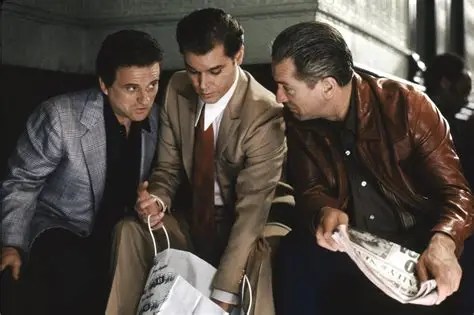
Alongside Francis Ford Coppola’s The Godfather and The Godfather Part II, Goodfellas is the staple movie for the gangster genre, three films which essentially created the blueprint for a genre that is still kicking to this day. These films inspired television series such as The Sopranos, and it is clear to see why, many would argue that Goodfellas is Scorsese’s magnum opus. Based on the film’s screenwriter’s 1985 nonfiction novel Wiseguy, Nicholas Pileggi’s script follows the rise and fall of Mafia associate Henry Hill and his friends and family from the years of 1955 to 1980.
The biggest takeaway from this film is the performances, with Robert De Niro, Joe Pesci and Ray Liotta walking away from the film with some of the most memorable performances of any film ever. The script would be composed of improvisation and ad-libbing that the stars would input into the project during rehearsals, which gives the dialogue a great feel of authenticity and naturality, Pesci specifically gets to showcase his darker side as one of the evilest characters in a Scorsese picture yet. The performance even awarded him with the Oscar for Best Supporting Actor.
What separates the novel and the film away from regular mob-land films is its fly on the wall approach that would become synonymous with the director at this point in his career, both novel and film would tackle the day-to-day operations of the Mafia, foregoing any major Hollywood narrative in favour of a Mafia-at-home feature. The episodic nature of the script is given fresh life however with a Scorsese penned voice-over and a narrative that thrusts the audience between the present, past and future in various orders. Scorsese also layers the films with incredibly compelling directorial touches, making the use of freeze frames, fast cutting and various uses of the long tracking shot, giving the mob-home feature a incredible energy
1) Bringing out The Dead
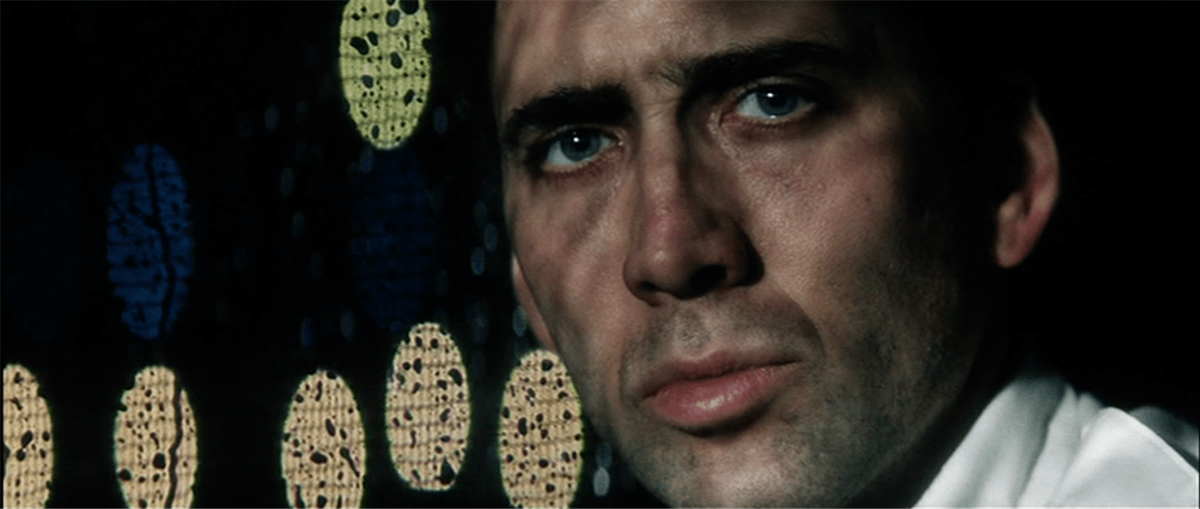
Bringing out The Dead, one of Scorsese’s lesser appreciated features takes the top spot on this ranked list. Starring Nicholas Cage, the film follows a traumatic 48 hours in the life of a depressed and tired New York City paramedic. The film grossed only $16 million at the box office against a £32 million dollar budget, and when retrospectively talking about the project, Scorsese revealed the personal nature of the film.
The film serves as a love letter to the brave men and women that work as paramedics and showcases the mental turmoil that they must suffer, showing Scorsese’s level of empathy for the people he saw working day and night during his youth. Paired with a wonderful script by screenwriter Paul Schrader, who had worked on the scripts for Scorsese classics like Taxi Driver and Raging Bull, the film plays out like a horror feature, or a neo-noir, with dark and grainy photography and editing which gives it this haunting feeling, recognising the audience with the horrors at display. Nicholas Cage leads a terrific cast who drop into the narrative at specific points to show the different perspectives of this night, and the different ways the workers will deal with this trauma. John Goodman, Ving Rhames, Patricia Arquette and Tom Sizemore are all incredible, but Cage easily takes the reins of the film.
Haunted by the multiple people he could not save while on duty, and especially when he failed in resuscitating a homeless teen known as Rose, Cage plays the character with such subtle sadness. Cage has become well-known for his over-the-top performances, whether its in the critically panned The Wicker Man remake or his two Marvel outings as The Ghost Rider, but this character allows him to hone his sensibilities back. However, when he begins to boil over into his typical over-acting, it comes out as less humorous or impressive, and more on the sad side
 Rhys Reviews
Leave a comment