
The effects of COVID-19 on the film industry are still being felt to this day, a virus which shut down the entire world for an entire year and pushed back every studio’s film schedules for the year. Based on the box office of the decade, regular film-going numbers have increasingly gone down, with the once guaranteed success of films like superhero movies and animated movies being long-gone. Streaming services became the new hot commodity in Hollywood, and it will be a long time until the cinema rises back to its 2010s era of popularity, where 1 billion dollar grossing feature films were so common. Films about the period of COVID-19 lockdown has become an interesting film trend in response to the real-world events, with the release of films like Host, a horror film which captured the isolation felt during the time when the world revolved around Zoom videochats. The James McAvoy-starring film, Together, captured the breakdown of a marriage during the lockdown, as the lockdown brings apart a loving relationship rather than holding them close together. The newest film to capture his specific topic comes as the film, Eddington, from director Ari Aster. The director got his start in the horror genre, releasing Hereditary and Midsommar through the production company A24, with the former being A24’s highest grossing film at time of release. The director moved away from the genre that made him famous with the release of Beau is Afraid in 2023, a surrealist comedy epic that was a box office bomb but featured the first collaboration between the director and future Eddington star Joaquin Phoenix.
The director has reported that he had a pitch for a contemporary Western film but pushed the project back to work on his horror features, and now he has circled back to it. Joined by Joaquin Phoenix as star, Eddington tackles more than just the COVID-19 pandemic, as it acts as a grab bag of many societal issues that happened during 2020, with the film acting as black comedy take on every side of the political spectrum. The film’s plot focuses around the political and social turmoil that happens in Eddington, New Mexico, as Sherrif Joe Cross and Mayor Ted Garcia come to blows during the years’ mayoral election.

Capturing such an impactful year as 2020 is going to be hard for any filmmaker, but Ari Aster seems the closest at being able to pull it off. What begins as a story about the divide between a town amongst the COVID-19 mask protocols, with a clear divide between the republican and democratic responses to life wearing masks and protected from the virus, becomes a narrative that reinvents itself frequently. This is certainly not going to be a film for everyone, it changes tones and its narrative throughline constantly, acting as a checklist of topics to cover from the 2020 period, but it manages to pull this off perfectly. It evolves into a narrative that is perfect for one focused around a police department in a year which brought the morality of the American police department into question. George Perry Floyd Jr, an innocent African American man, was murdered on 25th May 2020, after a white police officer, known as Derek Chauvin, knelt on Floyd’s back and neck for over nine minutes. Floyd’s final words ‘I can’t breathe’ would become a rallying slogan during the Black Lives Matter protest across the year of his death, a year which marked a remembrance of the various past cases of police brutality, especially towards black people, and called for a systematic revaluation of the police force and the people employed to protect the peace. Eddington seeks to spoof the police officers that caused the systematic violence during the period, the governmental bodies that attempted to make profit at the time, and the bad faith actors that turned a peaceful protest into a period of looting and rioting.
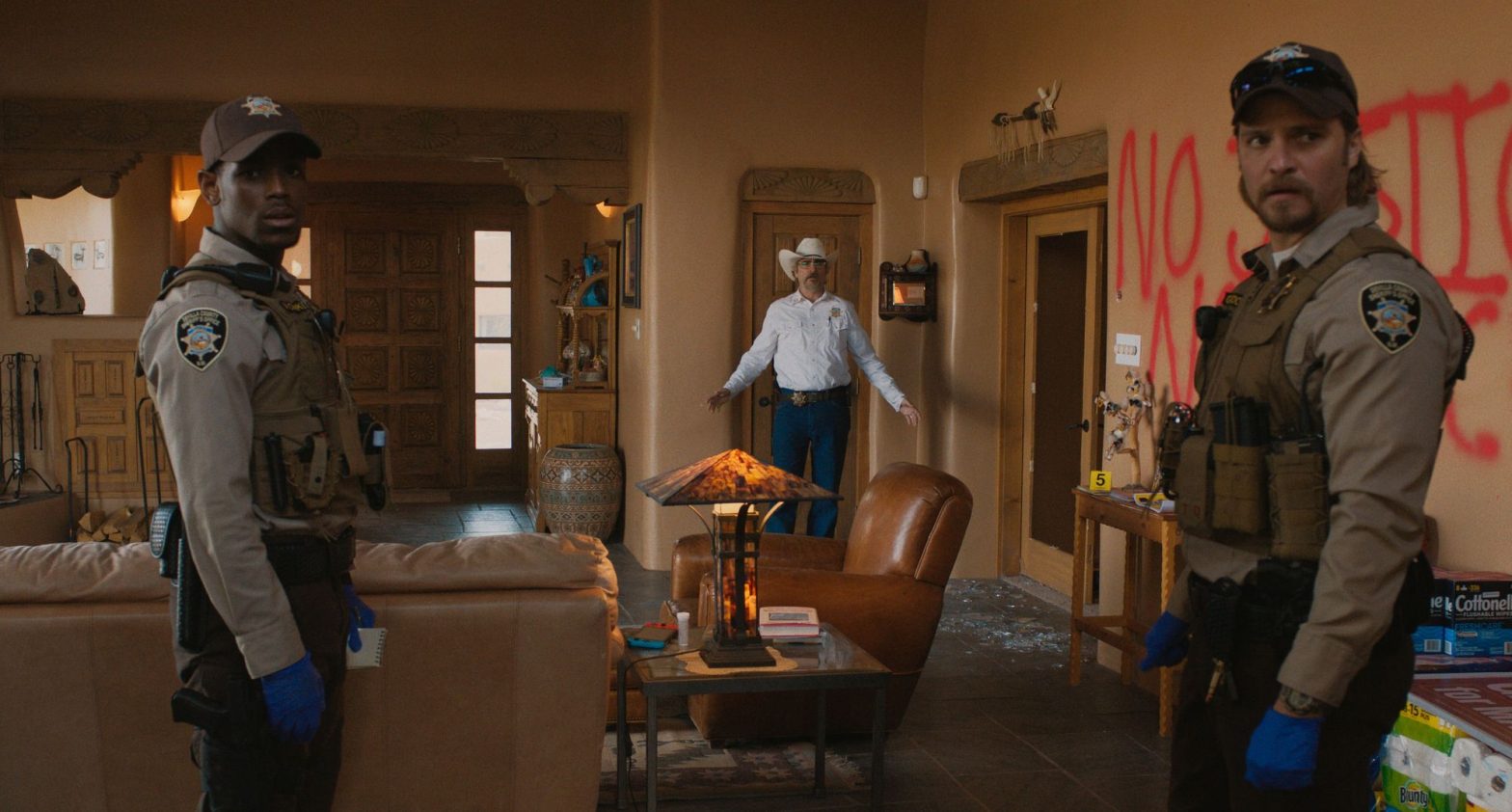
Aster does not pull his punches in the film, and does not play sides, in a way that may offend some audiences but plays true to the dark comedy genre. Both sides of the political angle are criticised heavily, with the film continuing Aster’s motifs focusing on the loss of individual identity in the face of communal or inherited forces, and cult-like behaviour. Hereditary and Midsommar feature actual cults, as the characters lose themselves to firstly possession, and then, in Midsommar’s case, the pull to a better life in the cult. Beau is Afraid explores the loss of identity through childhood trauma, as a child becomes one with the cult-like impression of its mother and family. In comparison, Eddington explores the cult-like nature of joining a noble cause for selfish reasons, as one loses their identity to a cause they do not believe in and betrays their own morals. This is also shown through the police department, with the one major African American character, played by Michael Ward, being a cop. He is judged for being a member of the police department during this time, and the film truly questions is it morally safe and morally sound to be a part of the department as an African American.

What keeps the film afloat in its social commentary is that its central character, played by Joaquin Phoenix, is centralised as the most despicable character in the film. No matter what jabs the film pulls at either political side, or contemporary moment during the 2020 season, it is still all morally above water by comparing it to the struggle of Phoenix’s protagonist. Phoenix’s character will be contentious but is brought to life by a very controlled performance from the star, who keeps the character from feeling too silly, but also keeps just likeable and despicable enough at the same time. He serves to bridge the film into its final section, where it essentially becomes an adaptation of Cormac McCarthy’s Blood Meridan, or Ethan and Joel Coen’s adaptation of McCarthy’s other text, No Country For Old Men. The film captures the fear of being hunted perfectly, capturing a sense of paranoia and terror that hasn’t been seen in the director’s work since his departure from the horror genre. Composers Bobby Krlic, who previously worked with Aster on Beau is Afraid, and Daniel Pemberton, known for the scores for films like Spider-Man: Into The Spider Verse, work wonders to deliver a score that feels at home in a horror film rather than this social drama, delivering a sense of unease that muddles the tone on purpose.
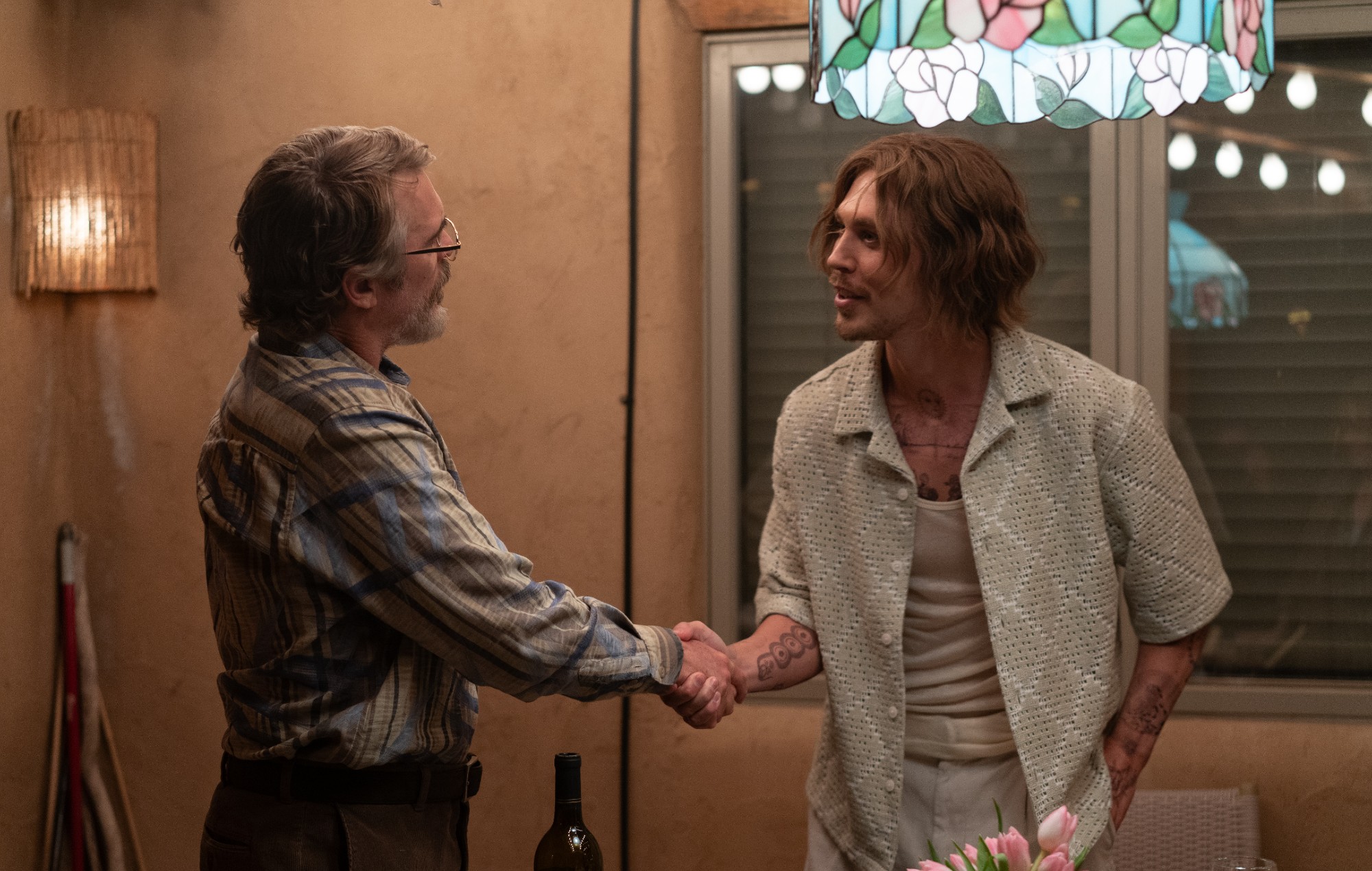
Aster never forgets to also focus heavily on the family drama aspect of his narratives, family trauma is always at heart of his narratives, whether its Toni Colette’s grief over her daughter’s death in Hereditary, Beau’s trauma around his childhood with his mother, or the suicide of Florence Pugh’s sister that forms the narrative of Midsommar, its always present. Here, Phoenix’s Joe Cross, must deal with the disfunction at home with his wife, played by Emma Stone. Stone’s role is minimal but crucial and easily could be analysed as Aster taking a shot at cancel culture and the commercialisation of the Me-Too movement in the modern day, and potentially how it has been angled away from true cases. Austin Butler portrays essentially a cult leader, an internet personality that takes advantage of the dissolution between husband and wife, and he delivers his performance exceptionally. He seems a mix between Andrew Tate and former actor Russel Brand, an internet personality that has become increasingly more famous because of everyone’s affinity for their phones in a time when they are locked at home. The rest of the cast serve their roles well enough, with Pedro Pascal playing a charming but multi-layered mayor who seems to have sold his soul to mega corporations, and Luke Grimes delivering an evil but humorous police officer character.
Aster has proven himself an actor who has a firm eye for contemporary commentary, whether it was around toxic relationships in Midsommar, or sexually focused family abuse in his initial short film debut, The Strange Thing About the Johnsons in 2011. He has only continued to impress with Eddington, a film that is not going to be for everyone. Its dark comedy is hard hitting while also being hilarious and does not choose sides, it is bound to offend some, but it works more as a commentary than it does not. The performances are strong and entertaining, Joaquin Phoenix leads an ensemble cast as such a despicable character, and his character matches the changing tones and genres that the film tackles across its runtime, turning from a socially conscious drama to an intense action film. The film seems to have one goal, to be a film which combines essentially ever major 2020 conspiracy theory into one exceptional film, and it works incredibly well.
 Rhys Reviews
Leave a comment