The modern Hollywood system is based on expensive gambles, big marketing campaigns built around a massive high-concept premise that is easy to digest for general audiences, mostly contained to the months of summer. This is common to the studio system at this point, with the summer movie season expanding to blockbusters being all year round. However, the summer blockbuster would have been foreign to the film industry 50 years ago, a time focused around the so-called ‘New Hollywood’, a time of auteur-focused features where the winter was where studio made their big money. This would all change with the release of Steven Spielberg’s Jaws, which turns 50 years old today, marking the beginning of the centre piece of Hollywood’s moneymaking scheme.
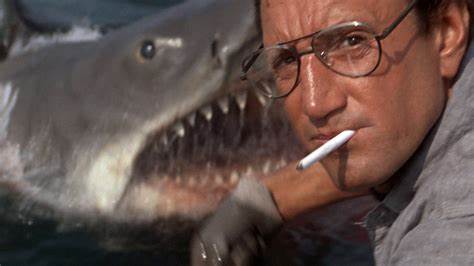
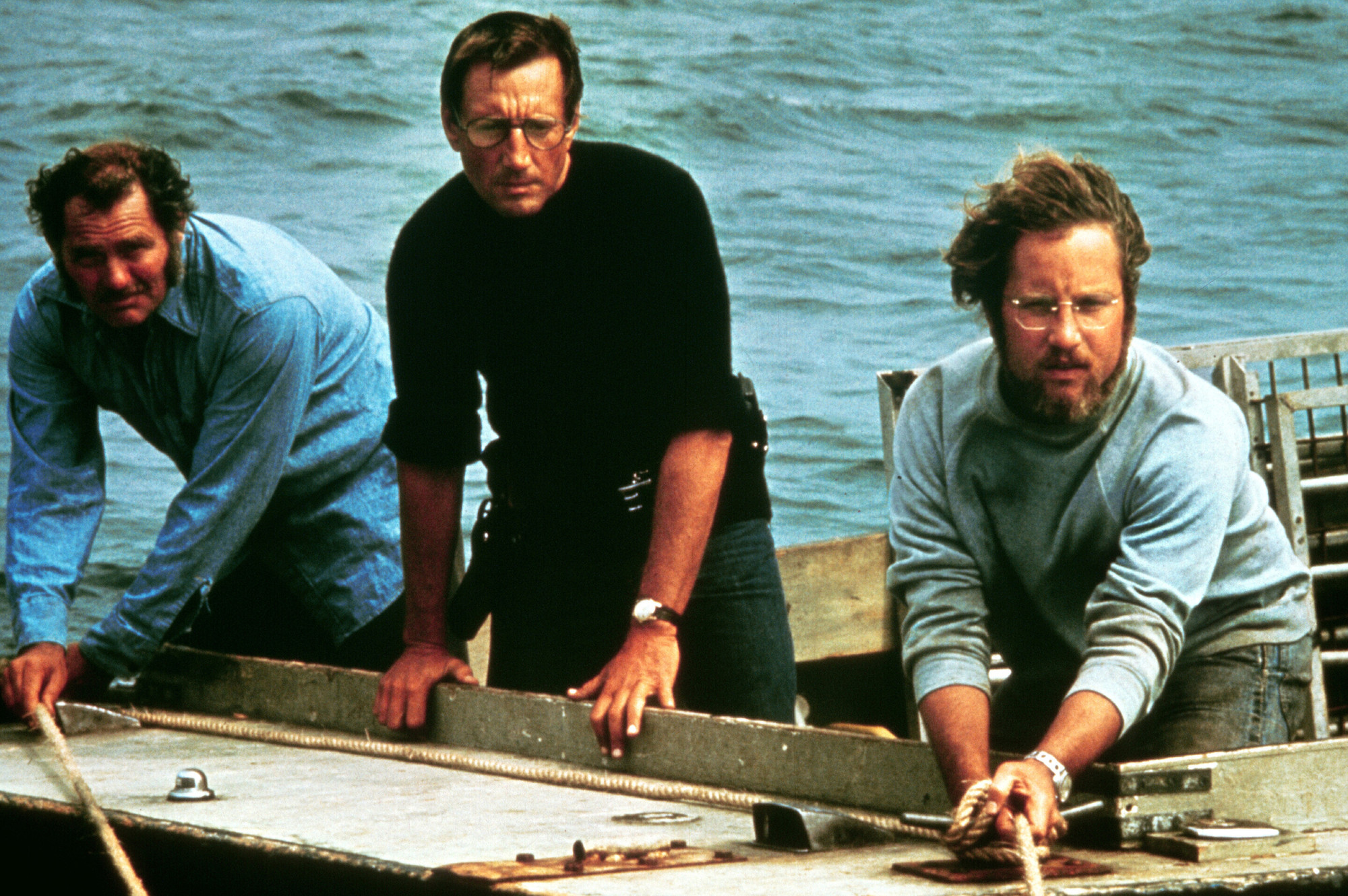
Based on Peter Benchley’s novel of the same name, the iconic film follows police chief Martin Brody (Roy Scheider) as he investigates sudden shark attacks that are plaguing a small beach town that uses the beach resort as its cash-source. With the help of a professional shark hunter (Robert Shaw), and a marine biologist (Richard Dreyfuss), Brody must go into the open seas personally to slay the shark.
Released in 1975, the film quickly became the highest grossing film of all-time at the time, and opened to a wide array of positive reviews, ensuring a forever-enduring legacy, and receiving the Academy Awards for best film editing, best original dramatic score and best sound.
Changes were made between novel and adaptation, namely the removal of the affair subplot between Brody’s wife and Dreyfuss’ marine biologist. Written by original novel writer Peter Benchley and then redrafted by Carl Gottlieb during principal photography, the removal of these elements could be boiled down to an attempt to make the film appeal to the most mainstream markets. In the days before the introduction of the PG-13 rating as well, a removal of sexual content would help the movie’s chances at appealing to the most audiences.
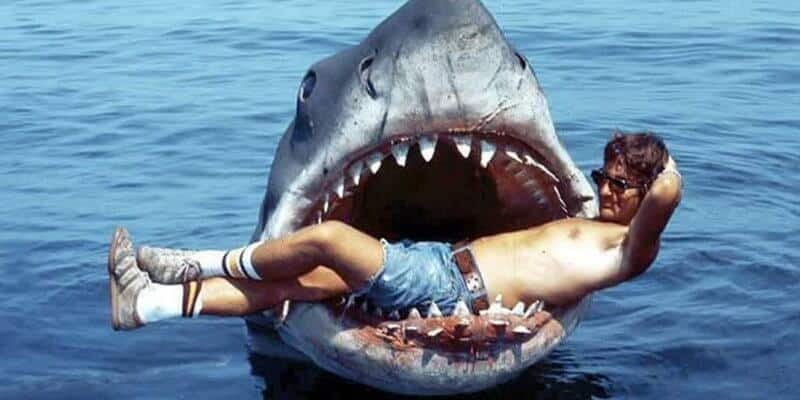
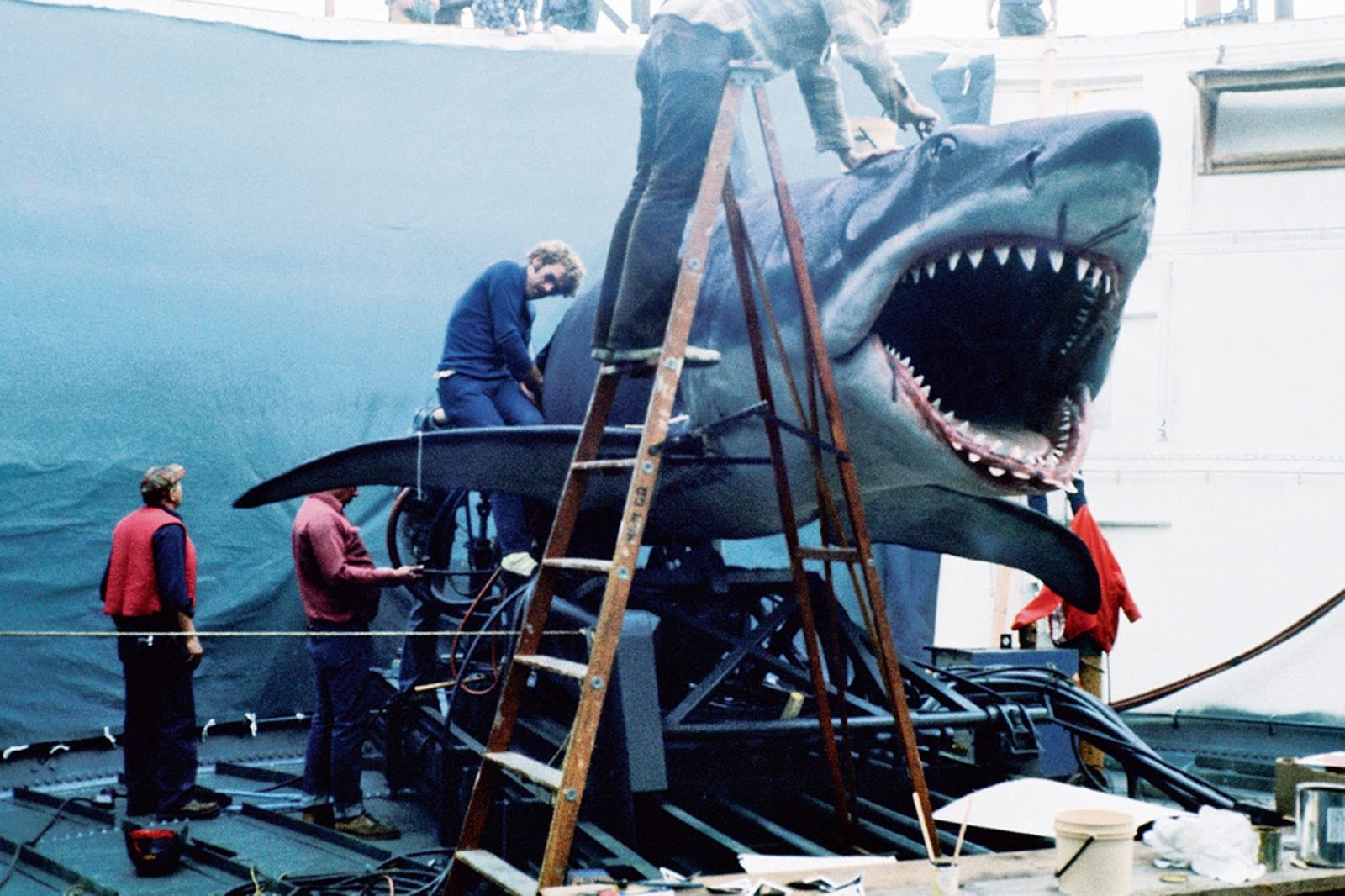
The other notable change would come from the movie’s usage of its main draw, the shark itself. Brought to the screen as a practical mechanical animatronic, the crew saw problems when filming on the open water with the mechanical prop malfunctioning commonly on set. In order to get around this, a subtle approach was used by director Steven Spielberg, making use of John Williams’ now iconic score to imply the presence of the shark. This makes the actual appearance of the shark, in the film’s bloody conclusion, as even more memorable, relying on the idea that less is more in creating fear.
The use of the shark however is not what makes Jaws an important feature for the film industry, its instead down to the idea that it formed the basis for the Hollywood summer tentpole film. Releasing the film was a gamble for Universal Pictures, the film went over budget when filming on open-water, and the studio went all-out for a never-before-seen marketing campaign. Multimedia franchises are commonplace in Hollywood now, with franchises like Marvel and Harry Potter extending out of just being film franchises, gaining prominence through videogames, television series and store-bought toys.
Dozens of television spots and trailers for the film were lined up for commercial breaks for primetime TV, and a vast multimedia campaign began with the release of the book the film based its narrative on. Posters became commonplace with the release of this film, launching a joint cover with the novel, and a logo that both versions of the story would use. Various merchandise that would be usual for modern Hollywood were used for the first time with this release, including soundtrack albums, composing Williams’ iconic score as part of the campaign, behind the scenes making of the film novels, clothing, games, and toys and costumes based on the shark.
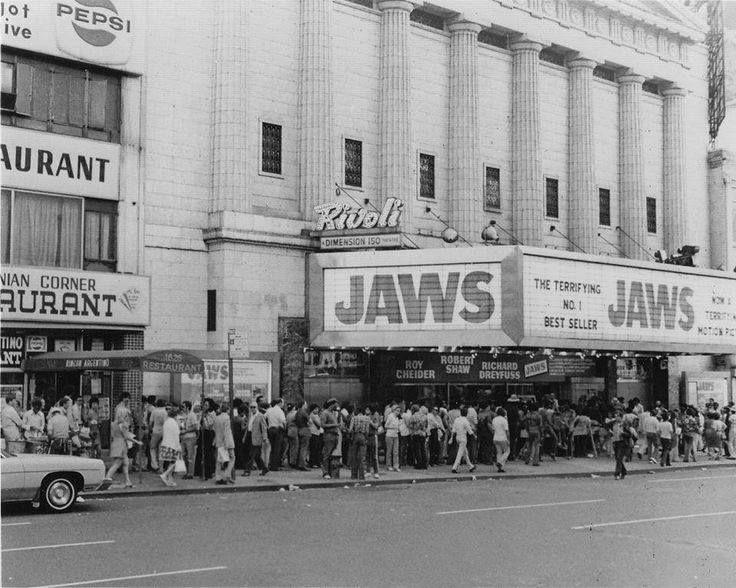
Followed by the release of Star Wars (later subtitled A New Hope) two years later, the new release strategy for big tentpoles would also soon become commonplace for the blockbusters of today. Originally, films would be released in a staggered release schedule, opening in a small array of cinemas in the opening week, and then opening to more screens in following weeks. Jaws opened the door to more widespread releases, still featuring a staggered release, but opening to a wide array of screens earlier than usual. Opening to a number of around 400 screens in North America alone, where films used to open to 5-10 in their original opening weekend. The studio also saw the opportunity to extend the release of the film, staying in its locations for a staggered amount of time across the summer, marking the summer as the new home for big concept features.
The summer blockbuster belonged to filmmakers like George Lucas and Steven Spielberg, with Jaws putting Spielberg’s name on the map for Hollywood. The director is one of the most mainstream and well-regarded filmmakers of his day, with the success generated from this film launching him to create even more well-known blockbusters. Projects like the Jurassic Park franchise, the Indiana Jones franchise, ET: The Extra-terrestrial and Close Encounters of the Third Kind would help establish the summer blockbuster into a gamechanger for moneymaking across the 1980s and 1990s.
The director would also entertain major success in the future of his career, receiving nine nominations for best director at the Oscars, thirteen nominations for best picture, and winning best director twice for 1993’s Schindler’s List and 1998’s Saving Private Ryan. Though collaborating on Spielberg’s previous and first film, The Sugarland Express, the film marked the first mainstream collaboration between Williams and Spielberg, a collaboration that would become synonymous with the two artists, Williams only being absent from composing five of the director’s films.
Jaws holds itself as an influential film for the changing world of Hollywood filmmaking. Following the release, the film would be followed by 3 sequels, without major input of Steven Spielberg, releasing in 1978, 1983 and 1987 respectively. Through the success of the initial film, the summer blockbuster would become a central piece of Hollywood filmmaking, evolving into the modern day with tentpoles moving across the filmic calendar. Each studio now has their own tentpoles, made on large budgets, attempting to be recognised by a large audience and marketed thoroughly through trailers, television spots and multimedia merchandise. 50 years removed from the film, in a summer which will be dominated by such big budget features as Jurassic World: Rebirth, Superman and Fantastic Four: First Steps, it is important to look back to see where these money-makers all began.
 Rhys Reviews
Leave a comment