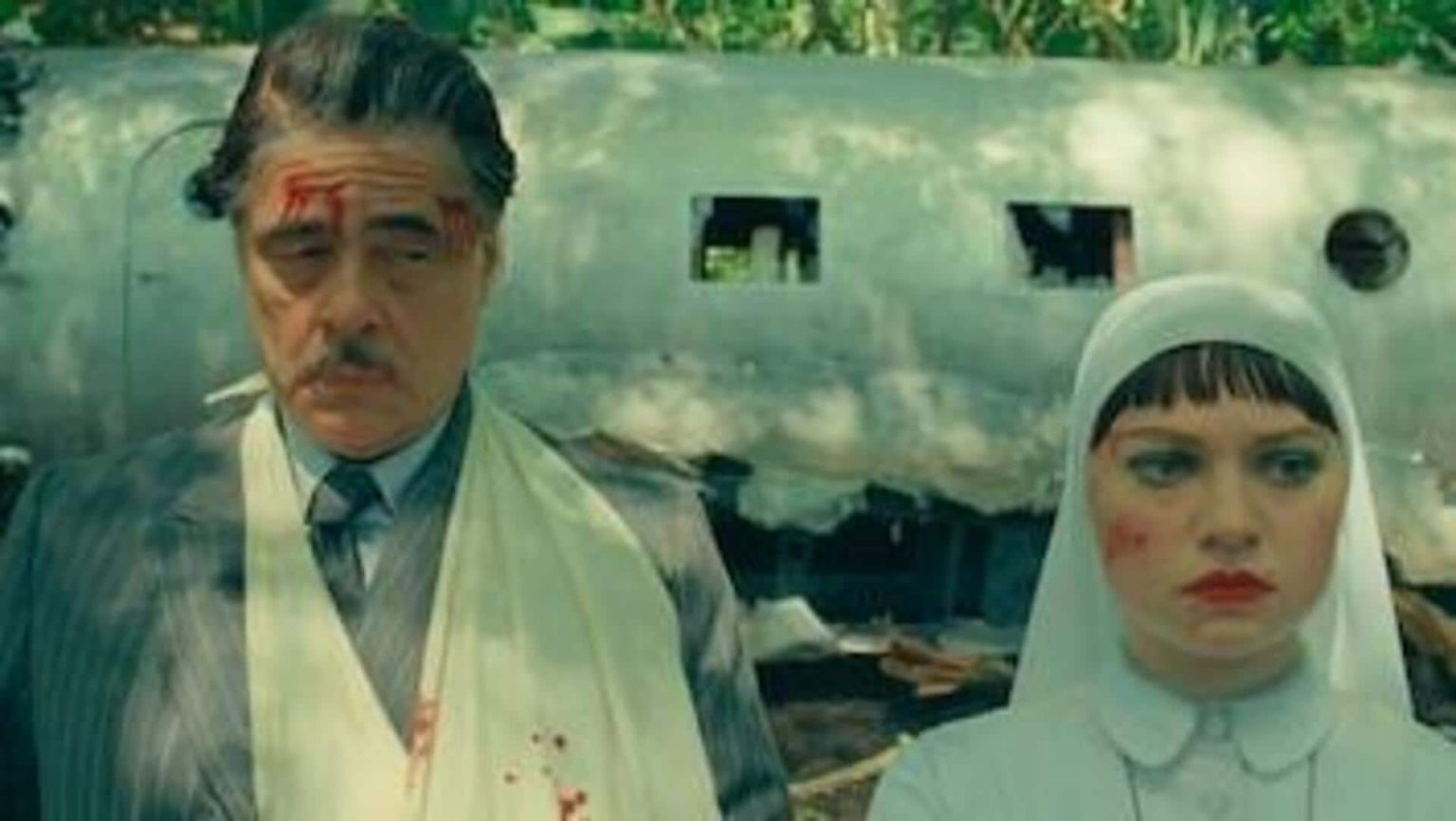
Once Wes Anderson was an independent filmmaker, making indie films that rivalled what came out of Hollywood, but ever since becoming a commercial household name after the release of The Grand Budapest Hotel in 2014, that cannot be said anymore. His signature style, involving doll-house-lite sets, monotone acting and delivery, deadpan humour and a focus on colour and aesthetics, has become so well-known, that AI Wes Anderson movies became a trending topic on social media app TikTok. At this point in his career, if you have seen one of Anderson’s films, you have essentially seen them all, and that is still true for his newest feature, 2025’s The Phoenician Scheme.
His newest feature follows Zsa-Zsa Korda (Benicio Del Toro), a wealthy businessman, who after another near-death experience when an attempt is made on his life, appoints his estranged daughter as sole heir of his fortune. When facing shady businessmen, terrorists and more assassination attempts while trying to make more money for their estate, their fractured relationship is put to the test.
What really stood out about Anderson’s earlier works was how heartfelt and human they felt even throughout all the witty dialogue, colourful sets and monotonous characters. Rushmore found its heart through the coming of age of its central character, The Life Aquatic centres around its lead character coming to terms with his own mortality and trying to become a better person, and The Royal Tenenbaums is self-explanatory in its exploration of family dynamics and absentee fathers. Even The Grand Budapest Hotel, a film which essentially started the current state of Anderson’s film output, is still human and heartfelt while delivering a wacky and outlandish plot.
This sense of heart has seemed to become lost in his newest work, with films like The French Dispatch and Asteroid City becoming increasingly more convoluted and chaotic in both their directional and narrative content. Both films feature multiple overlapping narratives that need to be deciphered, in order to understand, with a wide variety of characters, and an increase in visual style that draws attention commonly to the viewer is watching a film. These factors leave these two films feeling messy in drawing upon its central emotions, leaving various parts feeling cold and empty compared to the director’s past projects.
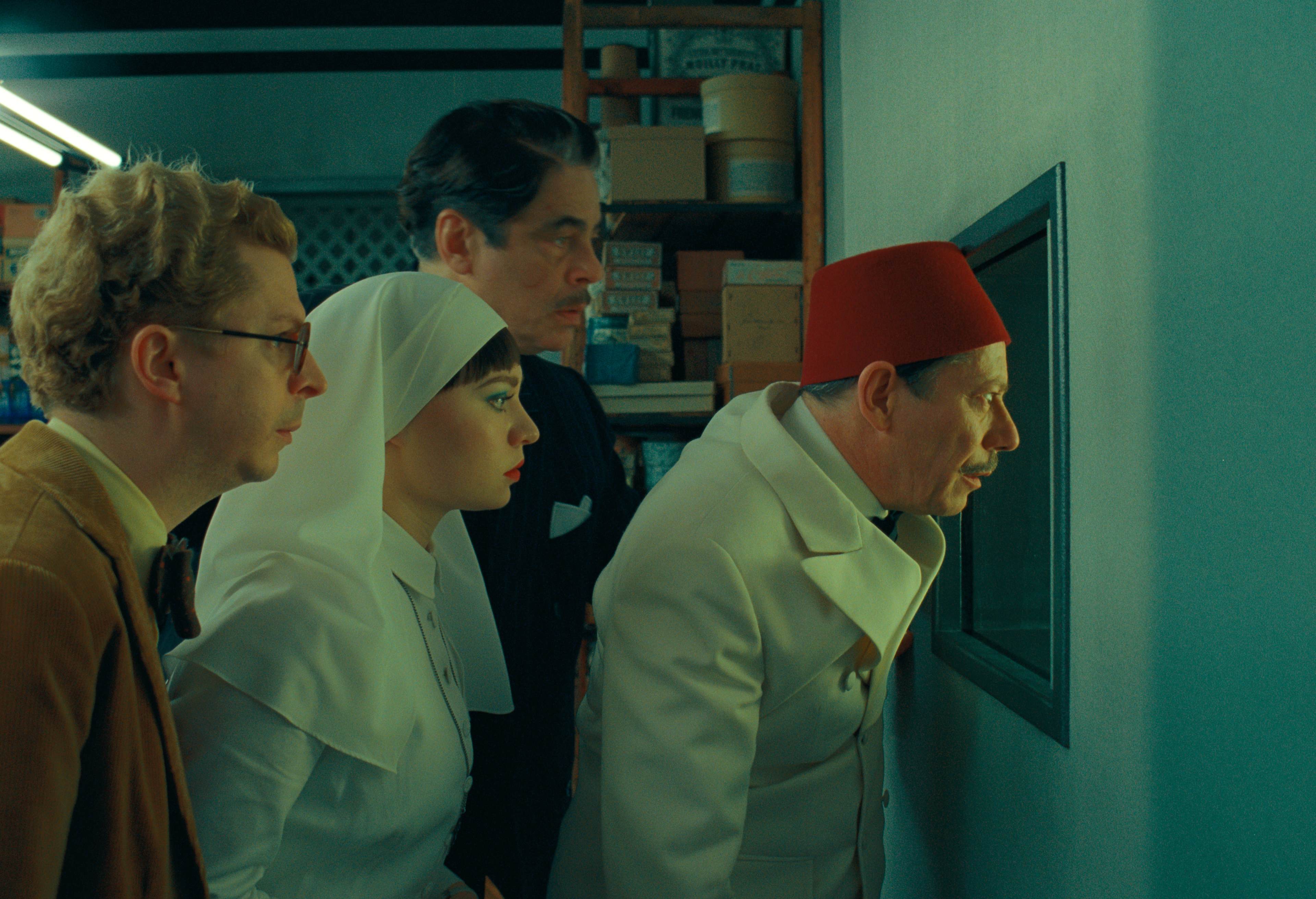
The Phoenician Scheme divorces itself from the overlapping narratives, slimming its narrative down to just one linear storyline. The film also seems to finally narrow its focus back to what made the classic Wes Anderson features work, endearing character relationships. Narrowing the focus to the development between estranged father and daughter seems to be a return to form for the director, but the tendencies that have come forth in the director’s modern work is still here. Somehow through such a simple narrative, Anderson loses himself and the central heart through the messy nature of the storytelling and the severe number of characters that appear.
Riz Ahmed, Tom Hanks, Bryan Cranston, Scarlett Johansson, Benedict Cumberbatch and Jeffrey Wright are just some of the names that make up this impressive ensemble, and they all appear in essentially one scene each. Each actor of course gives a well-done performance, even if the actors’ stilted deliveries feel a bit more overpowering in this feature. The problem comes in when seeing that the film essentially comes to a pause every time the next actor appears, the film is messy and chaotic, where it moves from scene to scene with such a loose narrative, any sense of narrative cohesion goes out the window. These actors have commonly appeared in Anderson features, but in the past, they would be full-fleshed out characters, but here they are props to have one comedic scene and then move the plot forward.
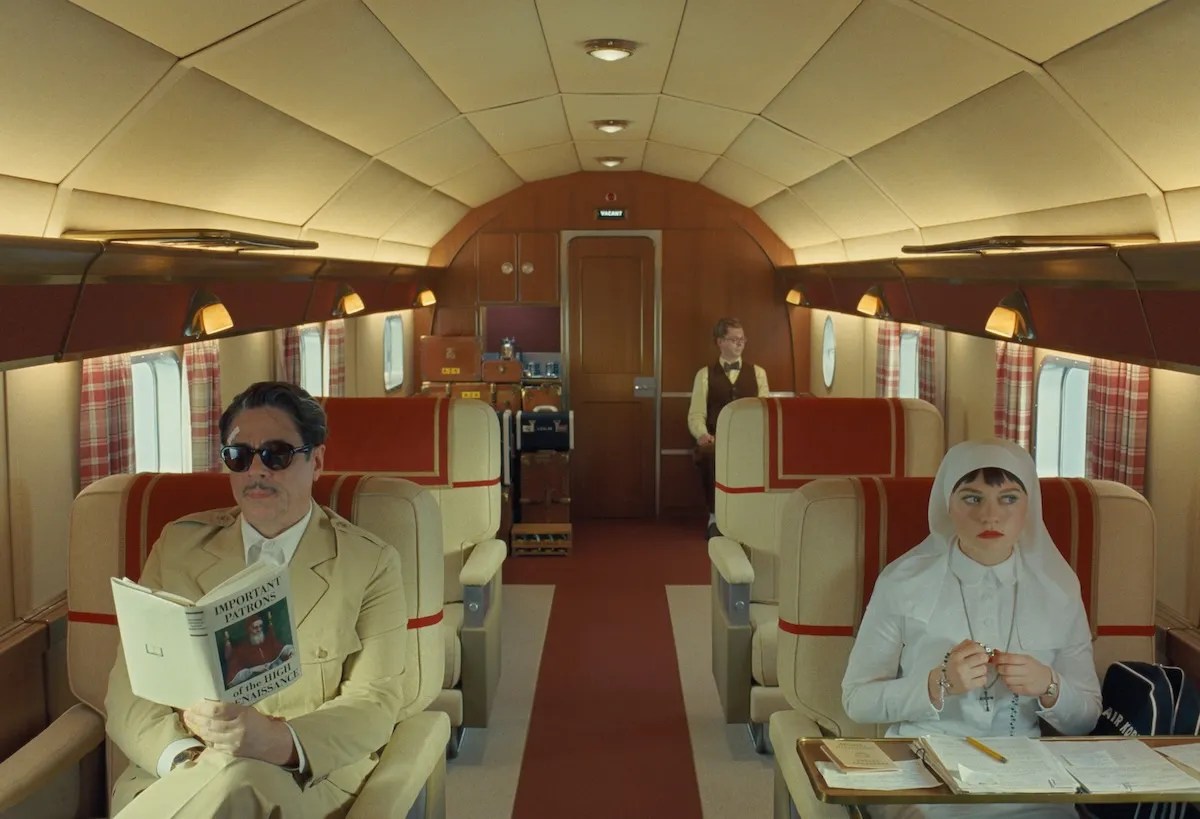
The biggest standout of the cast comes in the addition of Michael Cera as a new Anderson mainstay, the actor was made for the deadpan humour of the director, and his role as tutor Bjorn Lund is a clear comedic highlight. Benicio Del Toro gives a reliable performance as the lead, he has one of the best deliveries of the entire cast, he has the full-of-himself swagger that the character needs. Mia Threapleton seems to struggle at times with delivering the Anderson-specific delivery in some scenes, but she has a strong presence. The film’s exploration into the reconciliation between their two characters could have been a highlight of the film, but it leaves up as feeling more like an empty do-over of The Royal Tenenbaums.
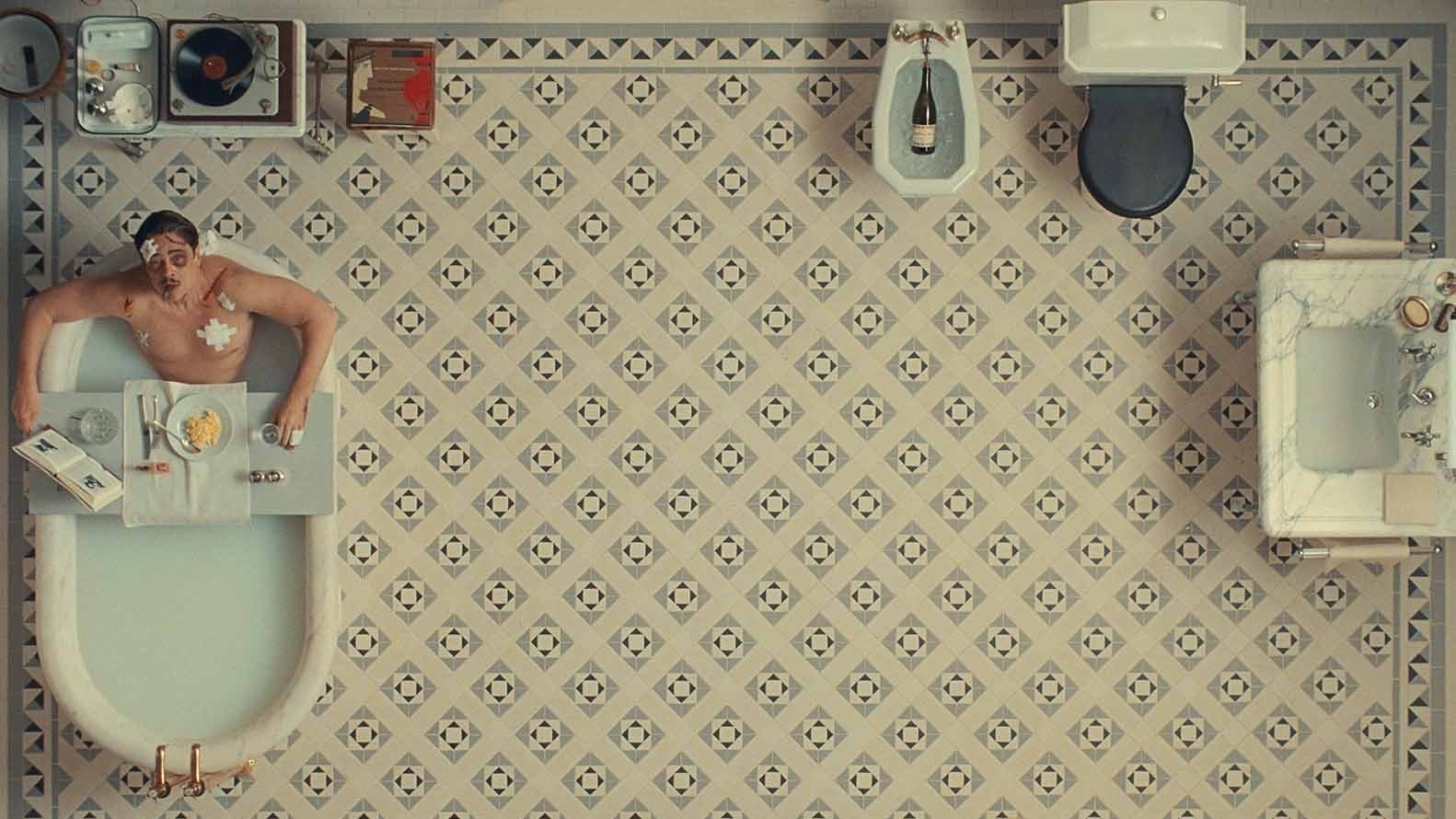
Just to be expected from Anderson, the film is still a visual treat, each set is perfectly crafted to be brimming with colour. The doll-house style Anderson has developed continues to impress, and one key sequence featuring black-and-white photography standouts as something new for the director. It is especially not a situation of style, over substance, there is enough substance contained in the film, an exploration into family, greed and coming to terms with death are all present. However, the film is just overstuffed and directionless, stuffed with so many one-note characters from talented performers, that anything resembling something emotional gets lost in the overall picture.
 Rhys Reviews
Leave a comment